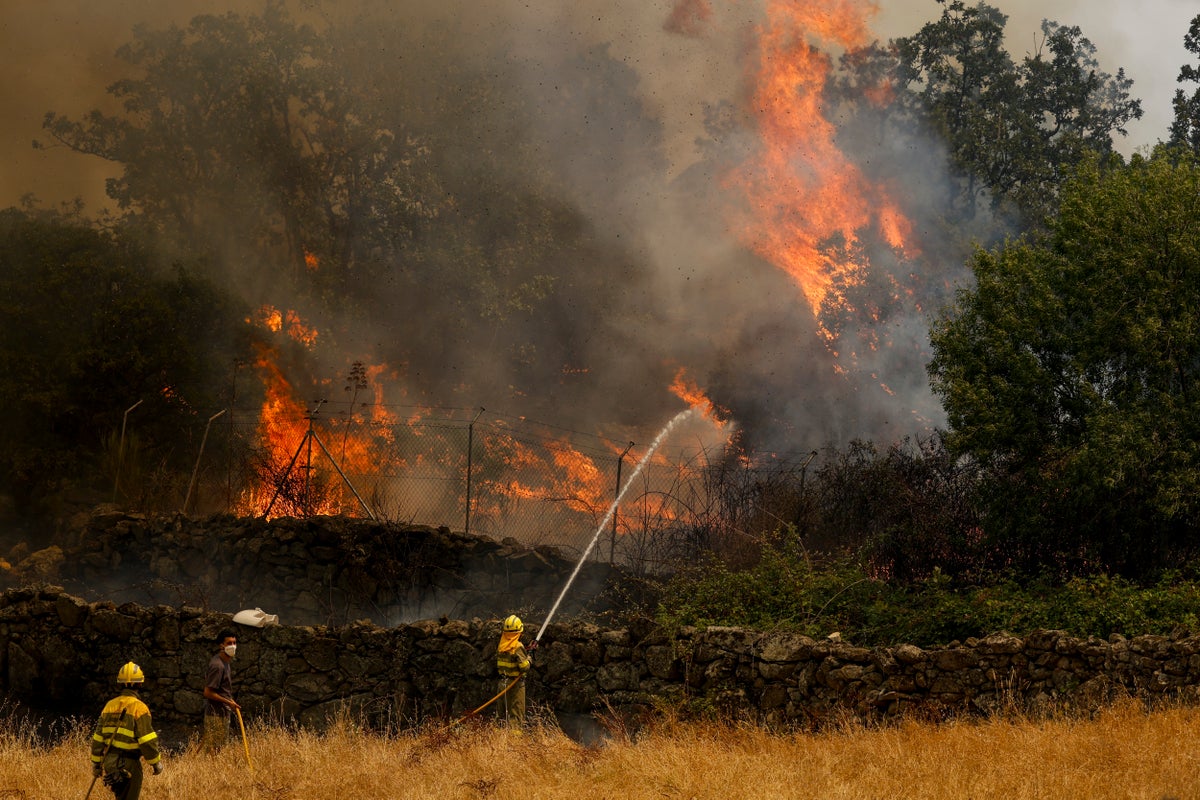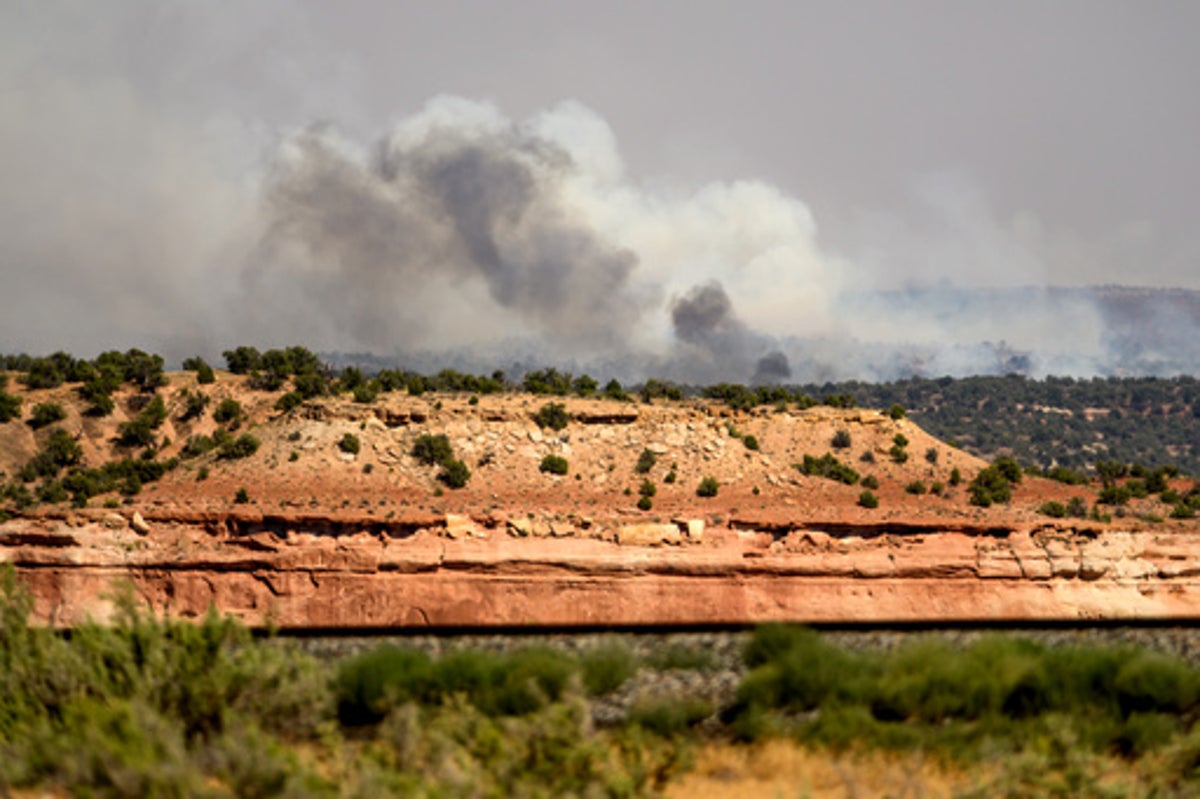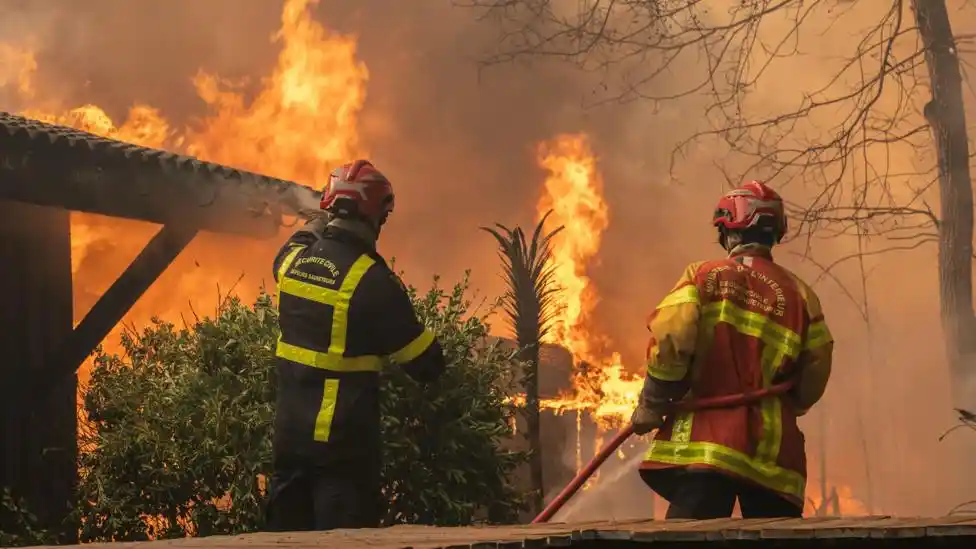
More than 250,000 people have been evacuated across France and Spain as wildfires, fuelled by extreme heat and strong winds, continue to ravage regions in both countries, with authorities warning the crisis is far from under control.
Bordeaux under threat as French fires intensify
In south-western France, firefighters are battling to contain blazes advancing toward Bordeaux, with flames now within 40 to 50 kilometres of the city. Officials have described the situation as unprecedented, with around 200,000 people evacuated from the Gironde and Landes regions since the fires began.
The French military has been mobilised to assist, clearing brush and creating firebreaks, while the government has activated the EU’s civil protection mechanism. Reinforcements, including water bombers from Croatia and Portugal, Black Hawk helicopters from the Czech Republic and Slovakia, and a Romanian forest fire team, are en route to support local efforts.
Residents and tourists have described harrowing evacuations, with one British couple reporting ash covering their holiday rental and smoke causing respiratory distress. Spencer Randall, a tourist who fled with his family, told the BBC the scale of the blaze was "frightening," with winds fanning flames and sending smoke as far as 160 kilometres away.
In a related development, the final stage of the Tour de France has been shortened by 44 kilometres to allow security forces to be redeployed to wildfire-affected areas. French President Emmanuel Macron is scheduled to hold an emergency meeting with ministers as at least 30 fires burn across the country.
Spain declares state of emergency amid deadly blazes
Spain has declared a state of emergency as wildfires near Madrid and in the Valencia region force tens of thousands to flee. A man in his 70s was found dead in his car after a fire in Manises, near Valencia, marking the first fatality linked to the current outbreak.
Nearly 60,000 people have been evacuated from the Madrid and Ávila regions, while over 28,000 remain confined to their homes. Spanish Prime Minister Pedro Sánchez acknowledged the challenges ahead, stating, "We have a window of opportunity to tackle the wildfires, protect lives, and control the fires," though he warned that thunderstorms and persistent winds could exacerbate conditions.
Madrid’s regional president, Isabel Díaz Ayuso, called the situation the "worst fire in the history of the region." Across Spain, 130,000 hectares of land have burned so far this year—already exceeding the country’s annual average of 100,000 hectares over the past decade.
A shift in weather conditions, including reduced wind speeds and higher humidity, has provided some relief near Madrid, though authorities remain cautious about the potential for renewed flare-ups.
EU braces for record-breaking wildfire season
The European Union is preparing for what could be a historic wildfire season, with Hadja Lahbib, the EU’s commissioner for crisis management, warning that damage may surpass previous records. "Last year, one million hectares burned during the summer, and we are expecting another historical, sad record," she told the BBC.
Fires have already broken out earlier than usual, with the Netherlands activating the EU’s civil protection mechanism in April to request support. Italy has also faced significant blazes, with over 350 fires—including 10 major incidents—reported on Sicily, prompting evacuations.
In the UK, a major incident remains in effect as firefighters tackle a wildfire in Scotland’s Cairngorms National Park, which has been burning for 10 days. With forecasters predicting another heatwave, EU officials have warned that further outbreaks are likely as the summer progresses.
As the crisis deepens, the EU has deployed 11 aircraft and helicopters from its firefighting fleet to support operations in France and Spain. The coming days will be critical in determining whether containment efforts can outpace the spread of the fires.