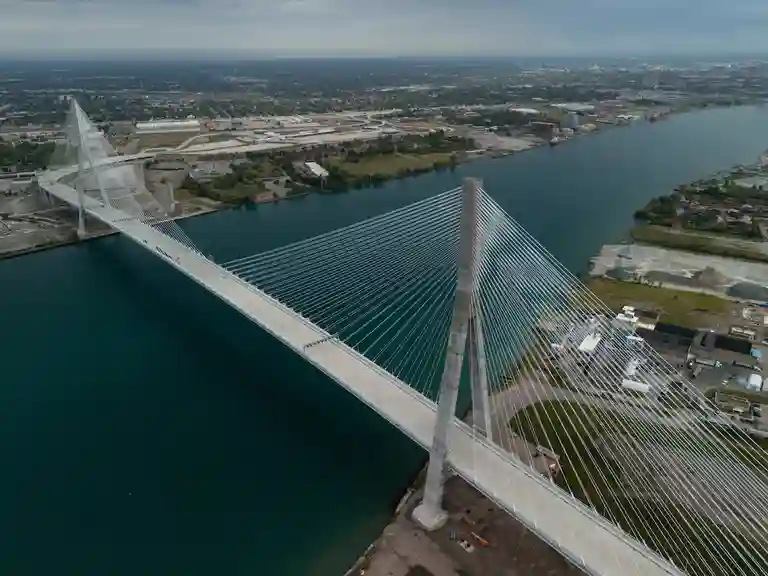
Prime Minister Mark Carney confirmed the Gordie Howe International Bridge may generate negative or modest toll revenue in its early years under a new agreement with the U.S. The deal, struck with former President Donald Trump on July 10, diverts a portion of future net proceeds to Michigan’s economy.
New deal reshapes Gordie Howe Bridge toll sharing
Canada financed the $6.4-billion bridge alone under a 2012 agreement with Michigan, planning to recoup costs through tolls over decades. The revised terms now require Canada to share half of its net revenue after operational expenses—such as staffing, maintenance, and snow removal—with a U.S. economic development fund for 15 years.
Trump celebrated the arrangement as a “MUCH BETTER DEAL for America” on social media. Carney clarified that no toll sharing occurs until all construction debt is repaid, though he acknowledged early revenues could be minimal. “We expect that after those costs, for the first few years, net revenues will be modest—in fact, we expect them to be negative,” he told reporters in London, Ont.
Criticism and calls for transparency
Conservative MP Shuvaloy Majumdar, the party’s Canada-U.S. relations critic, demanded the full agreement be made public, calling current disclosures a “giant dumpster fire mess.” He noted the government faces a “tough and unpredictable negotiator” in Trump but insisted Canadians deserve clarity on concessions made.
The bridge’s opening faced delays after Trump threatened to block it in February, demanding Canada cede at least half of the asset. The standoff followed a $1-million donation from Ambassador Bridge owner Matthew Moroun to a pro-Trump group, per reports.
Key financial terms of the bridge agreement
- Canada covers the full $6.4-billion construction cost under the 2012 Michigan deal.
- Net revenue sharing with the U.S. begins only after operational expenses are deducted.
- Half of the remaining net revenue will fund Michigan’s regional economy for 15 years.
- A provision reportedly requires U.S. approval to lower tolls below regional averages.



