Israel’s Crimson Thread military barrier is severing Palestinian communities in the northern Jordan Valley from their farmland, water sources, and livelihoods, with construction already underway despite widespread displacement and destruction. The project, announced in 2025, combines a 22km trench and military road between Ein Shibli and Tayasir checkpoints, with plans to expand to 500km across the occupied West Bank.
How the Crimson Thread barrier is reshaping the West Bank
The barrier’s route cuts deep into Palestinian territory—several kilometres inside the West Bank rather than along the Jordanian border—ostensibly to prevent weapons smuggling. Yet its path, stitched together with nine land seizure orders, has already destroyed irrigation pipes, wells, and greenhouses, while blocking access to thousands of hectares of agricultural land. Israeli authorities have issued 49 military land-seizure orders in the first half of this year alone, exceeding the 47 issued in all of 2025.
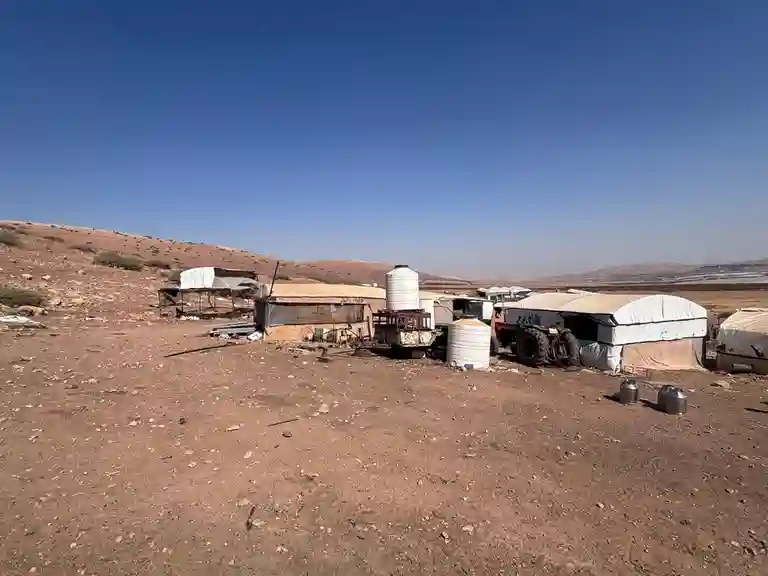
Residents like Thaer Bisharat, whose family owns land in Ras al-Ahmar, now face hours-long detours to reach their homes due to road closures patrolled by Israeli soldiers and settlers. The sole remaining access is a winding dirt road, where drivers risk encounters with armed patrols. During one such journey, Israeli forces destroyed three wells in the al-Buqaia plain, including one belonging to Bisharat’s relative, while enforcing a lockdown that has cut off water to the area for weeks.
Displacement and economic collapse in the barrier’s path
The barrier’s advance has accelerated a pattern of forced displacement, with settlers and military operations working in tandem. Since a June Supreme Court ruling cleared construction, authorities have confiscated tractors, water tanks, and farming equipment, while settlers have positioned caravans on land soon to be cut off from Palestinian communities. On June 16, settlers demolished livestock infrastructure at Bilal Bani Oudeh’s home and assaulted him after he refused to leave.
Local leaders report devastating economic losses. The Atuf village council estimated damage from a single day of well destructions on July 14 at over 4 million shekels ($1.3m). Agricultural production in some areas has collapsed by 90%, with families losing half their livestock due to restricted access to grazing land. Water prices have tripled, and transporting supplies has become perilous—Thaer’s brother was recently beaten and robbed by settlers while attempting to do so.
What happens next for the Crimson Thread project
With the barrier’s first phase already under construction, residents fear its completion will permanently sever their communities from essential services and farmland. Mahdi Daraghmeh, head of the al-Maleh village council, warned that the trench will turn the area into a "prison," with no hospitals, schools, or emergency centres accessible. Meanwhile, Israeli authorities continue to issue seizure orders, with NGO Kerem Navot tracking a "clear escalation" in land confiscations under the guise of security.
As the barrier expands, its long-term impact may mirror Israel’s separation wall, further fragmenting Palestinian territory. For now, the immediate focus remains on the northern Jordan Valley, where the Crimson Thread’s advance is already reshaping the landscape—and the lives of those who remain.