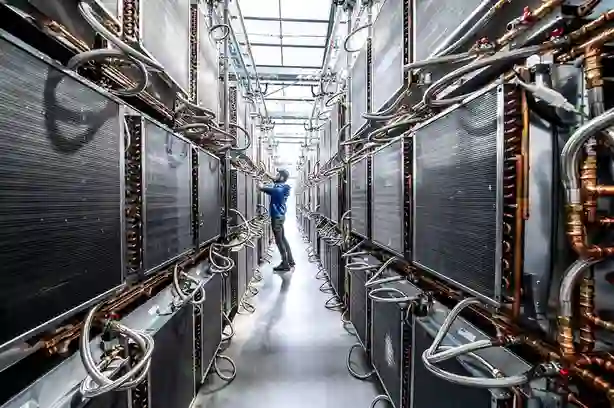
The Canadian federal government is investing $2.3 billion in AI initiatives, including $700 million to subsidize large-scale data centres, as part of a national strategy to boost digital sovereignty and reduce reliance on foreign providers. The push has sparked debate, with municipalities like Hamilton rejecting a proposed moratorium on new facilities amid concerns over energy use and environmental impact.
Why Canada Is Expanding AI Data Centres
Data centres—facilities housing IT equipment for cloud storage, banking, and AI—are central to Canada’s AI ecosystem. The federal strategy, led by AI Minister Evan Solomon, aims to attract private investment for hyperscale data centres (100+ megawatts) to strengthen domestic control over sensitive data. According to a document prepared for Solomon, Canada currently has 337 megawatts of AI data-centre capacity, with five hyperscale sites across four provinces.
Ottawa argues Canada’s climate reduces cooling costs, but critics highlight the strain on power grids. Hydro Ottawa reported unprecedented demand, with data centres accounting for 60% of recent large-scale electricity requests. Cooling systems and land use—such as a rejected 141-hectare proposal in Manitoba—have also drawn opposition.
Growth and Opposition Across Canada
Meta’s $13-billion Alberta data centre, set to consume nearly as much electricity as Edmonton, underscores the scale of new projects. BCE Inc. and Saskatchewan’s government have also announced a $1.7-billion facility, part of BCE’s plan for six AI data centres nationwide. Meanwhile, cities like Mississauga and Vancouver may soon debate moratoriums, following New York’s recent pause on high-power centres.
A federal document notes 20,000 megawatts of projects are under planning, though not all may proceed due to financing, regulatory, or community hurdles. The government’s $925.6-million budget commitment signals continued support, but local resistance and resource constraints could shape the future of Canada’s AI infrastructure.