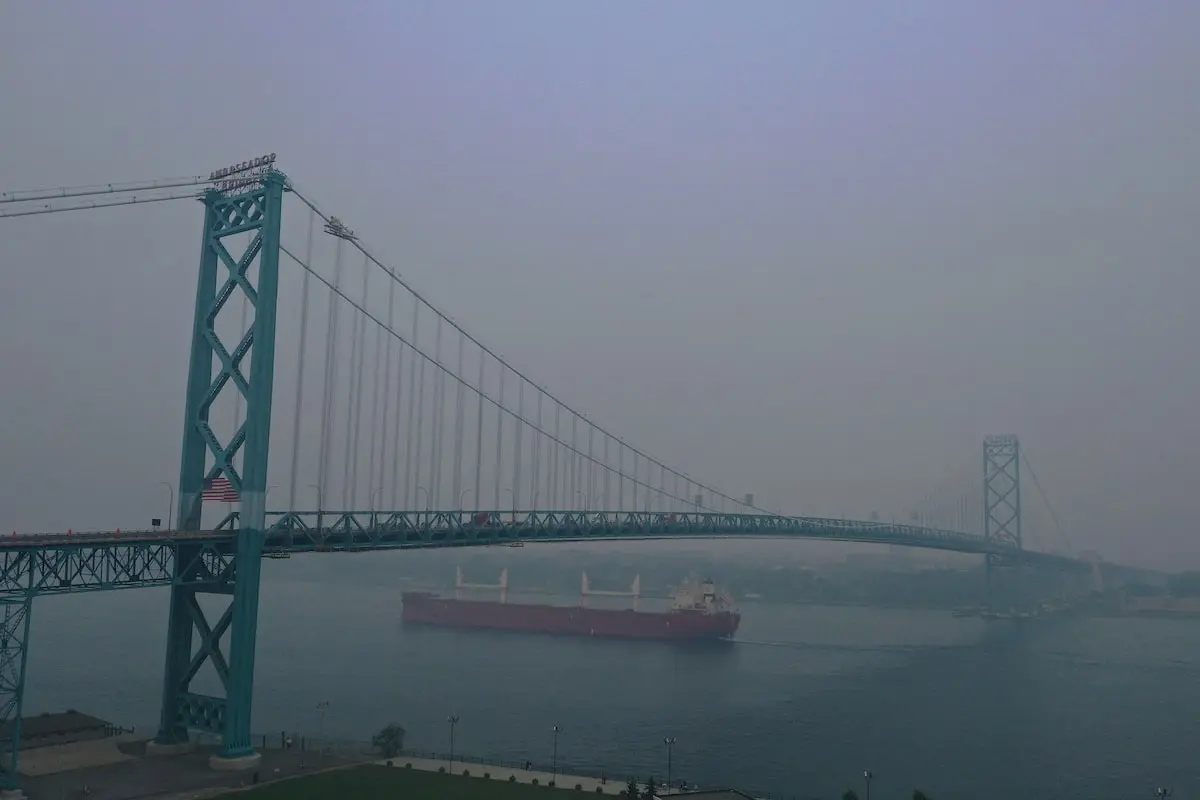
Hazardous smoke from Canadian wildfires has blanketed Southern Ontario and the northeastern United States for days, triggering air quality warnings for millions and disrupting major sporting events, though meteorologists forecast rain by Saturday could offer relief ahead of Sunday’s World Cup final in New Jersey.
Widespread health and event disruptions
The smoke has already forced schedule changes, including an early start for a Philadelphia baseball game between the Mets and Phillies and the postponement of a soccer match in Chicago between the Vancouver Whitecaps and Chicago Fire. In Toronto, hospitals reported an 80% spike in emergency visits for respiratory issues on Wednesday compared to two weeks prior, while paramedics noted a 14.4% increase in breathing-related calls between Monday and Thursday versus the same period last year.
Despite some improvement in Toronto’s air quality by Friday—where smoky conditions had earlier canceled outdoor World Cup watch parties—major U.S. cities, particularly around the Great Lakes, continued to record some of the world’s most dangerous pollution levels. Health authorities in Chicago and Detroit warned of serious, life-threatening symptoms from the smoke, which atmospheric chemist Emily Fischer described as “a river of smoke pouring into the Midwest,” directly linking the phenomenon to climate change.
World Cup final proceeds amid health concerns
The open-air World Cup final between Spain and Argentina remains scheduled for 3 p.m. ET Sunday at MetLife Stadium in East Rutherford, New Jersey, despite lingering haze and U.S. health officials’ warnings to limit outdoor exposure. Experts caution that even if smoke dissipates, players may face a “dangerous one-two punch” of poor air quality and 28°C heat, requiring heightened hydration and cooling measures, according to pulmonologist Dr. Vin Gupta of the American Lung Association.
U.S. President Donald Trump met with FIFA president Gianni Infantino on Friday to discuss air-quality concerns, later blaming Canada in a social media post for “not properly maintaining their Forests” and vowing to add wildfire costs to tariffs against Canada. Republican lawmakers echoed these criticisms, accusing Canada of “chronic under-investment” in forest management. Canadian Prime Minister Mark Carney responded by framing climate change as a shared responsibility, stating, “Climate change is everyone’s responsibility, truly everyone’s, including the United States.”