Global temperatures are more likely than not to rise by 4°C by 2100, triggering extreme fire weather and reshaping ecosystems, according to a new study in the Australian Journal of Botany.
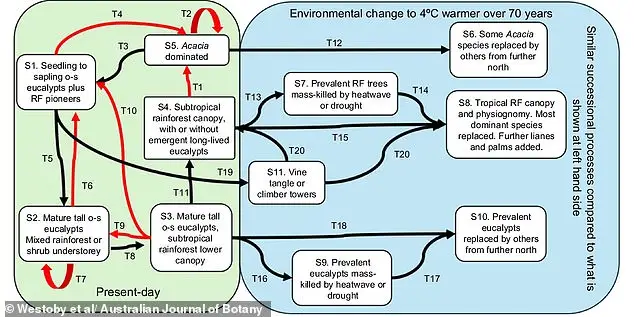
The research, led by Macquarie University in Sydney, outlines a future where frequent, intense bushfires—fueled by heat—transform vegetation and threaten species survival. Rainforests, which depend on long intervals between hot fires, may struggle as extreme fire weather becomes more common, said study author Professor Mark Westoby.
Lab-Grown Food and Gene Editing Reshape Agriculture
Traditional livestock farming could decline as lab-grown meat and dairy replace cattle and sheep. Cultivated chicken is already approved for sale in Singapore, the U.S., and Israel, while precision fermentation produces milk proteins without cows. Scientists are also developing lab-grown chocolate and coffee as climate-resistant alternatives.
Gene-editing technologies may suppress invasive species like disease-carrying mosquitoes, mice, or cane toads. These methods are already being tested to control pests and protect native wildlife.
Global Warming and Fire Risks
Recent catastrophic fires—Australia’s Black Summer, Canada’s 2023 wildfires, and California’s blazes—are linked to hotter, drier conditions. The study warns these events will worsen with a 4°C temperature rise.
A separate report by Climate Analytics states fossil fuel use must halve by 2035 to limit warming to 1.5°C, the Paris Agreement’s critical threshold. Full phase-out is needed by 2070 to avoid the most severe impacts.



