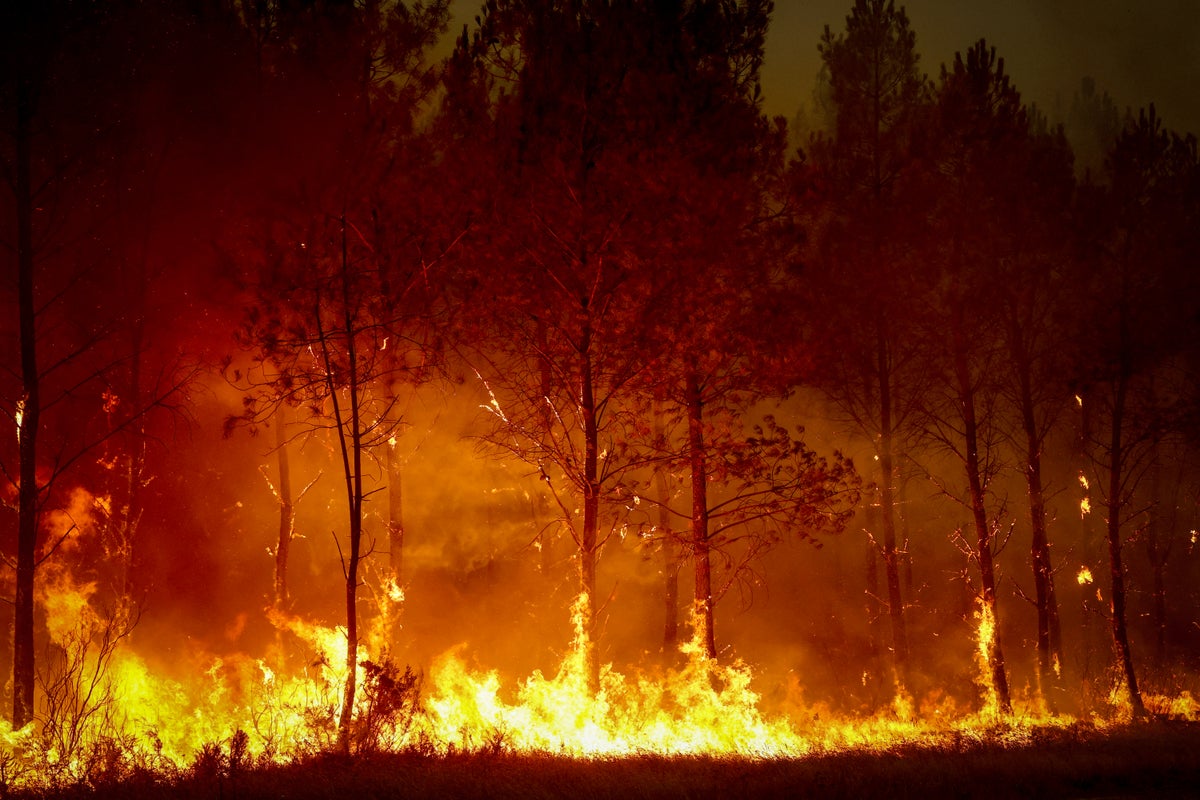
Devastating European wildfires have forced over 300,000 people to evacuate homes in France and Spain. The scale of the fires marks a significant event this century for France and the worst experienced in the Madrid region, following a summer of record-breaking heatwaves.
European Wildfires Spread Amidst Heatwaves
Record-breaking heatwaves across Europe have created conditions ripe for extensive wildfires. Temperatures have frequently exceeded 40 degrees Celsius (104 degrees Fahrenheit) in many areas, contributing to the rapid spread of flames.
In France, the Gironde region near Bordeaux has been particularly hard-hit. Over 200,000 residents have been displaced as fires consume forests and fields. The blaze has covered more than 162 square miles (420 square kilometers) in under four days, an area equivalent to four times the size of Paris.
The fires are now dangerously close to the city of Bordeaux itself, situated only nine miles (15 kilometers) to its south. The proximity poses a threat to urban areas and sensitive industrial and military installations.
Unprecedented Fire Behavior and Response Tactics
The intensity of these European wildfires has led to the formation of pyrocumulonimbus clouds, a rare phenomenon where the heat from the fire creates its own thunderstorm. These storms can generate lightning, which in turn can spark new fires, complicating containment efforts.
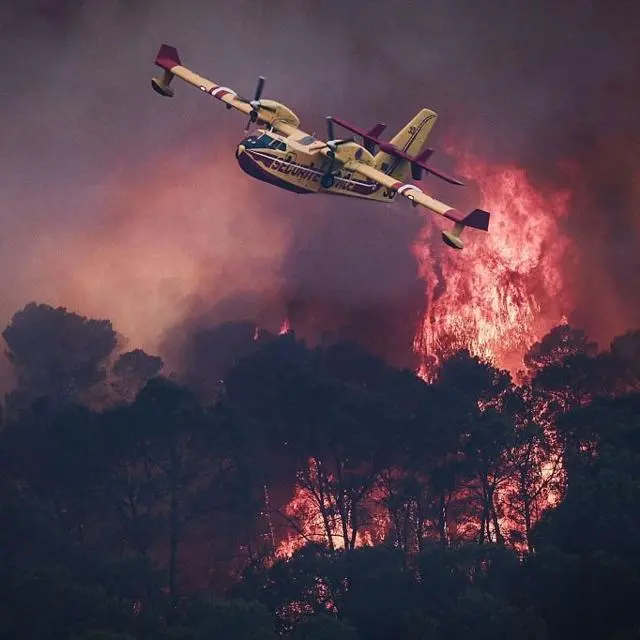
Firefighting efforts are employing advanced strategies to combat the extreme conditions. This includes aerial deployment of fire retardant and water-bombing aircraft like the Canadair, capable of dropping 6,000 liters of water in 12 seconds.
In Gironde, a substantial force of approximately 2,500 firefighters, supported by 1,500 military personnel and 1,200 police officers, is engaged in suppression. Ground crews are utilizing heavy machinery to construct wide firebreaks, some reaching 100 meters (328 feet) in width, to halt the fire's progression by removing vegetation.
Spanish Fires Reach Historic Levels
Spain is also experiencing severe wildfire activity. Officials in Madrid have described the current fires as "undoubtedly the largest fire in the history of the Madrid region." Similar containment tactics, including firebreaks, are being utilized by Spanish teams.
The current wildfire crisis is exacerbated by hotter, drier conditions linked to climate change. These environmental factors enable fires to spread more rapidly and burn with greater intensity.
Concerns remain high for the coming week, with forecasts predicting continued dry and increasingly hot temperatures. This outlook suggests that the difficult conditions for combating these European wildfires may persist.