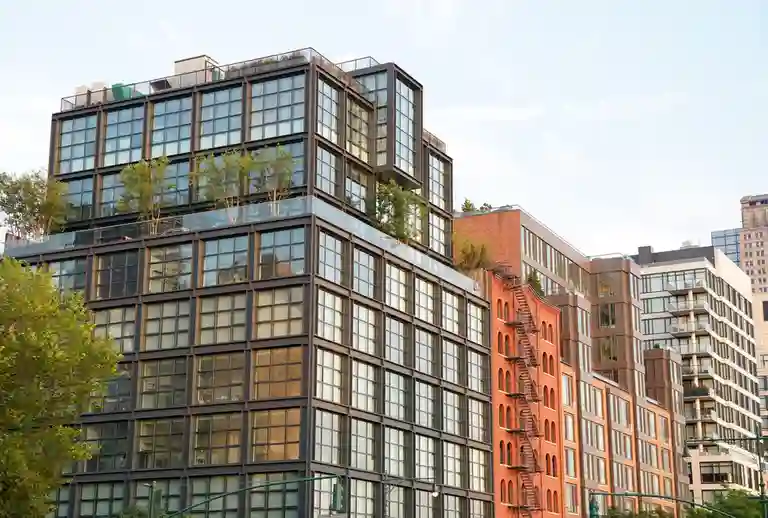
Wealthy households in New York City are receiving significant financial benefits from the city's rent stabilization program, according to a recent analysis of the 2023 Housing and Vacancy Survey. The data indicates that a notable portion of these affordable units are occupied by high-income earners, who save considerably more on rent than those with lower incomes.
Disparity in Rent Savings
An analysis conducted by the Citizens Budget Commission revealed that approximately 10% of all rent-stabilized units are occupied by households earning over $200,000 annually, with more than 86,700 such households identified. These high earners in the top 25% income bracket save an average of $1,000 per month, representing a 33% discount compared to market rates. Top earners in the highest 10% bracket experience even greater savings, pocketing approximately $1,300 monthly, or a 36% reduction.
In contrast, renters in the bottom three income brackets save closer to $300 per month, a discount ranging from 15% to 22%. This disparity is partly attributed to geographical clustering, where wealthier tenants often reside in more expensive neighbourhoods where the difference between market and stabilized rents is naturally more pronounced, even though the stabilized rent itself may still be substantial.
"You do have people paying $5,000, $6,000 or $8,000 for rent-stabilized apartments," stated Allia Mohamed, CEO of the rental data firm Openigloo, in comments to the Wall Street Journal.
Systemic Factors and Geographic Variations
The architecture of the rent stabilization system itself contributes to this uneven distribution of benefits, as it was not initially designed to assess a tenant's income for eligibility. Brad Greenburg, executive director of NYU’s Furman Center, commented on the administrative difficulties, noting, "Administratively, it feels impossible" to conduct income certifications for millions of units.
Geographic location further exacerbates these differences. In Manhattan, rent-stabilized apartments are priced at roughly half of what market rate would demand. This discount shrinks considerably in other boroughs, with The Bronx offering a 12% saving, Queens 13%, and Brooklyn around 24%.
Calls for Reform and Tenant Perspectives
Some within the real estate sector view this situation as evidence of a malfunctioning system. Massimo D’Angelo, a real estate attorney representing private landlords, asserted, "This shows you the system is malfunctioning," and argued for reforms to ensure apartments are allocated to those with genuine need.
Tenant advocates, however, offer a different perspective. Darius Khalil Gordon, executive director of the Metropolitan Council on Housing, suggested that a small number of affluent tenants within the vast housing stock should not warrant panic or a reduction in the program's scope. He clarified that rent stabilization is not intended as a welfare program but rather to ensure affordability in the city for its residents.
Program Background and Future Outlook
Rent stabilization, distinct from rent control, is overseen by the city's Rent Guidelines Board, which determines annual rent increases. The majority of rent-stabilized tenants are not wealthy, and these apartments are predominantly located in The Bronx and Washington Heights, with additional concentrations in Brooklyn and Queens. The expansion of the rent-stabilized stock was a campaign promise, aiming to add 200,000 new units over the next decade.
Historically, mechanisms existed to remove units from stabilization, such as landlords converting units to market rate if a tenant's income exceeded $200,000 for two consecutive years. However, state legislation in 2019 significantly curtailed these provisions, a change the real estate industry has actively sought to reverse. "There are no current annual income certification reviews," D’Angelo stated, adding that "That needs to be changed."