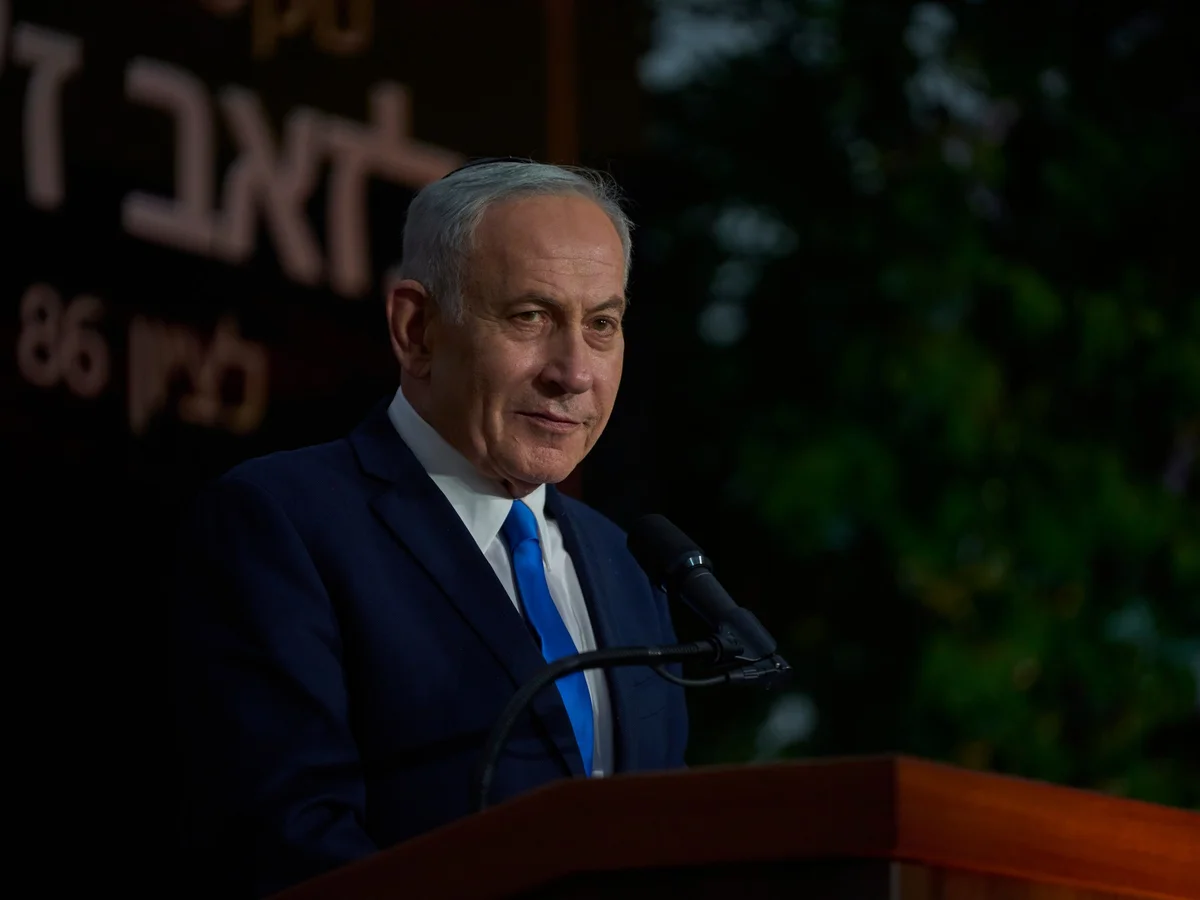
Benjamin Netanyahu’s once-formidable influence in Washington is under strain, as cracks emerge in his relationship with US President Donald Trump and broader American support for Israel frays. The Israeli prime minister arrives in the US capital this week for his first meeting with Trump since the stalled Iran war began, seeking to revive his image as Israel’s indispensable bridge to Washington—a claim central to his re-election campaign in late October.
Netanyahu’s Trump Card Shows Signs of Fading
For decades, Netanyahu has leveraged his deep ties to the US—cultivated during his American upbringing and reinforced by a camera-ready accent—to secure unwavering political and military backing. His rapport with Trump, in particular, reached new heights in 2025 when the US president became the first to join Israel in a joint war against Iran. Yet that conflict’s stagnation, coupled with Trump’s recent willingness to negotiate Middle East deals without Israeli input, has eroded Netanyahu’s standing.
Criticism within the US has intensified over Israel’s handling of the Iran war, which Netanyahu is widely seen as having pushed Trump to launch. Reports suggest the prime minister convinced the president of the mission’s feasibility, including the prospect of overthrowing Iran’s government—a claim now viewed as a strategic miscalculation. Meanwhile, friction over US plans to sell F-35 jets to Turkey and pursue a nuclear cooperation deal with Saudi Arabia has further strained relations.
Domestic Pressures and a Cynical Washington Visit
Netanyahu’s trip to Washington coincides with mounting challenges at home, including an ongoing corruption trial and unresolved regional conflicts. Analysts describe the visit as largely symbolic, aimed at reassuring Israeli voters of his US connections rather than advancing substantive policy. Alon Pinkas, a former Israeli ambassador, told Al Jazeera the agenda—ostensibly covering Iran, F-35 sales, and Saudi Arabia’s nuclear ambitions—is secondary to two goals: projecting strength to allies and critics in Israel, and securing Trump’s intervention in his legal troubles.
Trump previously called for Netanyahu’s pardon in November 2025, an unusual move that underscored their personal bond. However, the US president’s public remarks ahead of this week’s meeting signalled growing distance. Asked about Netanyahu’s opposition to the F-35 sale to Turkey, Trump told reporters aboard Air Force One, “Nobody tells me what we should be selling.”
US Support for Netanyahu at a Low Ebb
Netanyahu’s standing in Washington has deteriorated across the political spectrum. Figures on the American right, including Tucker Carlson and former Republican Representative Marjorie Taylor Greene, have openly criticised him, while Vice President JD Vance suggested in a podcast interview that Israeli officials sought to sabotage his Iran peace negotiations. Even traditional allies within the Republican Party’s centre-right have voiced concerns.
Israeli security analyst Ahron Bregman, a senior teaching fellow at King’s College London, described Netanyahu as “toxic” in the US, where he is blamed for dragging Trump into a “war of choice that has turned into a strategic catastrophe.” Mitchell Barak, a former Netanyahu aide turned pollster, warned that the prime minister’s ability to present himself as Israel’s indispensable US liaison—a cornerstone of his re-election pitch—may be irreparably damaged. “It could easily be that Trump declares Netanyahu was a great wartime leader, but that it was time for Israel to move on,” Barak said.
While no public rift is expected during this week’s meeting, the visit underscores Netanyahu’s diminishing leverage. Observers will watch for any signals from Trump about his willingness to endorse Netanyahu’s leadership—or pivot toward alternative Israeli figures ahead of the October election.



