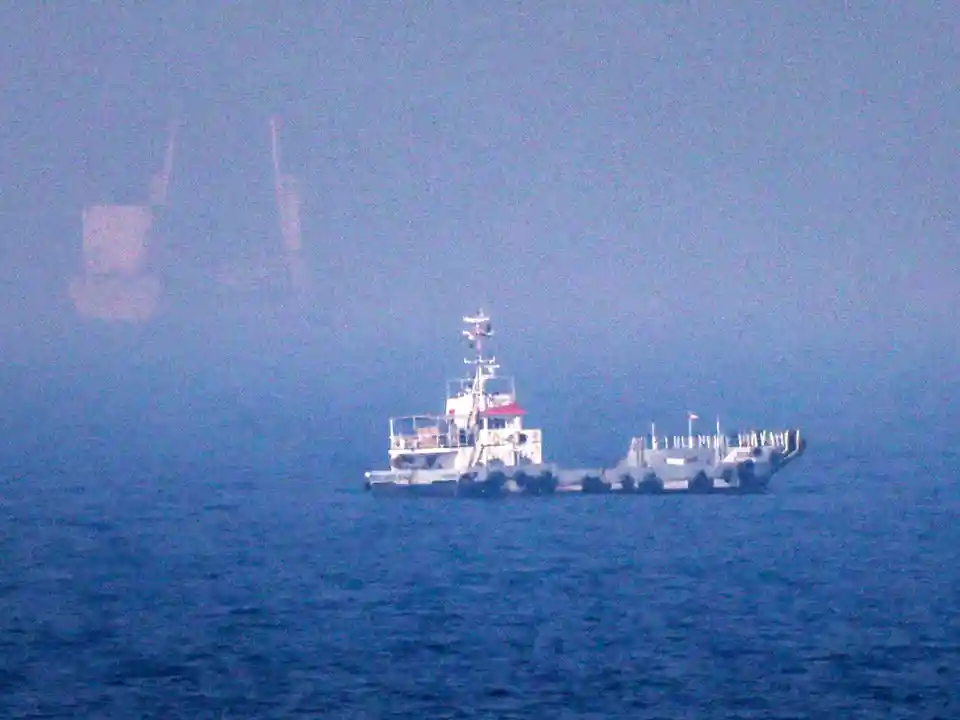
Maritime insurance premiums have quadrupled for ships crossing the Strait of Hormuz and the Bab al-Mandeb, as Iran and Yemen’s Houthi rebels enforce blockades on two of the world’s most critical trade routes. The surges follow escalating attacks on vessels, with insurers now charging up to 10% of a ship’s hull value for war-risk coverage—up from just 1-3% before the conflicts.
Why Key Shipping Lanes Are Under Siege
The Strait of Hormuz, a 39km-wide chokepoint handling 20% of global oil supplies, has become a flashpoint in the US-Iran standoff. Tehran’s Islamic Revolutionary Guard Corps (IRGC) warned this week that the waterway is “completely closed” to vessels linked to “America’s evil deeds,” after an explosion set a tanker ablaze off Oman’s coast. The IRGC claimed the ship ignored warnings to avoid a mine-laden southern route.
Meanwhile, the Bab al-Mandeb—connecting the Red Sea to the Indian Ocean—faces a Houthi-declared blockade of Saudi ports. The Iran-backed group struck two Saudi oil tankers, the Encelia and Layla, on Thursday, using missiles and drones. Traffic through the strait plummeted 30% in a single day, according to S&P Global data.
Insurance Costs Skyrocket as Risks Mount
War-risk premiums for Hormuz crossings now range from 7.5% to 10% of a ship’s hull value, up from 1-3% pre-conflict. For a 270,000-metric-tonne tanker, that translates to $21 million in insurance costs alone at current rates of $77.96 per metric tonne—four times the five-year average.
In the Bab al-Mandeb, premiums have risen to 0.5% of hull value, compared to 0.1% for Red Sea routes outside Houthi range. Marcus Baker of Marsh, a risk management firm, told S&P Global that insurers are “charging more for risk” in the region, though not yet at Hormuz levels.
- Hormuz traffic: 10 vessels on Tuesday (down from 16 on Monday)
- Bab al-Mandeb traffic: 29 vessels on Tuesday (down from 41 on Monday)
- Peak insurance rate: $140/metric tonne in March (vs. $77.96 now)
Ceasefire Fails to Ease Tensions
A June 17 US-Iran ceasefire memorandum briefly reduced hostilities, but large-scale attacks resumed in mid-July. The Houthis framed their blockade as a “siege-for-siege” response to Saudi Arabia’s 12-year restrictions on Yemen, a claim Riyadh denies. With no resolution in sight, analysts warn of further disruptions to global oil and commodity flows.
What to watch: Whether insurers extend higher premiums to adjacent routes, or if diplomatic efforts can reopen the straits before supply chains fracture further.