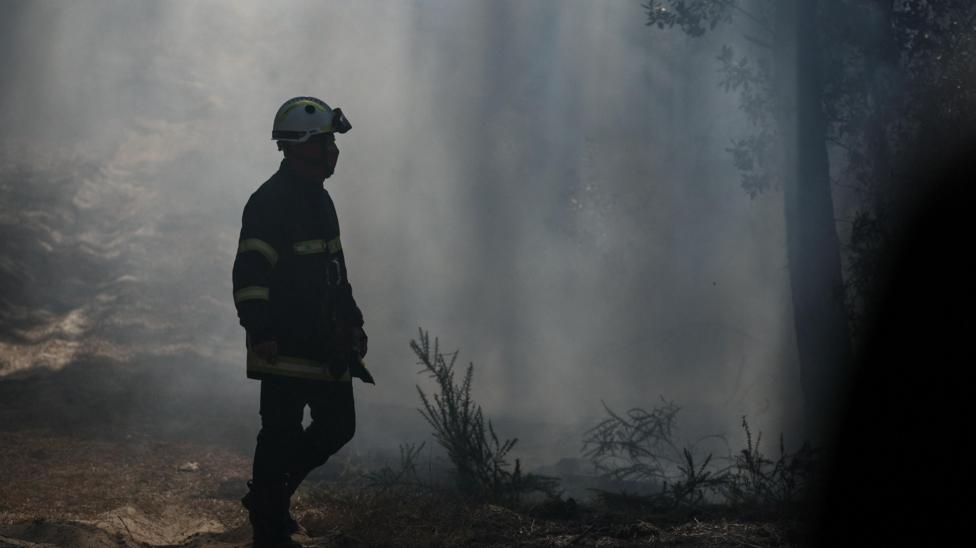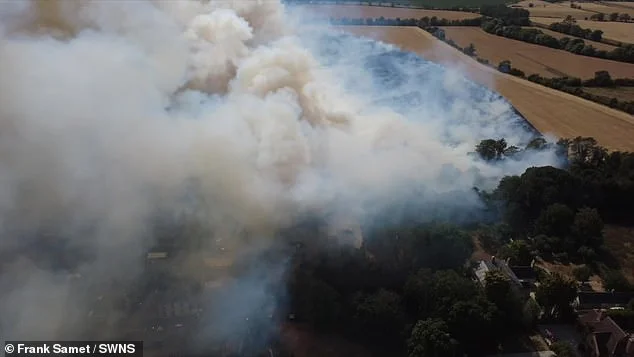
Firefighters across Britain are battling a surge in wildfires as the country faces its fourth 35C heatwave of the year, with drought-like conditions turning farmland and forests into a tinderbox. Cambridgeshire Fire and Rescue Service alone responded to 20 field blazes over the weekend, including a three-field inferno near the village of Peakirk that threatened homes and allotments.
Firefighters contain Peakirk blaze amid escalating wildfire risk
Footage from the Peakirk fire, which erupted at 3:30pm on Saturday, shows flames leaping through arable fields as thick plumes of smoke billowed toward nearby villages. Some 35 firefighters—led by Peterborough Volunteer Fire Brigade—worked to prevent the blaze from spreading to residential areas. Chief Officer Anthony Gould described the operation as "hard work for everyone involved," while Cambridgeshire Fire and Rescue Service warned of the growing threat posed by parched vegetation.
Group Commander James Ball highlighted the particular danger of farmland fires during extreme heat, noting that crews were also deployed to a separate blaze in Whittlesey on Sunday. The National Fire Chiefs Council (NFCC) has urged the public to exercise caution, warning that disposable barbecues, cigarettes, and other ignition sources could spark further outbreaks. "Fire and rescue services have already faced significant pressure this summer," an NFCC spokesperson said, adding that teams remain on high alert for the duration of the heatwave.
Heatwave peaks with 35C temperatures and amber health alerts
The Met Office has issued amber health alerts for the South East, East, and East Midlands, effective from 9am Wednesday for 24 hours, as temperatures are forecast to climb into the mid-30s. Yellow alerts cover the South West, West Midlands, and Yorkshire and the Humber, while northern regions—including Scotland and Northern Ireland—are expected to escape the worst of the heat.
Met Office Deputy Chief Forecaster Gregory Wolverson said the heat would be "short-lived but intense," with temperatures rising rapidly in the southeast before cooling slightly from Friday. If conditions meet official heatwave criteria, this will mark the fourth such event in the UK this year. July’s mean temperature of 17.5C is already the second-highest on record, trailing only July 2006 (17.8C). Meteorologists warn that heatwave thresholds may need to be adjusted upward to reflect the UK’s warming climate, with some counties already seeing their limits raised by a degree in recent years.
- Eight water companies have imposed hosepipe bans after demand surged by up to 30% during July’s hottest days.
- Six areas, including five in north Wales, are now in drought, with eight more at risk.
- A wildfire in Scotland’s Cairngorms has burned for two weeks, requiring 75 firefighters and nine fire engines.
Europe’s wildfire crisis underscores UK’s vulnerability
The UK’s wildfire surge comes as blazes ravage mainland Europe, with 220,000 people evacuated in southwest France and 116,000 in Spain. In Bordeaux, a fire so vast it has generated its own thunderstorms has destroyed over 240 properties, many of them holiday homes. French President Emmanuel Macron described the coming weeks as "tough," with soaring temperatures complicating firefighting efforts.
While Britain’s fires have not yet reached the scale of those in Europe, the NFCC has warned that the risk remains elevated. "With the potential for further hot weather ahead, services remain prepared," the council said. The public is advised to avoid activities that could spark fires, including discarding cigarettes or using disposable barbecues near dry grass. As the heatwave peaks, authorities will continue monitoring conditions, with further updates expected from the Met Office and fire services in the coming days.