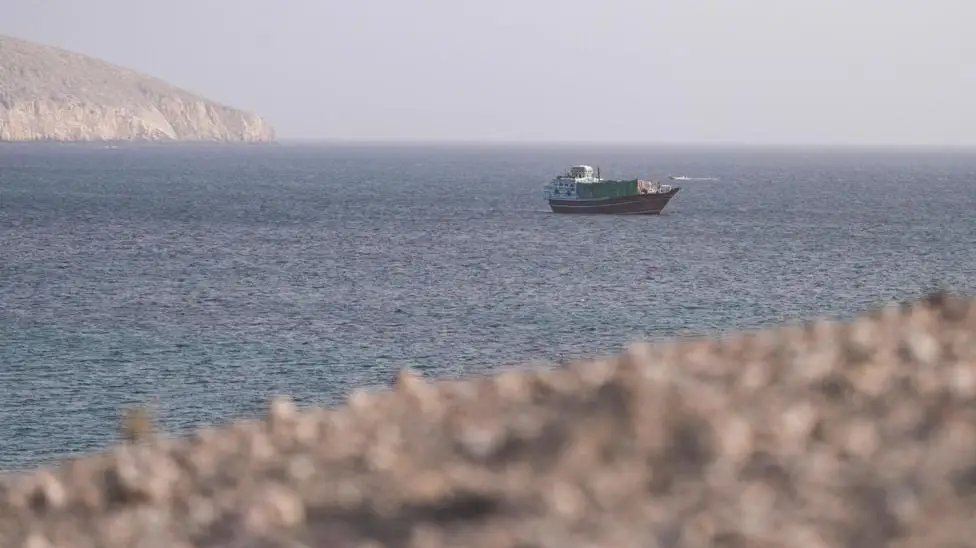
The United States has carried out a sixth consecutive night of strikes against Iran, targeting military capabilities as tensions escalate over control of the Strait of Hormuz. US Central Command confirmed the attacks on Thursday, while Iranian state media reported missile strikes near Qeshm Island, Bandar Abbas, and Bushehr—home to a nuclear power plant.
For context, the Strait of Hormuz remains a critical flashpoint, with Iran effectively blocking the waterway in response to prior US-Israeli strikes.
Escalating military exchanges
Both sides exchanged strikes overnight, further straining a preliminary deal aimed at de-escalation. Iran claimed it had targeted US military bases in Jordan, Kuwait, and Bahrain, while the US said it conducted a six-hour wave of strikes across multiple locations in the strait.
White House press secretary Karoline Leavitt stated that President Donald Trump remains open to diplomacy but will hold Iran accountable for attacks on ships in the strait. "The president will hold them accountable when they turn their back on the words that they state to the United States. But he is always open to diplomacy at the very same time," she told reporters.
Diplomatic tensions persist
Iran’s top negotiator, Mohammad Bagher Ghalibaf, insisted Tehran had "no reason" to abide by any agreement that did not benefit the country, citing national security concerns tied to its control of the strait. Meanwhile, Trump praised Iran for the reported release of US detainee Dena Karari, though Iran’s judiciary later denied any prisoner exchange had occurred.
Observers should watch for further military action or diplomatic developments as both sides maintain their positions.



