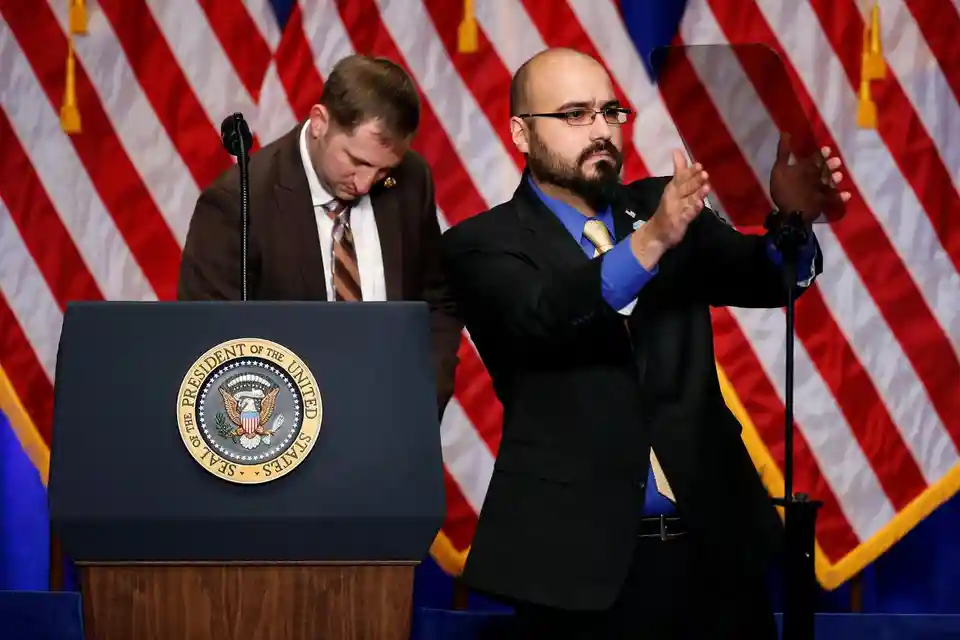
A White House aide, Gabriel Perez, has departed his government position following federal investigators' determination that he profited significantly from placing bets on political speeches via the prediction market Kalshi. Perez reportedly made tens of thousands of dollars by wagering on whether then-President Trump would utter specific words or phrases.
Prediction Market Bets Trigger Government Probe
Perez, who served as a deputy assistant to the president and technical advisor, earned $175,000 annually. He was placed on unpaid administrative leave earlier this month after reports surfaced that Kalshi had referred an internal probe to the Commodity Futures Trading Commission (CFTC). The investigation centered on allegations of insider trading, with Perez accused of leveraging his access to President Trump's remarks for financial gain.
A White House official confirmed that Perez "no longer works in the federal government" but declined to specify whether his departure was voluntary or the result of termination. White House Press Secretary Karoline Leavitt characterized the allegations as "deeply unfortunate and frankly a disgrace," stating that President Trump personally made the decision to place Perez on leave.
Ethical Concerns Emerge Over Prediction Market Use
Perez had a decade-long association with Trump, working alongside him since his 2016 presidential campaign. He was among a select group of aides privy to Trump's remarks before delivery. Reports indicate Perez placed bets on events including Trump's February State of the Union address and speeches at the World Economic Forum and a Medal of Honor ceremony.
Kalshi's enforcement head, Bobby DeNault, stated the company "promptly flagged and referred these trades" to federal investigators and is "cooperating and assisting regulators." Leavitt added that the process played out as it should, with Kalshi's notification leading to an investigation and Perez's subsequent departure from the White House.
While federal prosecutors in Manhattan reportedly declined to pursue criminal charges, regulators have allegedly reached a settlement with Perez. This agreement would reportedly require him to return his profits and refrain from similar betting activities. The situation highlights growing concerns among critics regarding government employees potentially using nonpublic information for personal gain, impacting markets and geopolitics.
Broader Implications for Government Ethics
The incident underscores a broader debate surrounding the use of prediction markets by government officials. Lawmakers are considering measures to restrict such activities, and the White House previously warned staff against similar transactions after suspicious trading related to the U.S. war with Iran. Existing federal ethics rules prohibit gambling on government property, but a March memo reinforced warnings against using nonpublic information for private gain.
This follows a pattern of similar incidents, including a U.S. Army soldier accused of using classified information for over $400,000 in gains on Polymarket. Separately, three congressional candidates faced fines and suspensions from Kalshi in April for wagering on their own election outcomes.
Despite these controversies, Trump has expressed views that government intervention preventing prediction market operations could leave the U.S. behind globally, noting the widespread nature of such betting platforms. However, he also stated he does not "like it conceptually."