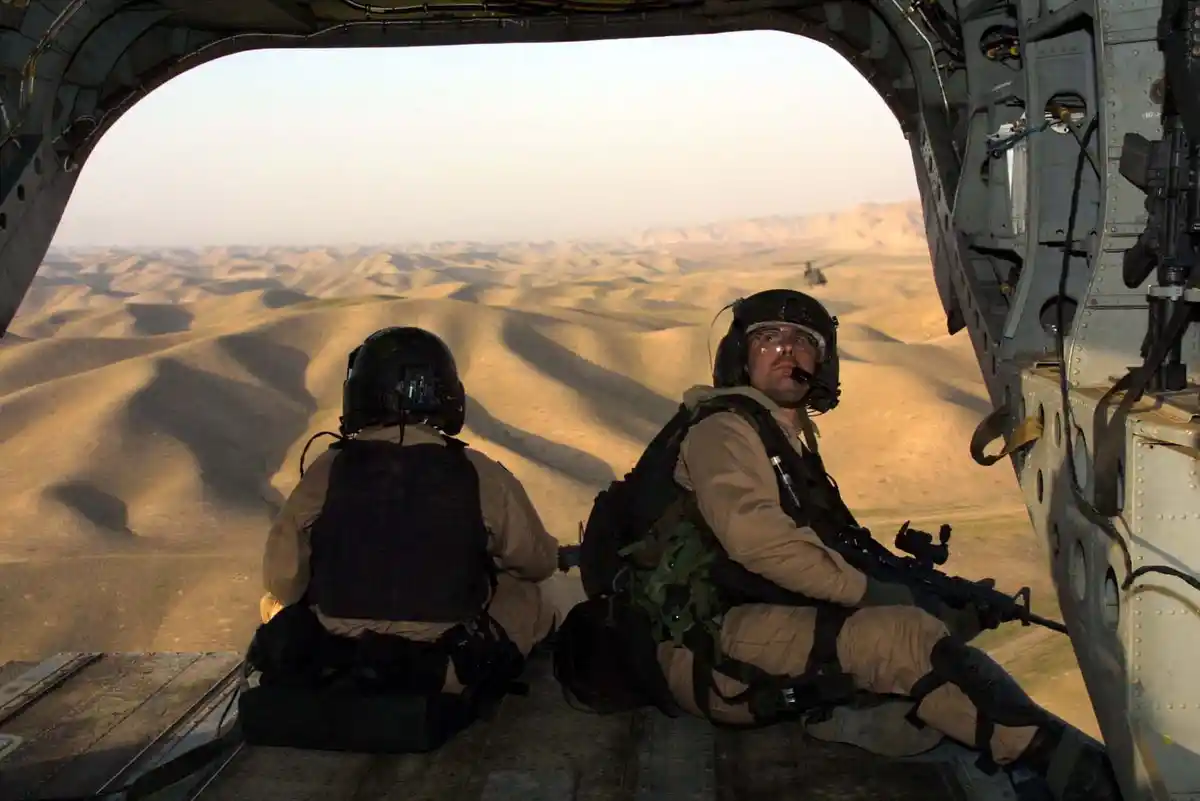
The U.S. has waged major wars for over 20 of the past 25 years, yet its overwhelming military power has repeatedly failed to secure lasting political victories in Afghanistan, Iraq, and Iran.
In each case, rapid initial successes—such as the 2001 ousting of the Taliban in Afghanistan, the 2003 removal of Saddam Hussein in Iraq, and recent strikes on Iranian leadership—did not lead to the fundamental change Washington sought. Today, the Taliban govern Afghanistan, Iraq remains unstable, and Iran’s regime endures despite sustained U.S. military pressure.
Why U.S. military strength falls short
Analysts argue the U.S. excels at the opening phases of war but struggles with the aftermath. Peter Bergen, author of All The Presidents' Wars, notes the U.S. often neglects post-conflict planning. “We tend to not plan for the day after—the peace that follows the war,” he said.
Paul Salem of the Center for Strategic and International Studies adds that the U.S. approaches conflicts with “an imperial appetite, but a tourist’s mindset,” expecting quick, low-cost resolutions. This disconnect between military power and political strategy has defined U.S. engagements in the region.
Lessons from past conflicts
Douglas Lute, a retired Army lieutenant general and former U.S. ambassador to NATO, highlights the 1991 Gulf War as a rare exception. With limited objectives—liberating Kuwait rather than regime change—the U.S. achieved a swift, decisive victory. “That was the last time we had realistic objectives,” he said.
In contrast, later conflicts like Iraq and Afghanistan saw the U.S. overestimate its ability to reshape complex societies. “We’ve had repeated disconnects between ends, ways, and means,” Lute added.
The shifting nature of modern warfare
Local defenders have increasingly countered U.S. military advantages with asymmetric tactics. In Afghanistan and Iraq, insurgents used roadside bombs and suicide attacks. In Iran, low-cost drones and naval blockades have disrupted U.S. operations despite America’s technological superiority.
Harvard professor Stephen Walt warns that the U.S. has overlooked this shift. “Warfare has been slowly favoring local defenders, even against seemingly superior foes,” he wrote in Foreign Policy.
The current Iran conflict remains unresolved, with analysts like Salem predicting future confrontations. The U.S. retains the ability to strike Iran, but Iran can still impose economic costs, ensuring the conflict’s outcome—and its broader implications—remain uncertain.