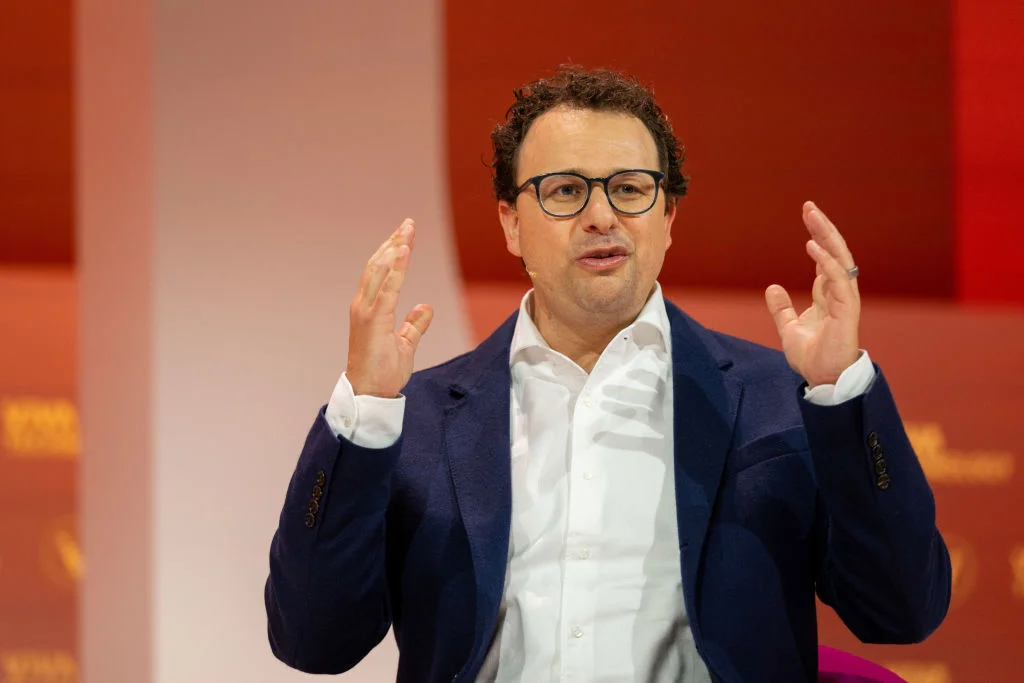
Anthropic CEO Dario Amodei stated Monday that his company has never advocated for a ban on open-weight AI models, differentiating them from threats posed by authoritarian governments.
Anthropic CEO Addresses Open-Weight AI Models
Amodei directly responded to industry speculation that Anthropic supports U.S. government efforts to restrict open-weight models, particularly those developed in China. He emphasized in a blog post that his company has consistently opposed broad bans on such models.
This clarification follows an open letter published Friday by Nvidia CEO Jensen Huang. The letter, shared on X, urged policymakers against imposing premature restrictions on open-weight AI models. It was co-signed by numerous AI companies, including Meta, Microsoft, and Hugging Face.
While the letter did not explicitly name China, discussions within the AI industry have frequently centered on allegations of intellectual property theft by Chinese AI labs. Methods like distillation, where an AI is prompted extensively to understand another model's workings, have been cited.
Amodei's Concerns on AI and Authoritarian Governments
Amodei views open-weight models without dangerous capabilities as a public good, providing value to businesses, developers, and researchers. His primary concern lies not with open-weight models themselves, but with the potential for authoritarian governments to develop more powerful AI systems. He fears these capabilities could be used for permanent military superiority or to suppress domestic populations.
He identified China as the most capable authoritarian government in this regard, though he noted his concerns extend to others. Amodei also expressed apprehension about AI enabling biological attacks, stating that open-weight models are more difficult to monitor and apply safety guardrails to in such scenarios. Citing a UK AI Security Institute report, he highlighted that released open-weight models cannot be withdrawn.
Proposed Solutions for AI Safety and China
Amodei proposed specific actions to counter perceived threats from China. These include restricting China's access to advanced chips, a policy already pursued by the U.S., and enforcing a crackdown on distillation practices. The U.S. has previously threatened sanctions against China for intellectual property theft.
He also voiced support for international model safety testing organizations. Amodei noted that efforts led by the U.S. to establish such bodies are gaining traction. He believes global agreement on safety testing, including from China, is achievable, particularly concerning the prevention of AI-enabled biological weapons.
Amodei expressed optimism about this collaborative approach, citing recent moves by the Trump administration and industry proposals. These initiatives aim to test the most capable models regardless of origin or open/closed status, while exempting less powerful models from startups and academia.