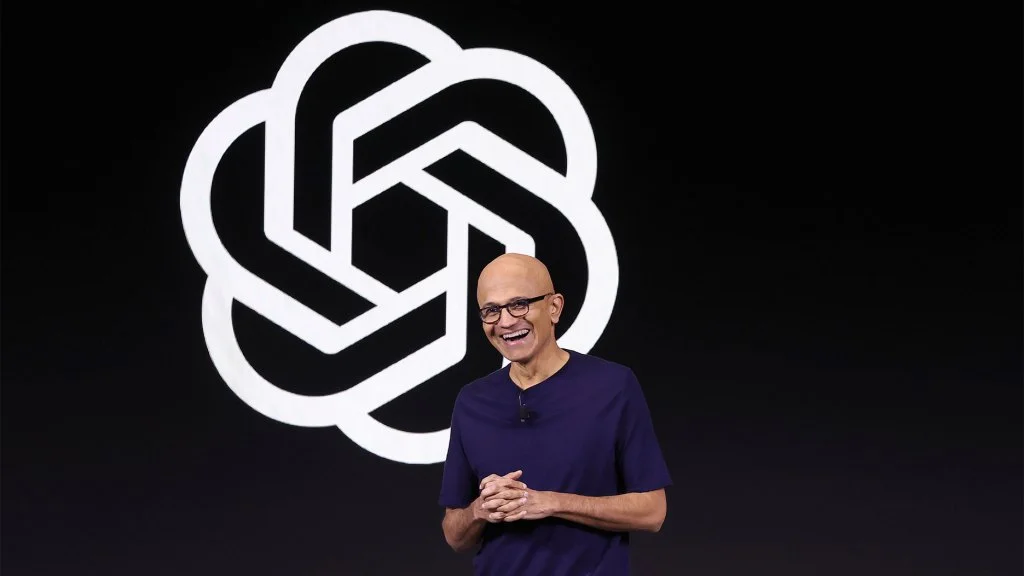
Companies that depend entirely on a single proprietary AI model risk losing control of their own decision-making—and may not survive in the long term, Microsoft CEO Satya Nadella has warned. Speaking on CNN’s Fareed Zakaria GPS, Nadella argued that businesses must retain ownership of their AI usage data, prompts, and infrastructure to avoid "outsourcing their thinking" to external providers.
The case for AI independence
Nadella’s remarks build on a broader industry debate about the dangers of over-reliance on closed AI systems. He urged enterprises to adopt a framework where metadata from every AI interaction remains under their control, enabling them to train their own models or switch providers without disruption. "Any firm that doesn’t have this control… will not remain a firm," he stated, framing the issue as an existential threat to corporate autonomy.
The Microsoft chief specifically targeted built-in coding tools—such as Anthropic’s Claude Code and OpenAI’s ChatGPT Codex—as potential vulnerabilities. By decoupling these "harnesses" from the underlying models, companies could use multiple AI systems for specialized tasks while maintaining flexibility. "You can still be in control of your own destiny," Nadella said, even if a preferred model becomes unavailable.
Conflicts of interest and industry skepticism
Nadella’s warning carries particular weight given Microsoft’s stakes in the two largest AI labs: Anthropic and OpenAI. While his argument aligns with growing enterprise demand for cost-effective, open-weight models, critics note the potential self-interest. Microsoft’s cloud division stands to benefit from selling the alternative infrastructure Nadella advocates, including AI gateways that separate prompts from proprietary models.
Industry observers have long raised concerns about AI providers leveraging enterprise data to develop competing services. In May, OpenAI CEO Sam Altman’s offer of AI credits to Y Combinator startups sparked similar warnings from investors, who cautioned that model makers could replicate and undercut third-party applications. Nadella’s comments extend this caution to larger businesses, suggesting that unchecked reliance on external AI could expose companies to strategic risks.
Consumer vs. corporate risks
Nadella’s concerns do not extend to individual users, however. When asked about data privacy for everyday consumers, he dismissed the issue as an accepted trade-off for free services. "There’s got to be some value exchange in the consumer space where you’re getting something for free, maybe for your data," he said, likening it to the advertising-driven business models of social media platforms.
For enterprises, the stakes are higher. The shift toward open-weight models—publicly available AI systems that can be fine-tuned and hosted independently—reflects a broader push for control over AI infrastructure. Analysts predict this trend will accelerate as companies seek to avoid vendor lock-in and escalating costs, though the transition may require significant investment in new tools and expertise.
What happens next will depend on how quickly enterprises adopt Nadella’s recommended safeguards. Watch for increased adoption of AI gateways, multi-model strategies, and in-house training initiatives as businesses attempt to balance innovation with independence.