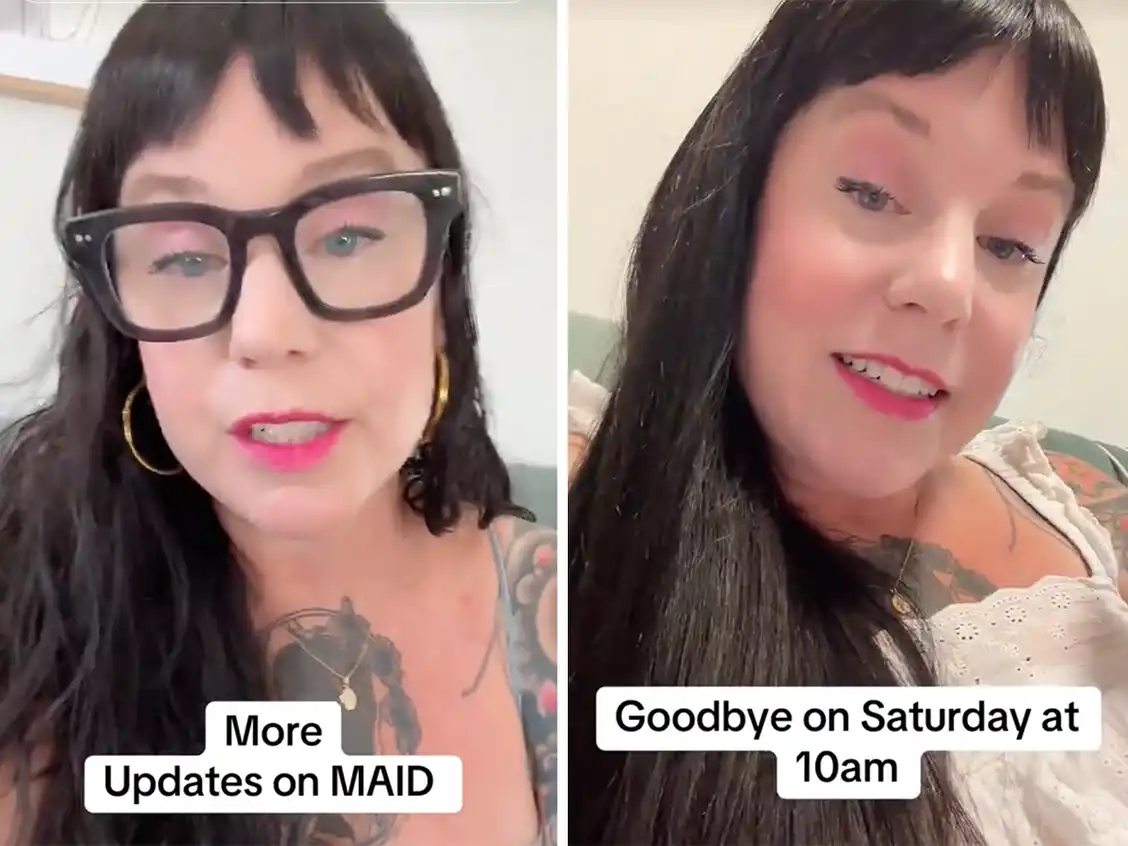
A 49-year-old Victoria woman with young-onset Alzheimer’s disease died by medical assistance in dying (MAID) on July 25, after documenting her rapid cognitive decline and advocacy for end-of-life choice. Rebecca Luna, a mother of two, was diagnosed at 48 and shared her experience with over 97,000 followers on TikTok.
Diagnosis and rapid decline
Luna first noticed symptoms of cognitive decline at 46, initially attributing them to stress, perimenopause, and ADHD. A neurologist later confirmed her Alzheimer’s diagnosis. In a May 2025 interview with Yahoo Life, she described the disease’s progression as unlike the typical image of elderly dementia patients.
“Young-onset Alzheimer’s has nothing to do with what you expect from somebody with Alzheimer’s that’s 80 years old,” Luna said in a video posted four days before her death. She emphasized the difficulty of appearing physically healthy while facing terminal illness, noting her struggle with daily tasks and paperwork.
Decision to pursue MAID
In July 2025, Luna announced she had met with a MAID doctor to plan her end-of-life timeline. She explained her criteria for choosing the moment, stating, “You get to choose when you go and how much suffering you deem to be too much suffering.”
Luna’s priorities included preserving her ability to remember her family, experience joy, and avoid becoming dependent on a caregiver. “I want to leave the world where I still feel laughter and fun,” she said, outlining her personal standards for quality of life.
Family and advocacy impact
Luna’s eldest daughter, Maya Findlay, paid tribute to her mother in a TikTok post on July 29. “I miss my mom in a way that feels like homesickness. Like I just want to go home, but home was her,” Findlay wrote, sharing a screen recording of Luna during a video call.
Heather Cooke, manager of research and knowledge mobilization at the Alzheimer Society of B.C. and Yukon, told the National Post that young-onset dementia is often overlooked. “Our brain doesn’t go to the 60-year-old or the 65-year-old,” Cooke said, highlighting the need for greater awareness of early diagnoses.
What happens next
Luna’s case has reignited discussions about MAID eligibility for neurodegenerative diseases in Canada. Advocates continue to push for clearer guidelines on end-of-life choices for younger patients with terminal cognitive conditions. Her story remains a focal point for both Alzheimer’s awareness and MAID policy debates.