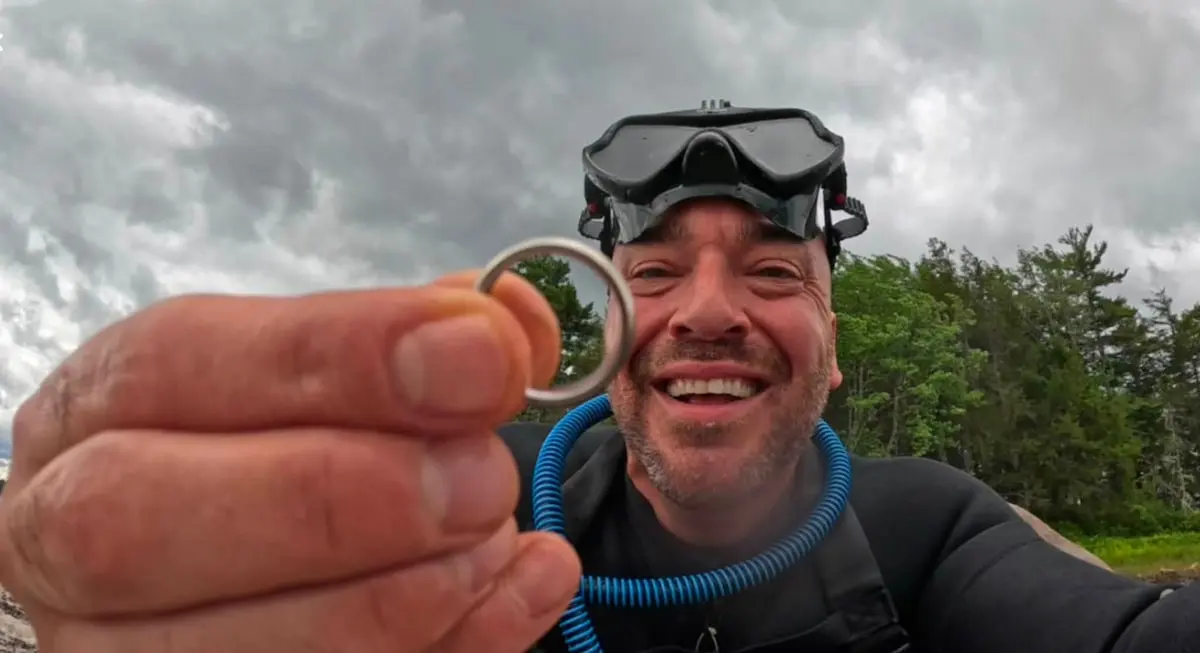
A Louisiana man’s lost wedding ring was recovered from a Nova Scotia lake by a metal detector operator, just hours before the owner flew home. Nate McLagan, a Royal Canadian Navy weapons technician, located the 14-karat gold band in Kejimkujik National Park after Jeff Daglaris reached out for help.
How the wedding ring was lost and found
Daglaris lost the ring in June while kayaking with friends near an island in the park, about 130 kilometres west of Halifax. The ring slipped off his finger as he climbed rocks and jumped into the water. Despite attempts to dive for it, the dark water and lack of equipment made recovery impossible.
After tagging the location on his phone, Daglaris searched online for help and contacted McLagan. The next weekend, McLagan drove two hours to the lake, kayaked to the island, and used his metal detector to locate the ring within minutes. Daglaris received a photo of the recovered ring just as he prepared to board his flight home.
McLagan’s metal detecting hobby helps others
McLagan, who has been metal detecting for nearly 20 years, treats lost item recoveries as a volunteer hobby. He set a goal this year to find missing items for 25 people, with wedding rings being a frequent request. Last year, he recovered 13 lost objects, including a wedding band from Porters Lake, N.S.
While he primarily volunteers his time, McLagan may accept payment to cover expenses like gasoline for longer trips. Daglaris described him as “incredibly professional and honest,” paying only a small fee for the recovery.
McLagan’s finds extend beyond jewelry. He has recovered items like artillery fuse primers and a First World War veteran’s silver pin, though some remain untraceable despite efforts to return them to owners.
Why emotional recoveries matter
McLagan said the most rewarding part of his work is the emotional reactions from those he helps. Daglaris, who had barely removed the ring since his wedding three-and-a-half years ago, was overwhelmed when it was returned. “As soon as I give the ring back, they actually fall down on the ground. So many tears of joy,” McLagan said.
For those who lose valuables, McLagan encourages reaching out—even if the location is far. “If people describe the item and where it was lost, I’ll make my way there,” he said.