Prime Minister Mark Carney has stated he could have "explained better" the terms of a new agreement with the United States concerning the sharing of toll revenues for the Gordie Howe International Bridge. This admission follows the public disclosure of the deal's specifics, which appeared to contradict his earlier descriptions.
Gordie Howe Bridge Deal Details Emerge
The agreement, made public earlier this week, notably omits a provision that would allow Canada to account for its debt-servicing costs before dividing net revenues with the U.S. This detail stands in contrast to remarks made by Prime Minister Carney to CTV News on July 12, during the Calgary Stampede, when the precise terms of the deal remained undisclosed.
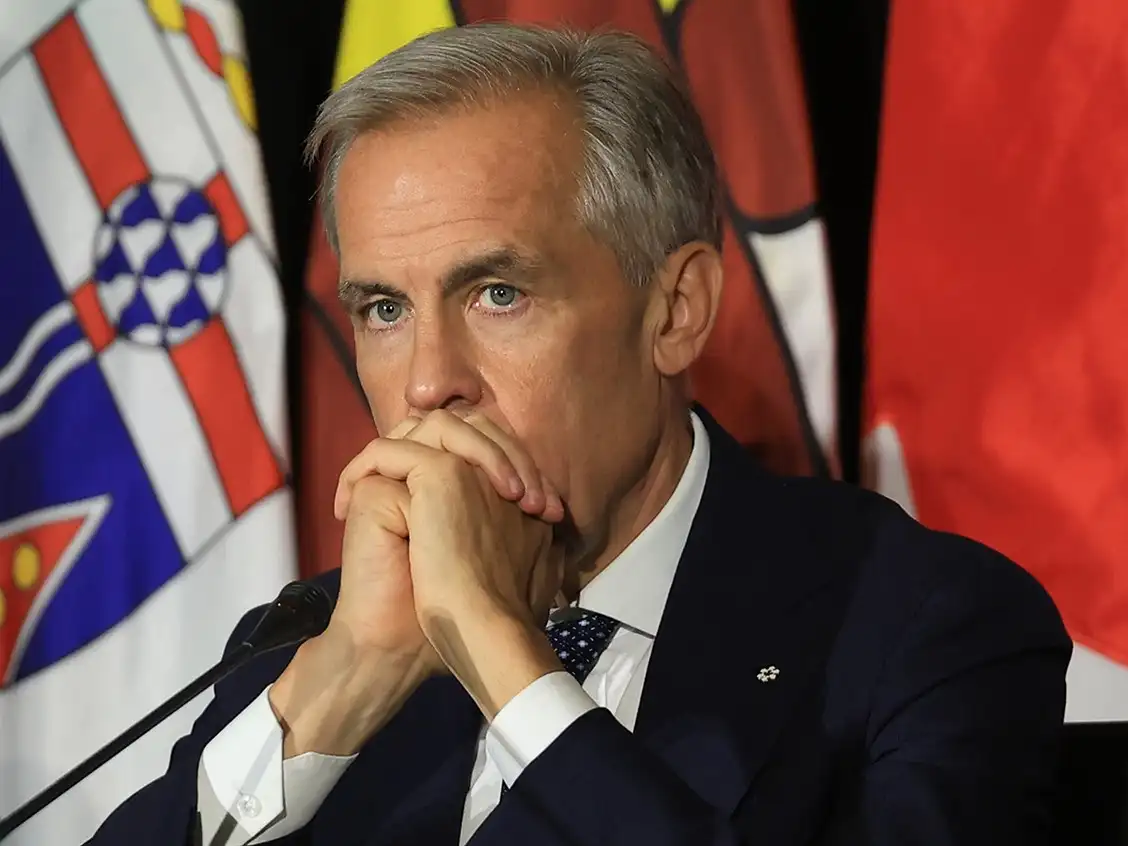
During a closing press conference in Charlottetown on Thursday, concluding a meeting with provincial premiers, Mr. Carney addressed the discrepancy. "Could I have explained it better on a Sunday morning at Stampede? Yeah, with a cowboy hat on," he commented. "Yes, I could have explained it better." The federal government initially announced the deal on July 10.
Contradictions and Clarifications on Revenue Sharing
The agreement, released by the Windsor-Detroit Bridge Authority, specifies that Canada will cede 50 per cent of net revenues to the U.S. for the initial 15 years, following the recovery of operating costs. Mr. Carney confirmed on Thursday that these operating expenses will not encompass debt repayment.
"I should have been clearer," the Prime Minister added, acknowledging the need for greater precision in his earlier communication. The construction of the Gordie Howe International Bridge commenced in 2018, aiming to alleviate congestion issues at the privately owned Ambassador Bridge, a crucial artery for over a quarter of Canada-U.S. trade.
Background and Political Response to the Bridge Deal
An earlier understanding struck with Michigan in 2012 had stipulated that Canada would finance the bridge's construction and receive all toll revenues until its financing costs, including interest, were recouped. Subsequent to this recoupment, revenues were to be shared, with both Michigan and Canada holding joint ownership of the bridge.
In June, U.S. President Donald Trump had obstructed the bridge's opening, asserting that the original arrangement was inequitable to the United States. Concerns were raised by Windsor's mayor and others, suggesting this obstruction stemmed from lobbying efforts by the Maroun family, proprietors of the Ambassador Bridge, who faced potential loss of toll revenue due to the new trade route.
"The underlying agreement between Canada and Michigan remains in place," Mr. Carney reiterated on Thursday. "Under that agreement, there is no splitting of tolls under that agreement, which is what I was referring to — perhaps imperfectly. But there is no splitting of tolls under that agreement until all of the debt is repaid."
Ontario Premier Doug Ford, seated alongside the Prime Minister, praised his efforts in finalising the crossing. "The prime minister did an excellent job getting this deal done, getting $300 billion of goods across the border to create more opportunities, more jobs," Mr. Ford stated. "Michigan is Ontario’s No. 1 trading partner, with over $70 billion of two-way trade." He further emphasised the bridge's importance for Canadian manufacturers.
Opposition Conservatives have voiced criticism regarding the Prime Minister's initial description of the deal's terms, which diverged from the documented text. Conservative MP Kelly McCauley, who chairs the House of Commons government operations committee, has announced plans to convene a meeting on July 29 to investigate the matter further.
A Canadian opening ceremony is presently scheduled for Friday. Cross-border celebrations, however, were recently cancelled by the federal government following Washington's announcement of new tariffs on Canadian goods.