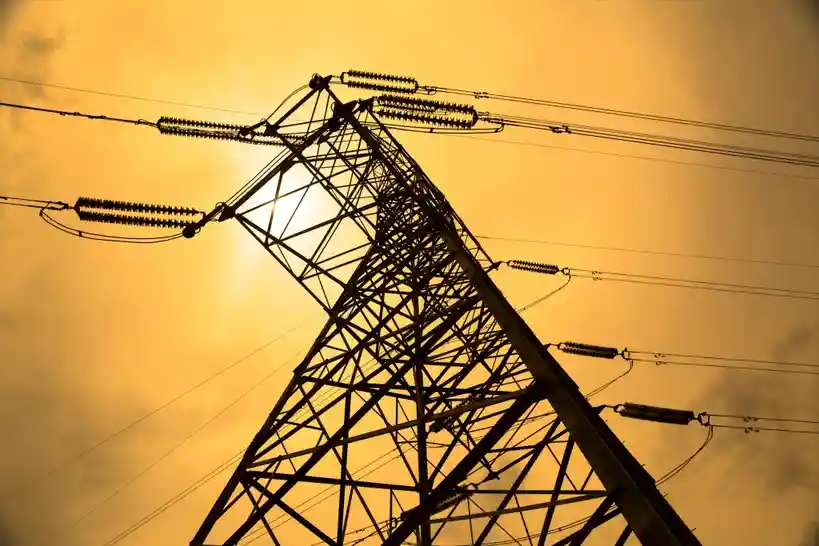
A fallen power line outside Washington D.C. this week exposed a significant vulnerability in the electrical grid, as a sudden, massive withdrawal of power from data centres caused a 10-minute recovery period, far exceeding the usual brief outage restoration times.
Data Centre Demand Stresses Grid Stability
The incident, which saw the PJM grid experience voltage spikes from Northern Virginia to Chicago, was attributed to more than 3 gigawatts of data centre load vanishing from the system nearly simultaneously, according to data from Ting Labs. While the event did not result in a widespread blackout, it caused noticeable light flickering across the region, underscoring a growing concern among experts that such grid disturbances involving large energy consumers like data centres will become more frequent.
Northern Virginia, a global hub for data centre concentration, was the epicentre of this disruption. Ricardo de Azevedo, CTO at ON.Energy, described the situation as "the canary in the coal mine," indicating that incidents involving substantial loads are escalating in frequency.
Understanding the Grid's Delicate Balance
The PJM Interconnection, which manages power for 67 million customers across 13 states and the District of Columbia, operates on a principle of near-perfect equilibrium between electricity supply and demand. When this balance is significantly disrupted, even a relatively small percentage of total demand, such as the approximately 3% represented by the disconnected data centres this week, can trigger substantial voltage fluctuations.
These fluctuations, whether sags or spikes, can lead to grid failsafes or internal facility protections being activated. In this instance, the initial voltage dip caused by the power line failure prompted data centres to switch to their backup power sources, effectively removing their substantial demand from the grid. The subsequent, cascading effect of multiple data centres disconnecting within seconds of each other amplified the initial drop in demand, creating an inverse surge in supply that destabilised the system for over eleven minutes.
Innovations for Grid Resilience
Ali Zain Banatwala, senior market models specialist at the Independent Electricity System Operator, suggested that a more orderly process for data centre disconnections and reconnections would be beneficial for grid operators to develop more robust procedures. Alternatively, data centres could be engineered to absorb such power supply disruptions internally.
Startups like ON.Energy are developing solutions to mitigate these issues. The company has created an uninterruptible power supply system designed for entire data centre campuses, which effectively presents a consistent, stable load to the grid. This system allows data centres to manage computing workloads, including AI training, without impacting grid stability and can absorb power fluctuations by charging its batteries during surplus periods or dispatching power when needed. ON.Energy is currently installing 3 gigawatts of these systems across four data centre campuses.
Grid managers are also responding to the challenge, with organisations like ERCOT preparing to mandate that large energy consumers, such as data centres, must be capable of "riding through" power disruptions. The urgency is underscored by recent events: this week's disconnection was double the magnitude of a similar incident in 2024, which involved 1.5 gigawatts. With data centres projected to represent a substantial portion of grid demand by 2040, addressing these power supply challenges is becoming increasingly critical.


