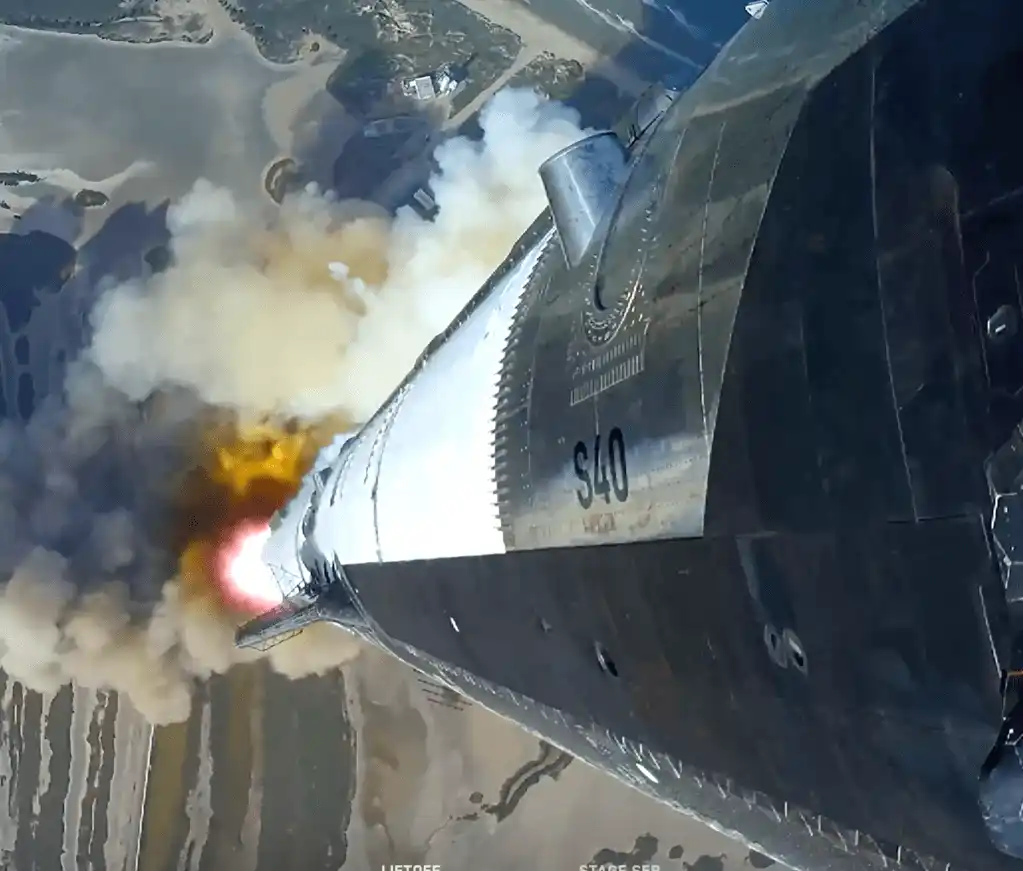
SpaceX successfully deployed its new V3 Starlink satellites on Friday, marking a significant step for its satellite internet constellation, but the company's Super Heavy booster experienced a failure during a simulated landing sequence.
Starship V3 Mission Overview
The launch, the 13th test flight for SpaceX's Starship mega-rocket prototype, saw the successful deployment of the upgraded third-generation Starlink satellites. This deployment utilized an enhanced version of the Starship vehicle.
However, the mission was marred by a recurrent issue with the Super Heavy booster. This marks the second time this specific V3 iteration of Starship has encountered a booster problem. Previously, in May, a similar failure occurred during the booster's separation from the upper stage on the inaugural Starship V3 flight.
Booster Failure During Simulated Landing
During Friday's flight, the Super Heavy booster advanced further into its planned trajectory than in prior attempts. Nevertheless, it failed to properly ignite all the necessary engines for its simulated landing burn over the Gulf of Mexico. The booster ultimately exploded upon impact with the water, which occurred sooner than anticipated.
This recent launch attempt followed a scrub just over a week prior. That earlier attempt had to be aborted immediately after ignition due to multiple rocket engine failures. SpaceX indicated that six engines were replaced ahead of Friday's flight to address the previous issues.
Starship Upper Stage Performance
The Starship V3 upper stage, referred to by the company as the "Ship," performed without incident during Friday's mission. This contrasts with the May flight, where the upper stage lost a rocket engine. On this occasion, the Ship proceeded to deploy the Starlink satellites without issue.
The upper stage successfully endured the rigors of atmospheric reentry and executed a simulated landing in the Indian Ocean approximately one hour after liftoff. Notably, unlike some previous Starship missions, the Ship did not disintegrate upon entering the water. Instead, it remained afloat, enabling SpaceX to deploy a drone for a detailed inspection of its heat shield tiles.
Starlink Satellite Deployment and Future Implications
The newly deployed Starlink satellites were designed to burn up in the atmosphere approximately 20 minutes post-deployment, as Starship is not yet capable of achieving Earth orbit. SpaceX confirmed communication with all deployed satellites while they were in space, signifying progress for this program, which is identified as the company's sole profitable venture.
The capacity to launch these more advanced V3 Starlink satellites is expected to enhance the economic viability of SpaceX's substantial investment in its space internet network. The company has stated that deploying 60 of the new satellites via Starship could lead to a "potential twenty-fold increase" in downlink capacity compared to what a single Falcon 9 rocket can deliver.
However, the realization of these potential gains may depend on SpaceX's ability to achieve full reusability of the Super Heavy booster. SpaceX's S-1 filing suggests that without a fully reusable Starship system, progress for Starlink would likely proceed at a "slower pace and higher cost." Investors reacted to the company's testing approach, with its stock experiencing declines following the recent launch abort and the booster failure on Friday.