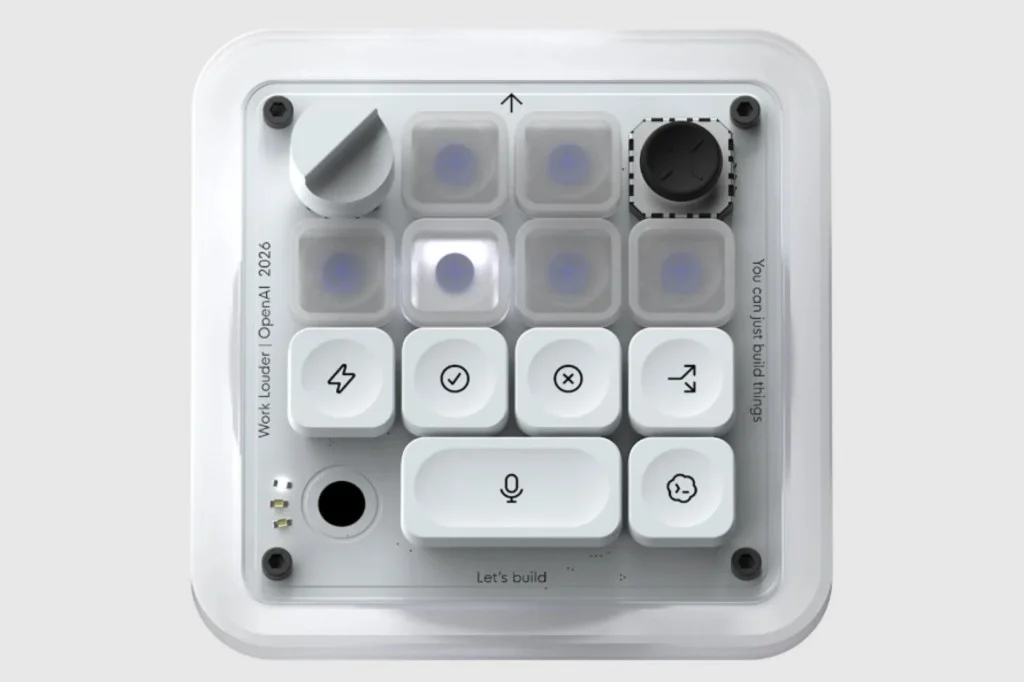
OpenAI has entered the hardware market with its first physical product: the Micro, a $230 customisable keypad designed to streamline interactions with ChatGPT and its coding tool, Codex. Developed in partnership with keyboard maker Work Louder, the device arrives amid legal and competitive turbulence, including a trade theft lawsuit from Apple and reports of a separate smart home project staffed by former Apple engineers.
Design and functionality: A niche tool with Apple-like polish
The Micro is a compact, six-key keypad with a premium build—sturdy enough, as one reviewer noted, to double as a paperweight if its AI integration fails. Its packaging mirrors Apple’s minimalist aesthetic, a detail that has not gone unnoticed given the ongoing legal dispute between the two companies. The device connects via Bluetooth or USB and features six "agent" keys at the top, customisable for specific tasks, alongside six command keys below.
A standout feature is the voice dictation button, which allows users to issue verbal instructions to ChatGPT without typing. Customisation is managed within ChatGPT’s interface, where users can adjust key lighting (white for idle, blue for processing, green for completion, red for errors) and assign projects to individual keys. The learning curve, however, is steep: users must memorise both the colour codes and the functions tied to each key.
Early reception: Enthusiasm from some, scepticism from coders
Initial reactions to the Micro have been mixed. While OpenAI positions it as a productivity tool for "hard-core coders," early adopters on Reddit have dismissed it as a "prank" or a product "engineered to piss me off specifically," according to one review. Independent outlet Aftermath criticised the $230 price tag as unjustifiable, noting cheaper DIY alternatives exist. Critics argue that for most users, the keypad’s functionality doesn’t outweigh the convenience of a standard keyboard and mouse.
Yet the Micro has its defenders. Those who frequently use ChatGPT report that the keypad can expedite workflows by allowing quick toggling between projects via dedicated keys. One tester found it "actually pretty fun" once programmed to their preferences, though they conceded it may not suit casual users. The device’s appeal appears limited to a specific subset: ChatGPT power users with disposable income and a penchant for tactile hardware.
What’s next for OpenAI’s hardware ambitions
The Micro’s launch is a cautious first step into hardware for OpenAI, overshadowed by broader strategic questions. The Apple lawsuit, which alleges trade secret theft, remains unresolved, while reports of a forthcoming smart home device suggest the company is exploring multiple product categories. For now, the Micro serves as a test case for OpenAI’s ability to translate its software dominance into physical tools—one that may struggle to justify its cost unless future iterations refine its utility or expand its audience.
Readers should watch for updates on the Apple litigation and any official announcements about OpenAI’s rumoured smart home project, which could redefine the company’s role in the hardware market.