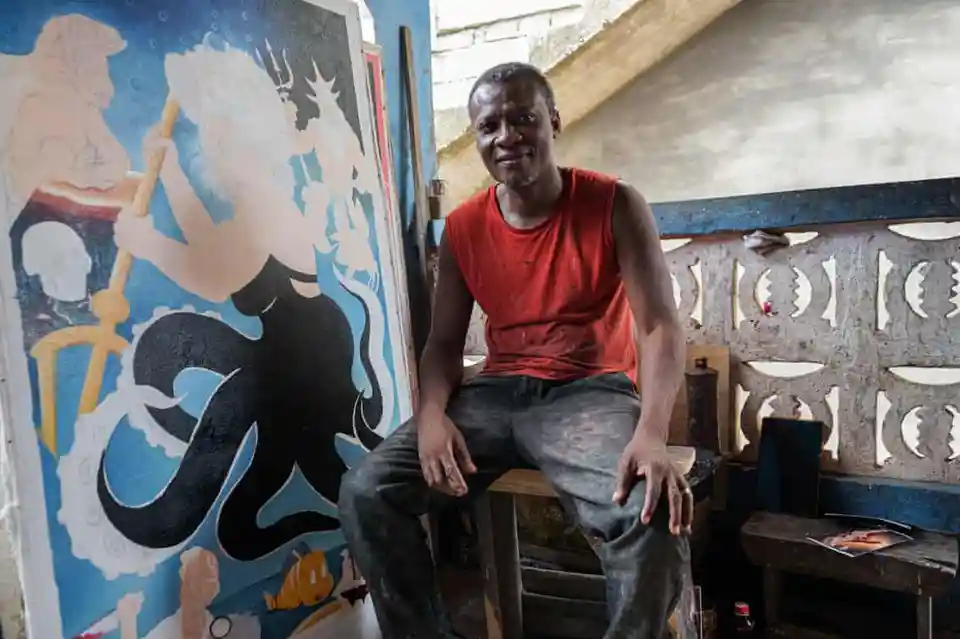
Ghana’s hand-painted film posters, once used to lure crowds to neighbourhood video clubs, have become sought-after collectibles, with rare works fetching hundreds of dollars from international buyers. The tradition, which flourished from the late 1970s to the early 2000s, saw local artists reinterpret Hollywood films with surreal, exaggerated imagery to attract audiences.
The rise and revival of Ghana’s hand-painted posters
Artists like Heavy J—real name Jeaurs Affutu—crafted vibrant, often humorous posters on flour sacks, adding elements like skulls or bloodied knives to films such as The Little Mermaid to spark interest. The practice declined as electricity and home entertainment spread, but a resurgence in demand, driven by online sales and western film enthusiasts, has revived the craft.
Deadly Prey Gallery, co-founded in 2012 by Ghanaian Robert Kofi and American Brian Chankin, now connects 15 artists, including Heavy J, with global buyers. Commissioned pieces start at $600 (£450), with action, horror, and sci-fi titles like The Exorcist and Star Wars among the most popular.
Artistic freedom and cultural preservation
Kofi, who oversees the creative process, ensures the posters retain their signature sensationalism. In a recent critique, he instructed artist Stoger (Benjamin Amartey) to make cats in a Gummo poster “uglier” and the spaghetti “dirtier” to match the film’s tone. Such exaggerations stem from an African tradition of “visualising the invisible,” according to Joseph Oduro-Frimpong of Ashesi University.
While the reinterpretations occasionally sparked backlash—Kofi recalls being beaten in the 1990s after a Double Impact poster falsely depicted a beheading—the art form endures. At Accra’s Centre for National Culture, Deadly Prey Gallery’s works, from Jennifer Lopez battling a snake in Anaconda to a mouse emerging from Jamie Lee Curtis’ mouth in Halloween, celebrate a fading tradition. “We are preserving a history,” Kofi said.