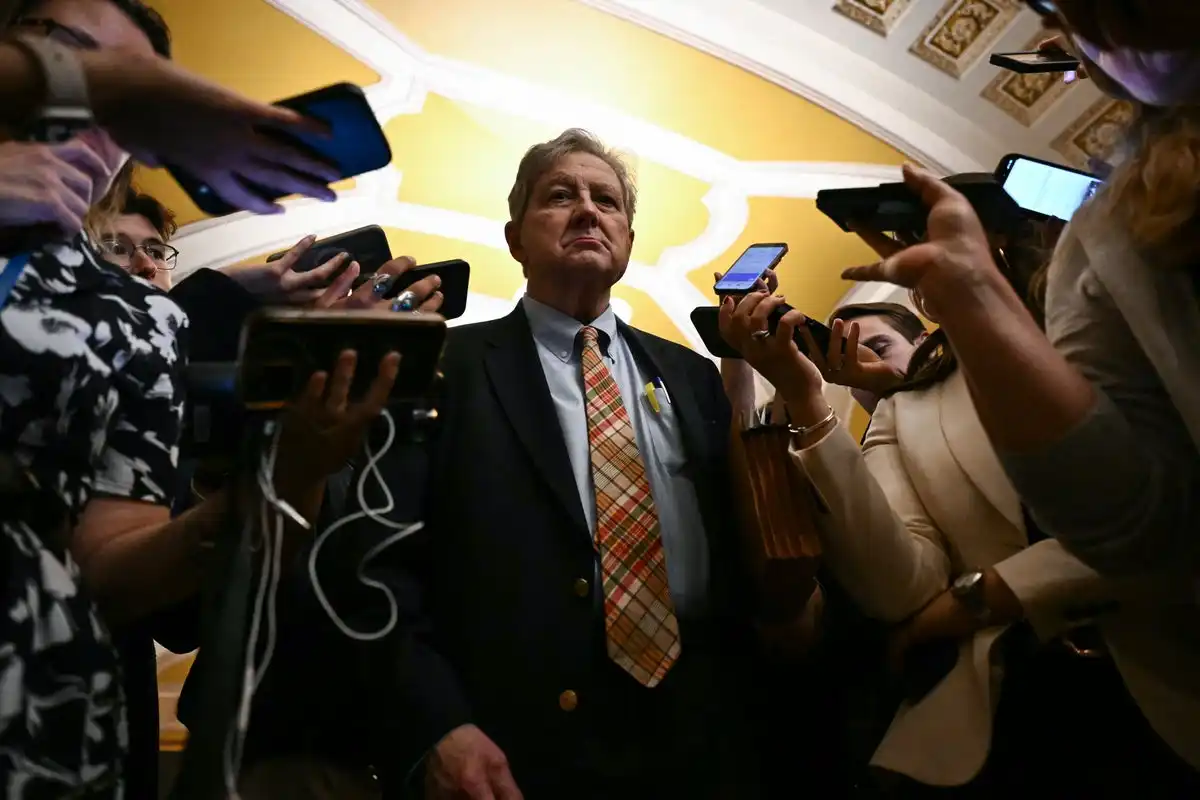
A Republican senator has publicly broken with Donald Trump over a controversial nuclear agreement with Saudi Arabia, marking a rare GOP rebuke of the president’s Middle East policy. Sen. John Kennedy of Louisiana told CBS’s Face the Nation he opposes the deal, which would streamline Saudi Arabia’s civilian nuclear program, citing concerns over timing and regional stability.
Why the Saudi Nuclear Deal Faces GOP Opposition
The agreement, signed by Energy Secretary Chris Wright, aims to help Saudi Arabia develop a civilian nuclear program while stopping short of weapons development. Trump has tied the deal to Saudi normalization with Israel—a precondition Kennedy called unrealistic, given Saudi demands for a Palestinian state, which Israel rejects.
Kennedy’s opposition centers on the contradiction of bombing Iran to prevent its nuclear ambitions while supplying nuclear technology to another Gulf state. “We’re bombing a country to keep them from getting a nuclear weapon, but we're signing a deal with another country... that the world perceives as possibly leading to a nuclear weapon,” he said. He added the deal sends the wrong signal amid global nuclear proliferation fears.
Trump’s Middle East Policy Divides Republicans
The senator’s stance reflects broader GOP unease with Trump’s foreign policy, particularly the ongoing war with Iran. The conflict, now in its fifth month, has failed to dismantle Iran’s nuclear program despite administration promises of a swift resolution. A ceasefire collapsed last month, reigniting tensions in the Strait of Hormuz and disrupting global shipping.
Kennedy’s remarks follow Trump’s endorsement of primary challengers against two GOP incumbents, further straining party unity. His $1.776 billion “weaponization fund” proposal—aimed at targeting political opponents—has also drawn criticism from Senate Republicans, including Kennedy’s colleague Bill Cassidy, who called the Iran war a “mistake” in a heated exchange with Trump.
What Happens Next for the Nuclear Deal
The administration has not indicated whether it will submit the Saudi deal to Congress for approval. Kennedy predicted it would not advance, citing poor timing and Saudi-Israel tensions. Meanwhile, Trump maintains the Iran war’s political costs are justified to prevent a nuclear-armed Iran, though no plan exists to remove Tehran’s remaining nuclear materials.
With midterms approaching, Republicans face a dilemma: defending a party tied to an unpopular war and rising gas prices without Trump on the ballot. The Saudi nuclear deal’s fate—and the GOP’s unity—may hinge on whether other senators echo Kennedy’s dissent.