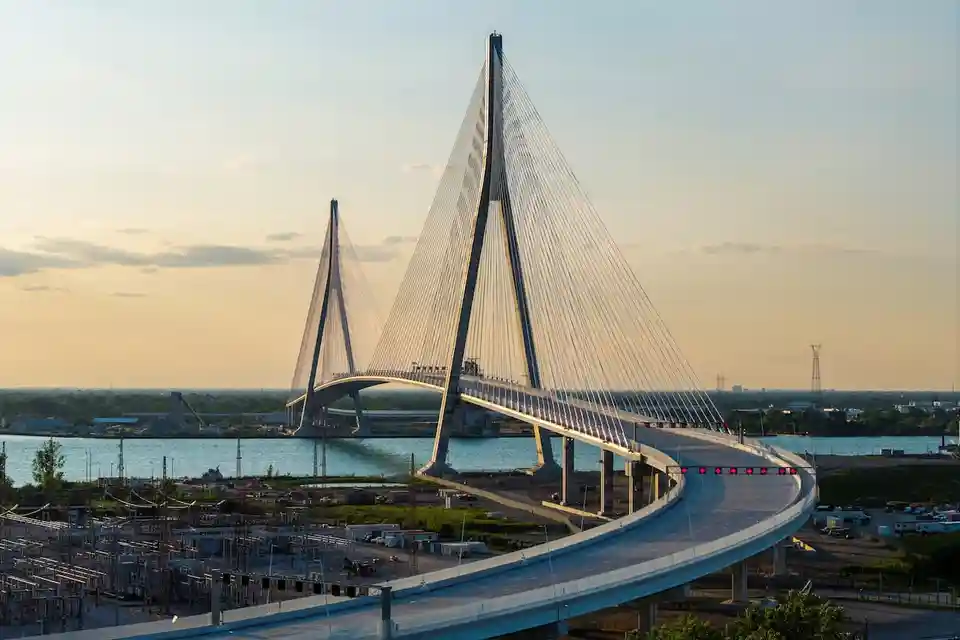
Canada will inaugurate the Gordie Howe International Bridge on Friday without American officials present, following a diplomatic dispute over toll revenue sharing and escalating trade tensions with the United States.
Bridge Opening Overshadowed by Diplomatic Rift
The $4.7 billion infrastructure project, connecting Windsor, Ontario, and Detroit, Michigan, was scheduled to open in June but faced delays amid strained bilateral relations. A planned cross-border ribbon-cutting ceremony was cancelled after the US demanded a share of toll revenues, which Canada had previously stated would only be shared after construction costs were recouped.
The bridge, named after the legendary Detroit Red Wings hockey player, was fully funded by Canada and is intended to provide a faster alternative to the existing Ambassador Bridge. It will officially open to traffic on Monday, though celebrations will be limited to Canadian officials.
Disagreements Over Toll Revenue and Trade Threats
The opening comes as trade negotiations between the two countries remain fraught. US President Donald Trump threatened earlier this month to impose a 50% tariff on Canadian exports, which account for 70% of the country’s trade. American officials have also accused Canada of contributing to US wildfire smoke from blazes in northern Ontario.
In February, Trump threatened to block the bridge project entirely, citing disputes over Canadian dairy tariffs and alcohol sales. A draft agreement released this week suggests Canada will split net toll revenues with the US for the first 15 years, though Prime Minister Mark Carney maintains that no revenue sharing will occur until Canada’s debt is repaid.
Legal and Political Uncertainty Remains
Experts have raised concerns over the lack of clarity in the agreement. Nicolas Lamp, an associate professor at Queen’s University, noted that the draft is not legally binding and that Canada could still negotiate better terms. Meanwhile, the absence of a dispute resolution mechanism leaves Canada vulnerable to further unilateral actions by the US, according to Don Abelson of McMaster University.
Opposition Conservatives have criticized Carney’s handling of the negotiations, though analysts suggest the priority was securing the bridge’s opening to preserve the critical Canada-US trade relationship.
What Happens Next
The bridge will begin operations on Monday, with no immediate resolution to the revenue dispute. Observers will watch for further developments in trade negotiations, particularly as the US election approaches and tensions over cross-border policies persist.