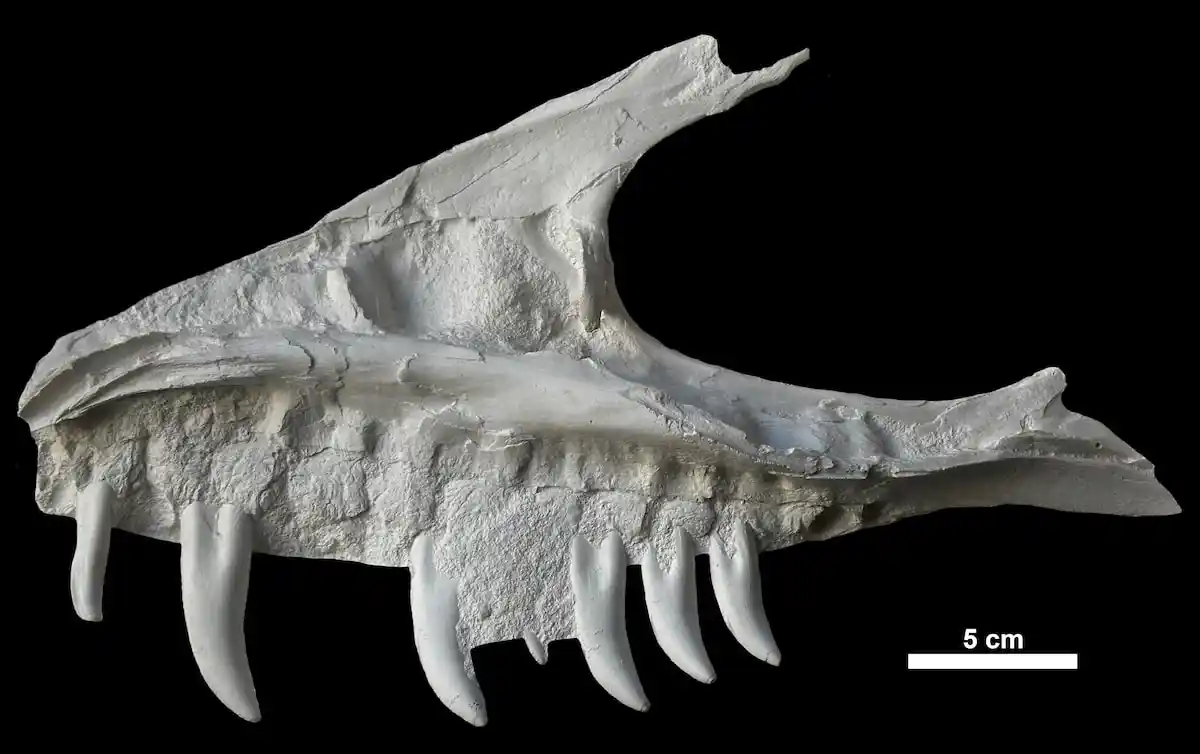
A partial dinosaur skull discovered in a British Columbia campground has been identified as belonging to a Gorgosaurus, a tyrannosaur species that roamed Western Canada approximately 76 million years ago, predating its famed relative, Tyrannosaurus rex.
New Insights into Gorgosaurus Skull
University of Alberta researchers, examining a cast of a skull impression found near the Alberta border, have detailed findings that offer a fresh perspective on this ancient predator. The study, published recently in the journal Palaeogeography, Palaeoclimatology, Palaeoecology, highlights unique characteristics that distinguish Gorgosaurus from other tyrannosaurs.
Lead author Colton Coppock explained that the identification was possible due to a distinct set of features present on the impression. The Gorgosaurus, a species known to reach approximately nine metres in length, is now understood to be a more lightly built, faster relative of T. rex, comparable to a speedier version of its later cousin.
Discovery in Tumbler Ridge
The initial discovery was made in 2017 by B.C. resident Rick Lambert while hiking at a campground in Tumbler Ridge. Lambert's keen eye, honed by a childhood spent fossil hunting in England, spotted an unusual rock formation near a river's edge. This find proved to be the first tyrannosaur skull ever unearthed in British Columbia.
The Tumbler Ridge Museum Foundation was notified, and a paleontologist confirmed the significance of the find. While British Columbia is rich in dinosaur material, actual bone fossils are rare, making this skull impression particularly valuable. The original sandstone block bearing the impression is now preserved under strict environmental controls at the museum.
Scientific Analysis and Gorgosaurus Traits
Although the original bone had largely eroded, the detailed impression of the partial skull, including the maxilla (upper jaw), allowed researchers to create a precise cast. This cast enabled researchers to examine the internal surfaces and compare them with more complete Gorgosaurus specimens from Alberta, where the species is well-documented.
Key identifying features included specific bone sutures in the nasal area and a distinctive rod of bone within the upper jaw. Researchers also noted that the teeth suggested the individual was likely a juvenile at the time of death. This observation led to the hypothesis that younger Gorgosaurus might have used their front teeth for precise cutting of flesh, contrasting with the more robust biting strategy of adult tyrannosaurs.
Gorgosaurus Range and Future Discoveries
Further analysis indicated that Gorgosaurus inhabited a significantly larger geographic area than previously understood, with its range extending from northern British Columbia down to northern Montana, covering an estimated 198,000 square kilometres. This expansive territory is comparable to the current ranges of large predators such as grizzly bears and cougars.
Lambert's discovery underscores the potential for British Columbia to become a significant site for future paleontological research, with Coppock describing the province as a "new frontier" for dinosaur studies. For Lambert, the find served as a profound reminder of Earth's long history and the remarkable stability of the planet.