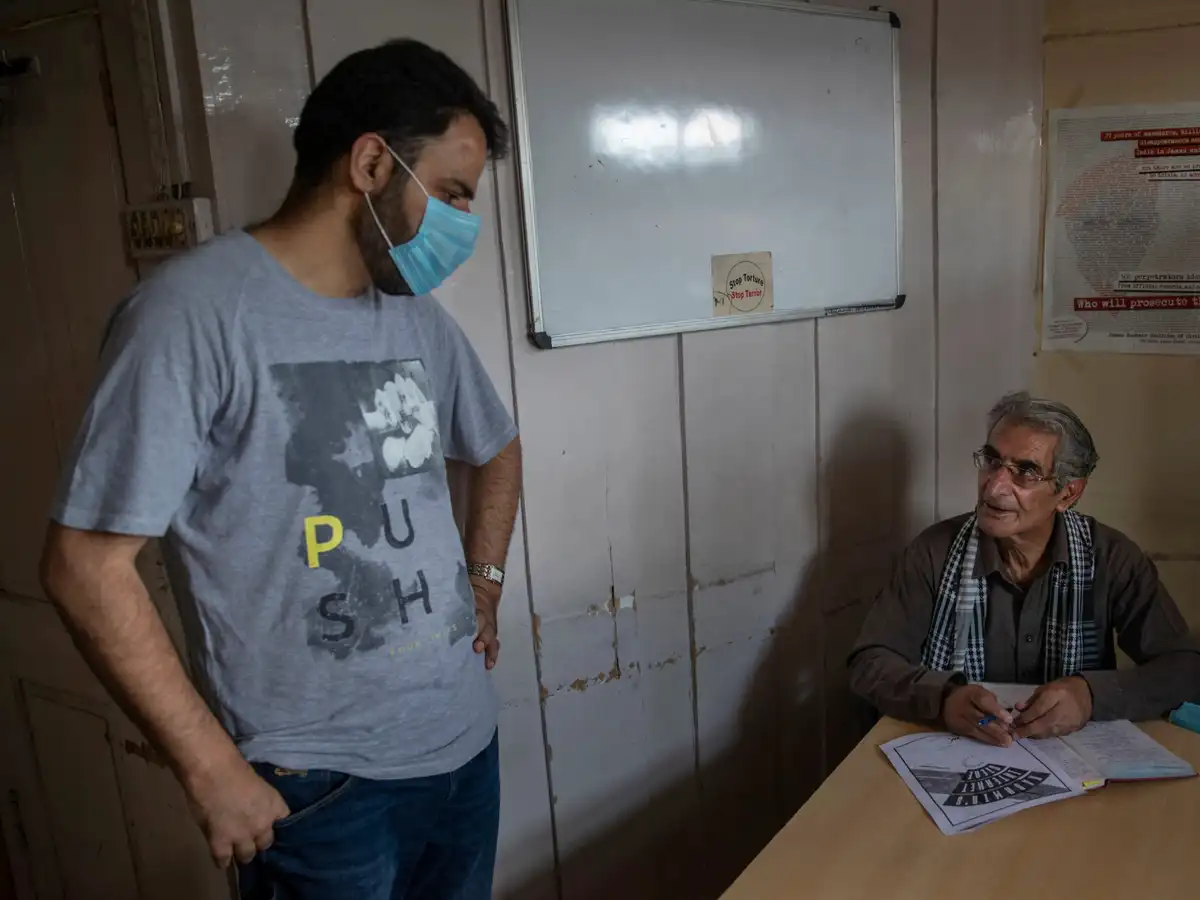
Kashmiri human rights activist Khurram Parvez and journalist Irfan Mehraj were released on bail late Wednesday from a New Delhi jail after facing "terrorism" financing charges. Both men remain under significant court-imposed restrictions as their legal cases continue.
Kashmir Activists Face Restrictions After Bail
For context, the release of Parvez and Mehraj comes amidst what human rights organizations describe as a broad crackdown by Indian authorities on dissent in India-administered Kashmir. This intensified following the government's 2019 decision to revoke the region's special autonomy status.
Parvez, a key figure with the Jammu Kashmir Coalition of Civil Society (JKCCS), was apprehended by India's National Investigation Agency (NIA) in 2021. Mehraj, a freelance journalist and researcher with the same organization, was arrested in 2023.
Both individuals face serious accusations, including "funding terrorism" and "propagation of secessionist agenda," under India's stringent anti-terrorism legislation. These laws have been criticized for allowing prolonged detentions without trial.
Legal Battles and International Scrutiny
The National Investigation Agency alleges that the JKCCS was used to support militant-linked activities and advance a separatist narrative, claims that both Parvez and Mehraj deny. Their bail was granted by a lower court last week, but the NIA has since appealed this decision.
While the Delhi High Court refused to halt the release order on Tuesday, it did implement stricter conditions on the men's movements and activities while the appeal is pending. Court documents indicate they are required to arrange their own accommodation in Delhi, where the trial is proceeding, and are prohibited from travelling back to Kashmir.
The JKCCS has a long history of documenting alleged human rights abuses by Indian security forces in Kashmir, including reports of torture and extrajudicial killings. The organization has also drawn attention to unmarked graves, raising concerns about enforced disappearances.
International bodies, including the Office of the United Nations High Commissioner for Human Rights, have previously called for the release of Parvez and Mehraj, stating their detentions were linked to their human rights advocacy. In 2023, the UN Working Group on Arbitrary Detention characterized Parvez's arrest as retaliation for his work and an effort to suppress Kashmiri civil society.
Following their release, organizations such as the International Federation for Human Rights and the World Organisation Against Torture have condemned the charges as baseless and politically motivated, urging Indian authorities to drop the case.
Since the annulment of Kashmir's autonomy in 2019, journalists in the region have reported increased harassment and arrests. Government figures indicate that between 2019 and 2023, over 3,600 individuals were detained under anti-terrorism laws in Kashmir, with more than half still in custody.
Ongoing Situation in Kashmir
The dispute over the Muslim-majority Kashmir region, divided between India and Pakistan since 1947, has led to decades of conflict. Rebel groups have been fighting the Indian government since 1989, seeking independence or a merger with Pakistan, resulting in tens of thousands of deaths, predominantly civilians.