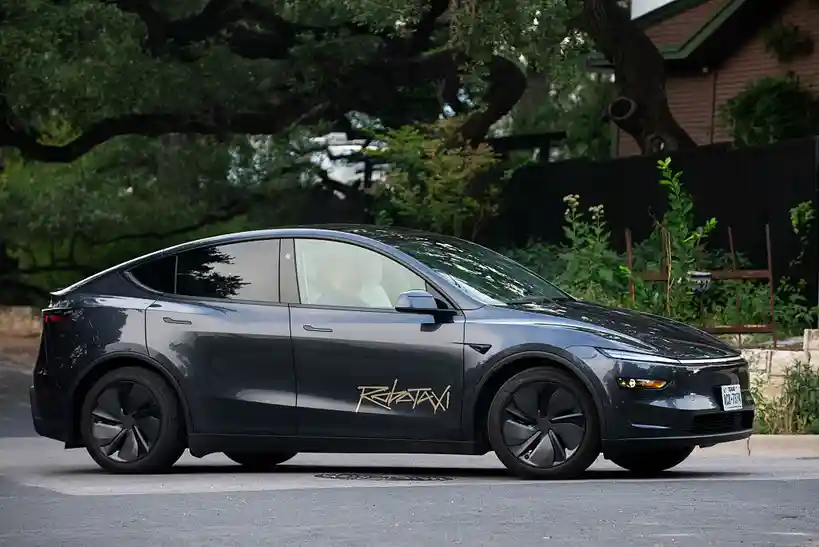
Tesla's nascent Robotaxi network experienced a notable decrease in miles driven for paying customers during the second quarter, a period that saw the company's stock price fall and its core businesses underperform analyst expectations.
Robotaxi Performance Trails Company Rhetoric
This quarter-over-quarter decline in paid Robotaxi miles contradicts Tesla's stated ambitions and past emphasis on developing a large-scale, low-cost autonomous fleet. CEO Elon Musk has previously described the company's push for autonomy as a full-scale effort.
For context, Tesla has been actively expanding its supervised and unsupervised Robotaxi operations across six cities in Texas and Florida. Despite this geographical growth, the data indicates a step-down in operational mileage.
While charts may initially suggest consistent growth in paid rides, closer examination reveals that cumulative numbers can be misleading. When segmented by quarter, the figures show a substantial reduction in operational distance covered by Tesla's Robotaxi fleet.
- First Quarter Paid Robotaxi Miles: Approximately 1.1 million miles
- Second Quarter Paid Robotaxi Miles: Approximately 700,000 miles
- Quarterly Decline: Approximately 36%
Cybercab Data Collection cited as a Factor
During a second-quarter earnings call, Elon Musk explained that Tesla needs to gather specific driving data for its "Cybercab" model. This purpose-built vehicle is intended to form the majority of its future autonomous fleet.
"We don’t have that for Cybercab," Musk stated, referring to the extensive real-world data from existing Tesla vehicles. He elaborated that Cybercabs, currently retrofitted with steering wheels and pedals, must accumulate miles to calibrate their specific chassis before widespread deployment.
This statement marks a shift from previous claims that Tesla's existing fleet of nearly 10 million customer cars has been passively collecting data to train future robotaxis and consumer driver assistance software, known as Full Self-Driving.
Executives also cited safety as a primary concern for the cautious scaling of the Robotaxi service. Musk emphasized the potential for severe negative media attention and regulatory scrutiny even from a single incident, contrasting it with the high number of annual automotive fatalities in the U.S. that often go unreported.
Ashok Elluswamy, Tesla's VP of AI, highlighted that the company's Robotaxis have reportedly driven "more than 380,000 miles" without a safety operator onboard, claiming "zero notable incidents." However, the definition of "notable incidents" was not provided, with reported issues often stemming from external factors impacting stationary vehicles.
Tesla Reports Incidents and Shifts Narrative on Autonomy Hurdles
Tesla has officially reported 22 crashes to the National Highway Safety Administration over the past year of its Robotaxi trials. While the majority involved other vehicles colliding with Tesla's autonomous units, the company also documented three crashes attributed to remote teleoperator control and several low-speed collisions with stationary objects like curbs and utility poles.
This reporting comes as Tesla shifts its narrative regarding the primary obstacles to full-scale Robotaxi deployment. Previously, the company often cited regulatory hurdles, without specific detail, as the main challenge.
Now, the focus is on demonstrating safety. In parallel, Tesla is continuing to advocate for its camera-only autonomy stack, eschewing radar and lidar sensors that are standard for industry leaders like Waymo. Elluswamy asserted that this approach proves safe, comfortable, and affordable autonomy is achievable without extensive sensor suites.
Both Musk and Elluswamy projected future growth, noting a weekly increase of approximately 10% in unsupervised miles driven since the service's introduction late last year. Musk expressed confidence in rapid future scaling of the Robotaxi service.


