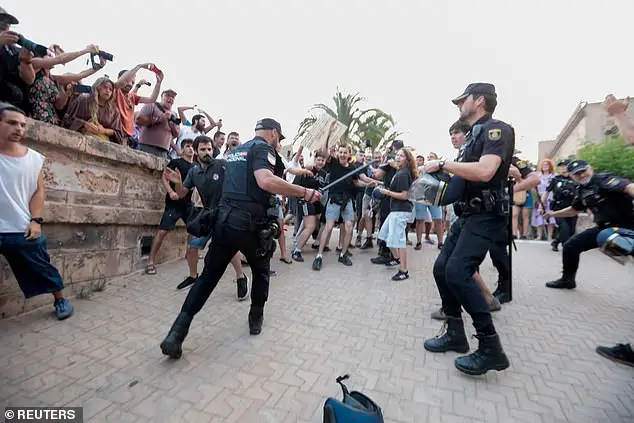
Armed riot police have clashed with anti-tourism protesters in Mallorca, Spain, as demonstrations turned violent on July 26, 2026. For context, the island of Mallorca has been experiencing an influx of tourists over the summer, leading to concerns about overtourism and its impact on the local community.
Protests Against Mass Tourism in Mallorca
More than 25,000 people flooded the streets of Palma, the capital of Mallorca, to protest against the large number of holidaymakers visiting the island. Protesters held signs with slogans such as 'tourists go home', 'tourism = destruction', and 'less tourism, more life', highlighting their concerns about the effects of mass tourism on the island.
Protesters claimed that the holiday hotspot had 'reached its limit' and that the influx of visitors has made their lives worse. The situation escalated, with protesters fighting with officers and rioters throwing bottles at police, prompting authorities to fire rubber bullets into the crowd to disperse them.
Background and Response to the Protests
The protests are not an isolated incident, as it is the third summer in a row that mass protests have been seen on the island. Earlier this month, anti-tourism groups in Mallorca faced backlash after publishing a 'Manual for Action Against Touristification', which details how supporters can identify possible targets of 'non-violent direct action' against what it says is 'a system that is suffocating us'.
The guide has received condemnation from several tourism giants in the Balearics, including the Majorca Hoteliers Federation, the College of Estate Agents, and the Confederation of Balearic Business Associations (CAEB). According to the Majorca Daily Bulletin, the hotel federation argued that the guidance goes from a disagreement to 'vandalism and sabotage'.
What's Next for Mallorca's Anti-Tourism Protests
As the situation continues to unfold, it remains to be seen how the protests will affect the tourism industry in Mallorca and what measures will be taken to address the concerns of the local community. The protests have sparked a heated debate about the impact of mass tourism on the island, with some arguing that it is necessary for the local economy, while others claim that it is destroying the island's way of life.
Readers should watch for further developments in the situation, including any potential responses from local authorities and the tourism industry. The ongoing protests highlight the need for a balanced approach to tourism, one that takes into account the needs of both visitors and locals, and ensures that the island's unique culture and environment are protected for future generations.