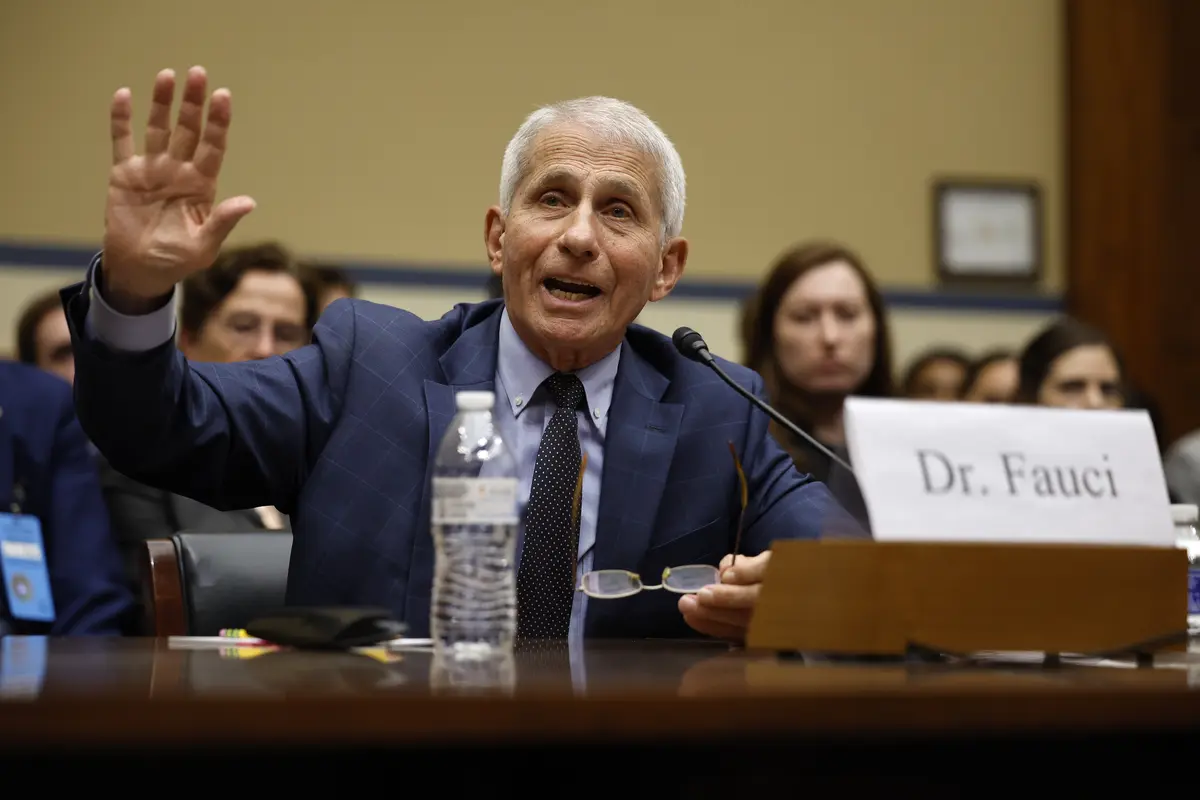
Senator Rand Paul, R-Ky., has published a collection of Dr. Anthony Fauci's private diary entries from the COVID-19 pandemic, offering a new perspective on early discussions surrounding the virus's origins. The release comes as Dr. Fauci, former Director of the National Institute of Allergy and Infectious Diseases (NIAID), is scheduled to testify before a Senate committee.
Fauci Diary Entries and COVID-19 Origin Debate
The 1,141-page document, made public over the weekend, comprises notes taken by Dr. Fauci between December 2019 and December 2022. Senator Paul, who has consistently investigated the origins of COVID-19 and related research, released the entries on the social media platform X. He asserted that the private writings suggest a divergence from Dr. Fauci's public statements regarding the pandemic's beginnings.
Dr. Fauci, a key member of the White House's Coronavirus Task Force during the pandemic, and Senator Paul have maintained differing public stances for years on how the virus first emerged. Even after Dr. Fauci concluded his tenure at NIAID in late 2022, Senator Paul has continued his inquiry into COVID-19's origins and taxpayer-funded life sciences research.
Early Scientific Discussions on Virus Genesis
In his X posts, Senator Paul highlighted select excerpts from Dr. Fauci's notes. One entry from January 26, 2020, describes the initial infection occurring in early December and not being connected to the Wuhan market, stating, "Now we know the market was not the source, it was the amplifier." Paul interpreted this to mean the wet market was not the initial source of the virus in Fauci's private assessment.
However, Dr. Fauci's note continued, "Having said that, somewhere the virus jumped from animals to humans." Another entry from February 1, 2020, detailed a conference call with a dozen researchers discussing the plausibility of SARS-CoV-2's natural evolution. According to the notes, only two scientists supported a natural origin, while the remainder considered deliberate genetic insertion to be possible.
Felicia Goodrum, a virologist at Dartmouth College, commented to NPR that these early discussions occurred when scientific data was limited. She explained that scientific understanding is iterative, with initial conclusions subject to revision as more evidence becomes available. Goodrum suggested that Dr. Fauci may have expressed less certainty in private discussions as researchers grappled with the new virus, compared to his public pronouncements aimed at reassuring a panicking populace.
Senate Hearing and Future Testimony
The release of the diary entries precedes Dr. Fauci's scheduled testimony before the Senate Homeland Security and Governmental Affairs Committee on July 29, 2026. Senator Paul chairs this committee and unilaterally subpoenaed Dr. Fauci's appearance after Dr. Fauci indicated he would not appear voluntarily. Lawmakers are expected to question Dr. Fauci about his knowledge and understanding of events as the pandemic unfolded.
Senator Paul has publicly advocated for the consideration of a lab-engineered origin for the virus, a theory that has been contested by some scientists. A report released in late 2024 by a Republican-led Select Subcommittee on the Coronavirus Pandemic concluded a lab leak was the most likely explanation. Robert Garry, a virologist at Tulane University, has disputed this, citing a lack of direct evidence and the absence of a sufficiently similar precursor virus at the Wuhan Institute of Virology.
In August 2021, Dr. Fauci himself noted in his diary receiving "more conspiracy theory like letters from congressmen and senators trying to link us to the origin of COVID-19," which he described as "an amazing and unbelievable waste of our time." Senator Paul, however, framed the current release and inquiry as essential oversight.