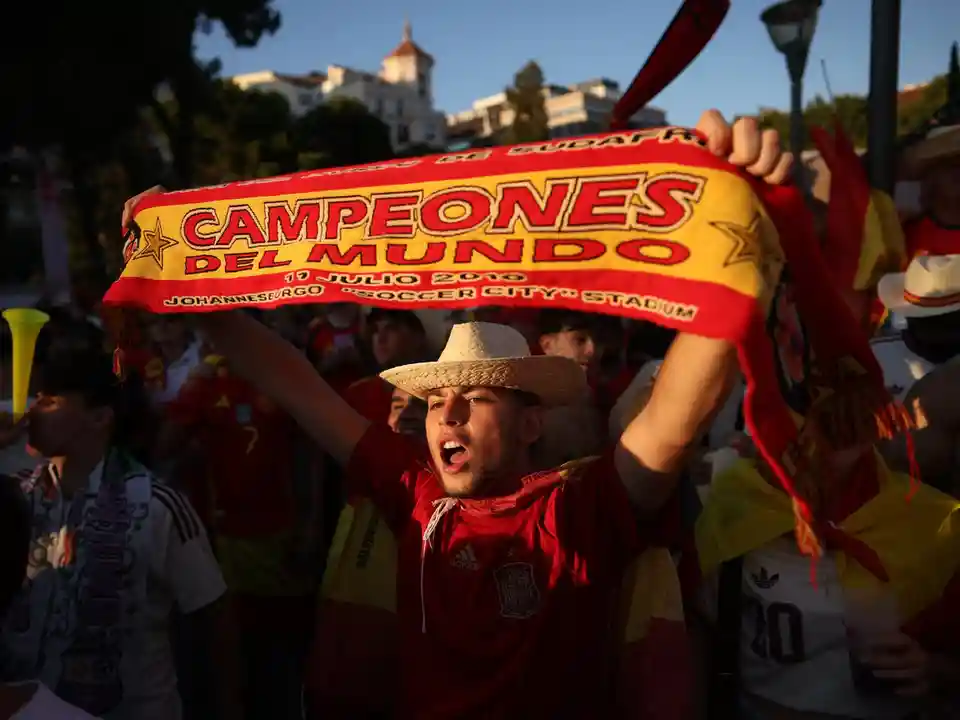
Spain's World Cup-winning squad is set to be welcomed home by an estimated one million jubilant supporters in Madrid on Monday, following their victory in the final match.
Spain’s World Cup Triumph and Return
For context, this marks Spain's second World Cup victory, the first having been secured in 2010. The team's triumphant return follows a closely contested 1-0 win against Argentina in New Jersey on Sunday, with Ferran Torres scoring the decisive goal in extra time.
Coach Luis de la Fuente and his players were scheduled to land in Madrid at 12:50 PM local time (10:50 GMT), bringing the coveted trophy back to a nation experiencing a significant outpouring of national pride.
Many of the younger generation of fans celebrating this win may not have been alive for Spain's initial World Cup triumph 16 years prior in South Africa.
Madrid Prepares for Massive Fan Welcome
Preparations for the team's arrival and subsequent celebrations are well underway in Madrid. The city's main avenue, Castellana, showed signs of extensive revelry from the previous evening, with cleaning crews beginning early to prepare the route.
Madrid Mayor Jose Luis Martinez-Almeida acknowledged the heightened emotions, stating, “I didn’t sleep much, because … [of] the celebration and then the tension of the match. I think it was a little more difficult for all of us to fall asleep.”
Upon landing, the squad is expected to be received by King Felipe VI at Zarzuela Palace. Official plans include an open-top bus parade commencing from Moncloa and concluding at Cibeles Square, a traditional site for national team celebrations.
Authorities anticipate approximately one million attendees along the parade route, necessitating substantial security and transport provisions. A total of 2,050 police officers and 400 Civil Guard personnel are slated for deployment to manage the expected crowds.
Broader Context and Future Implications
This victory places Spain in a unique position, as their women's team also secured the World Cup title in 2023. This means Spain currently holds both the men's and women's World Cup trophies simultaneously.
Looking ahead, Spain is set to be a co-host for the 2030 World Cup, alongside Portugal and Morocco, where they will have the opportunity to defend their title on home soil.
The Spanish press has lauded the team's performance, with Marca describing them as "The kings of all-time!" following their semi-final victory over favourites France and their win against Argentina. The newspaper highlighted a "masterclass in collective play" leading to their second star.
Regrettably, a tragic incident occurred in Ciudad Rodrigo, where a 13-year-old boy died after a fountain collapsed under the weight of celebrating supporters. In contrast, Buenos Aires experienced widespread disappointment following their defeat, with hundreds of thousands of fans still expected to greet their team upon their return.
The final match, the 104th of the tournament, saw Spain overcome Argentina, despite the presence of Lionel Messi. Spain's well-organized defence and decisive attack, culminating in Torres's goal after a setup from Nico Williams, proved insurmountable for the Argentine side, particularly after Enzo Fernandez received a red card.
Torres reflected on the significance of his winning goal, stating, "It’s not my goal, it’s the goal of 47 million people."