President Donald Trump indicated that the United States will return to its previous course of action if current diplomatic negotiations with Iran do not yield a successful agreement. This statement comes as Iran's deputy foreign minister reported that Tehran rejected a U.S. proposal during recent talks, describing it as containing "extreme demands."
Iran Rejects U.S. Proposal, Cites "Extreme Demands"
Kazem Gharibabadi, Iran's deputy foreign minister for legal and international affairs, stated that his delegation explicitly rejected a proposal presented by the U.S. during recent negotiations in Islamabad. He described the American proposal as reflective of "extreme demands" and insisted that Iran made no attempts to prolong the discussions after the U.S. threatened to withdraw.
Speaking at a conference for legal professionals, Gharibabadi elaborated on the U.S. stance. According to him, the American delegation declared that any rejection of their proposal would lead to the negotiations being considered a failure, prompting their departure. Gharibabadi emphasized that the Iranian delegation did not insist or plead for the continuation of the talks, characterizing their approach as an example of "dignified diplomacy."
Strait of Hormuz Developments and Diplomatic Stalemate
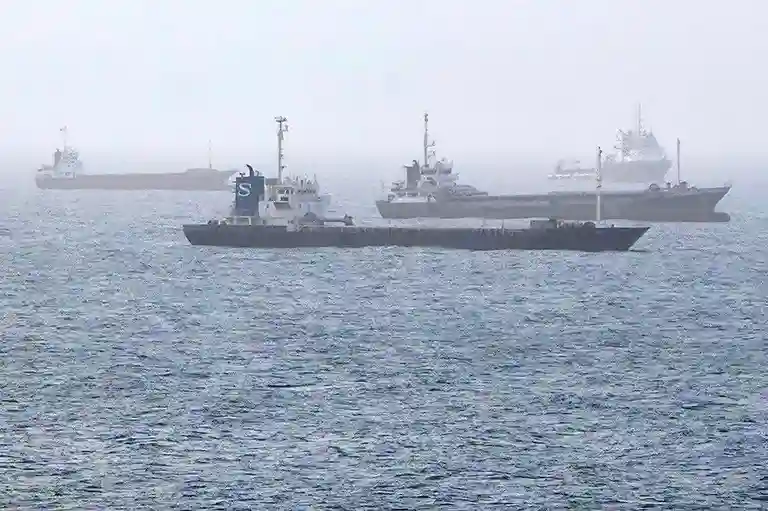
Gharibabadi also addressed recent events concerning the Strait of Hormuz. He noted that after Iran temporarily closed the waterway following what he termed "crimes committed by the United States more than two weeks ago," subsequent discussions were held in Oman. During these talks, he reported that the U.S. side pushed for the southern shipping route, which had been reopened, to remain accessible until the Iran-Oman negotiations concluded.
The Iranian delegation, however, did not agree to this condition. Gharibabadi asserted that Iran had clearly communicated its principled policy from the outset of the conflict and would not accept such proposals, regardless of the negotiation outcomes.
President Trump's Outlook on Iran Negotiations and U.S. Readiness
President Trump expressed that he possesses considerable patience and time for reaching a deal with Iran. He also commented on the Strait of Hormuz, stating that the waterway is in "very good shape" despite recent Iranian interferences with shipping. He mentioned that Iran had sought meetings with the U.S. through both surrogates and direct channels.
When asked about his current patience level, President Trump responded, "I have a lot of patience," adding, "I have plenty of time. Plenty of time." He further stated, "I think there's a good chance that something could happen. And if it does, good, if it doesn't, we go back to doing what we were doing two days ago."
Regarding U.S. military readiness, President Trump assured reporters that the United States has ample munitions, including advanced air-defense interceptors and precision-guided weapons, despite their rapid expenditure in the Middle East. He attributed the need to build up stockpiles to aid provided to Ukraine by the Biden administration.
In a separate development, the head of Iran's parliamentary national security commission issued a warning on social media in Ukrainian, suggesting that Ukraine might soon realize that "Iran does not leave its actions unanswered," following a recent Ukrainian attack on an Iranian commercial vessel.