Donald Trump’s long-promised healthcare plan remains unrealised nearly a decade after he first pledged to overhaul the US system, a delay now seized upon by California Governor Gavin Newsom as evidence of unfulfilled commitments.
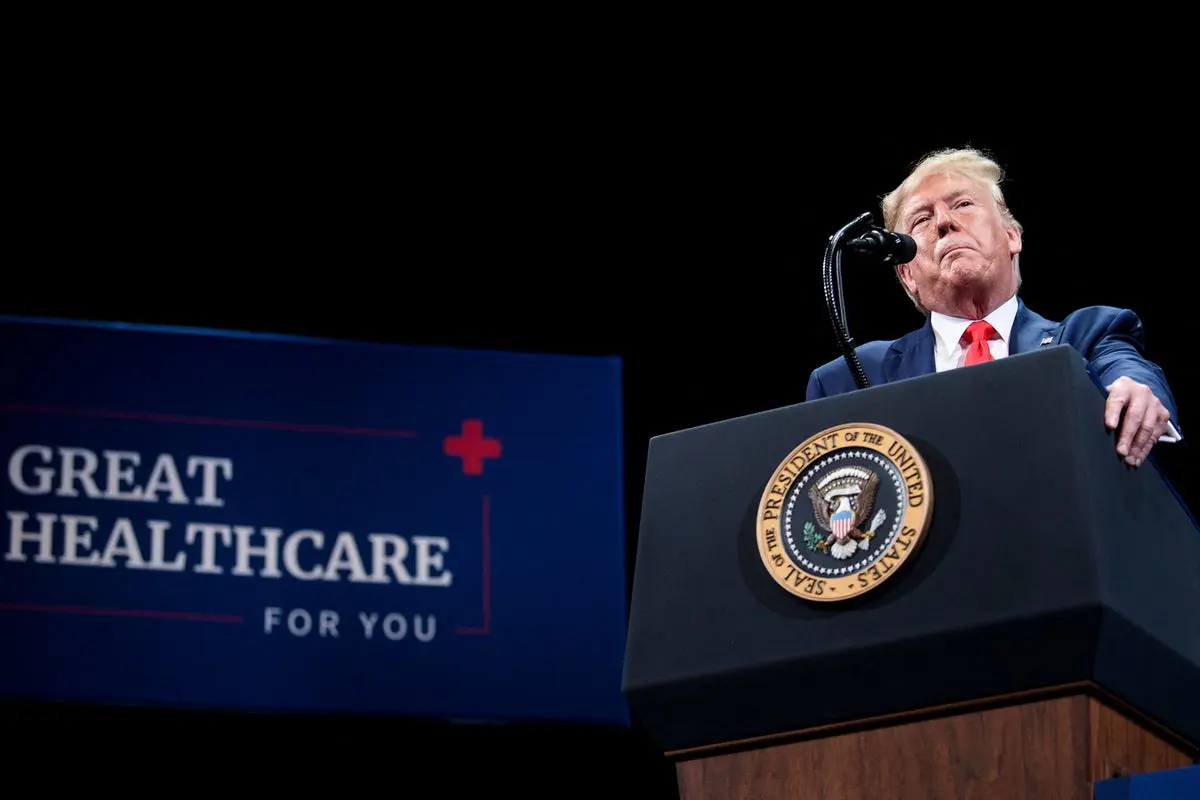
The White House announced in January 2026 that Congress would be tasked with enacting the “Great Healthcare Plan,” a proposal intended to reduce drug prices and insurance premiums while holding insurers accountable. Yet the initiative has stalled amid competing priorities, including the administration’s military engagements and infrastructure projects.
Newsom highlights Trump’s repeated healthcare pledges
Newsom’s press office took to X to underscore the president’s history of unmet healthcare promises, sharing a now-defunct White House webpage from 2017 as proof. The archived link, originally hosting Trump’s executive order on “Promoting Healthcare Choice and Competition,” had been removed, prompting the Democratic governor’s team to note: “Trump’s made this promise FOR 9 YEARS, but you wouldn’t know that since the page with the transcript has seemingly been removed!”
The exchange follows Trump’s latest vow during a Michigan speech to auto workers, where he reiterated plans to “stop all payments to big insurance companies” and redirect funds directly to citizens. Critics, however, drew parallels to his 2015–2016 campaign trail, when he repeatedly assured voters a healthcare plan would materialise “within two weeks”—a timeline that never came to pass.
White House defends progress amid scepticism
In response to Newsom’s remarks, White House spokesman Kush Desai pointed to TrumpRx, a government-operated online pharmaceutical marketplace launched in February 2026, which allows Americans to purchase discounted prescription drugs. “In the time President Trump secured multiple Most-Favored-Nation deals to lower prescription drug prices, Gavin successfully laid exactly zero miles of new high-speed rail track,” Desai said.
The January 2026 healthcare proposal, unveiled by the administration, centres on a cost-sharing plan to reduce Affordable Care Act (ACA) exchange premiums and replace federal subsidies with direct payments to citizens. White House press secretary Karoline Leavitt previously described the plan as “the most comprehensive and bold agenda to lower healthcare costs to have ever been considered.”
What comes next for Trump’s healthcare agenda
With the plan yet to advance through Congress, its fate remains uncertain. Observers note the administration’s focus on other legislative and geopolitical priorities may further delay its implementation. For now, the White House continues to frame the proposal as a transformative shift, while critics argue its repeated deferral underscores a pattern of unmet policy promises.