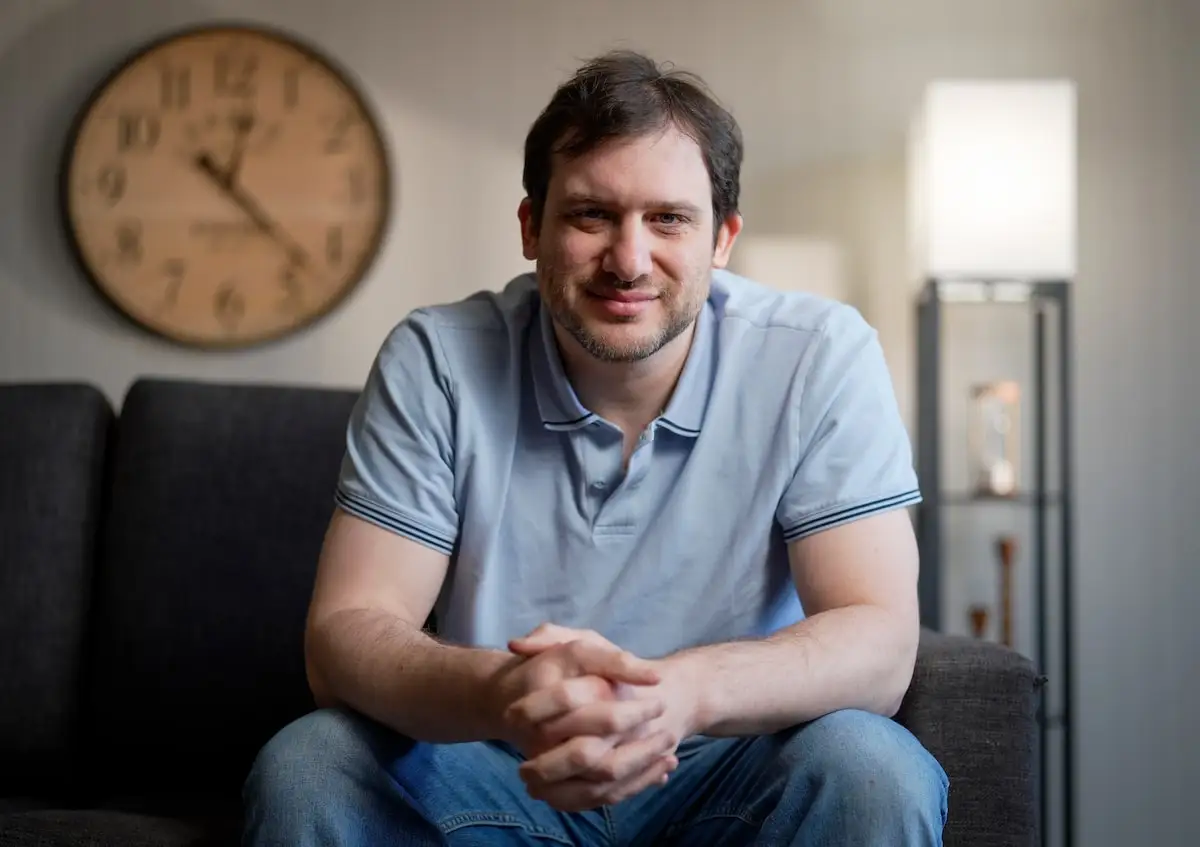
University of Toronto professor Jacob Tsimerman received the Fields Medal, the highest honor in mathematics, on Thursday. He shares the award with three U.S.-based scholars for their independent contributions to the field.
Jacob Tsimerman Recognized for Mathematical Achievements
Tsimerman, 38, a professor at the University of Toronto, was honored for his work in arithmetic geometry. He joins Yu Deng of the University of Chicago, John Pardon of Stony Brook University, and Hong Wang of New York University and France’s Institut des Hautes Études Scientifiques as a 2026 recipient.
The four medalists were announced at the opening ceremony of the International Congress of Mathematicians in Philadelphia. Each winner receives $15,000.
The Significance of the Fields Medal
Established by Canadian mathematician John Charles Fields, the Fields Medal is awarded every four years to mathematicians under the age of 40. It is often likened to the Nobel Prize in mathematics and aims to recognize both past achievements and future promise.
Hong Wang is only the third woman to win the Fields Medal since its inception in 1936. Tsimerman is the first mathematician based at a Canadian institution to receive the honor.
Tsimerman's Path to Prestigious Award
Tsimerman's work, particularly his proofs of the André-Oort conjecture and the Griffiths conjecture, garnered significant attention. He noted that as notification time approached, he was "definitely paying attention."
His accolades began early, with consecutive gold medals at the International Mathematical Olympiads in 2003 and 2004. He has since received several other major awards, including the Coxeter-James Prize, the New Horizons in Mathematics Prize, and the Ostrowski Prize.
Tsimerman, born in Kazan, Russia, moved with his family to Israel before immigrating to Canada in 1996. He began his undergraduate studies at the University of Toronto at 16, completing his degree in two years.
Collaboration and Future Impact
Described by colleagues as versatile, Tsimerman’s ability to draw from diverse mathematical areas sets his work apart. Deirdre Haskell, director of the Fields Institute for Research in Mathematical Sciences, called his breadth of knowledge "inspiring."
The Fields Medal citation highlighted Tsimerman's use of novel techniques that open new avenues for future research. While his work is pure mathematics, it has relevance to fields like cryptography.
Tsimerman emphasized the crucial role of collaboration in his success, stating, "When I work alone, I start to suspect I’m crazy." He also shared his philosophy with students: "I don’t know how to succeed as a mathematician but I know a thousand ways to fail."