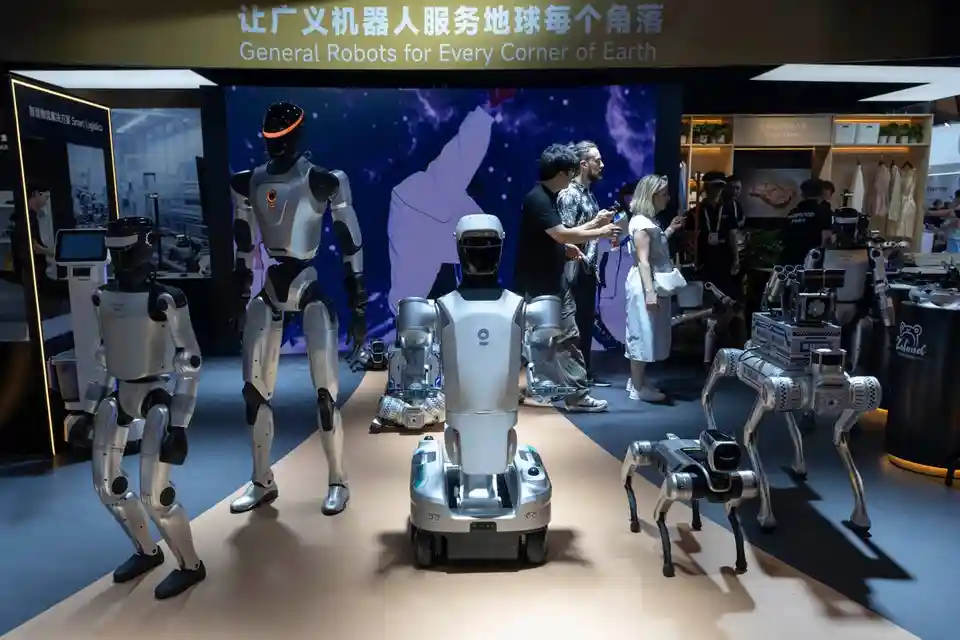
The United States Federal Communications Commission (FCC) announced on Tuesday a ban on the import of foreign-made humanoid robots, a move directly targeting China and citing concerns over national security risks. This decision arrives as the technological competition between the two global powers intensifies, particularly in the rapidly advancing field of robotics and artificial intelligence.
US Humanoid Robot Import Ban Targets China
The FCC's prohibition extends to new imports of humanoid robots, as well as quadrupedal robots, commonly known as robot dogs, and foreign-manufactured power inverters. Officials articulated that these advanced robotic systems, produced in foreign nations, present vulnerabilities within the United States' supply chains and pose significant cybersecurity and national security threats.
FCC Chairperson Brendan Carr stated that the directive was implemented to "secure America’s critical supply chains." This action aligns with a broader trend of the U.S. administration seeking to restrict the influence of Chinese technology, evidenced by previous bans on imports, including Chinese-made drones, and ongoing considerations for restrictions on Chinese open-source artificial intelligence models.
Dominance of Chinese Robotics in Global Market
China currently holds a substantial lead in the production of humanoid robots, with analysts estimating its global market share at approximately 85%. This dominance is further underscored by data indicating that Chinese manufacturers have been scaling production and reducing costs at a pace exceeding most international competitors.
This rapid growth has positioned Chinese firms as key players. For instance, in 2025, two of China's largest advanced robotics companies, Unitree and AGIBOT, each shipped over 5,000 humanoid robots, compared to only a few hundred or fewer from their U.S. counterparts like Tesla and Figure AI, according to research from Omdia.
Geopolitical Implications and Future Outlook
The U.S. ban could potentially strain diplomatic relations, especially as the two nations engage in intense technological competition. Experts suggest this move could be a precursor to further geopolitical friction, with one analyst noting it as part of a "steady drumbeat of potential flashpoints" ahead of anticipated summits.
While restricting access to the U.S. market removes a significant avenue for Chinese manufacturers and offers protection to domestic developers from price competition, it is unlikely to substantially impede China's overall robotic development. The nation's extensive domestic manufacturing capabilities and other international export markets provide ample opportunities for continued growth.
Furthermore, China is actively pursuing global markets, including Europe, for its advanced robotic products. This expansion, coupled with the U.S. ban, highlights the escalating competition and differing perspectives on technological advancement, with China asserting its innovations as beneficial to the world rather than a threat.
The prohibition may also impact collaborations between U.S. and Chinese technology firms. For example, a reference design for a humanoid robot revealed in June by Nvidia utilized a chassis from Chinese robot maker Unitree. The Pentagon has also previously identified Unitree and other major Chinese technology companies as having ties to or aiding the Chinese military, allegations that Beijing firmly disputes.


