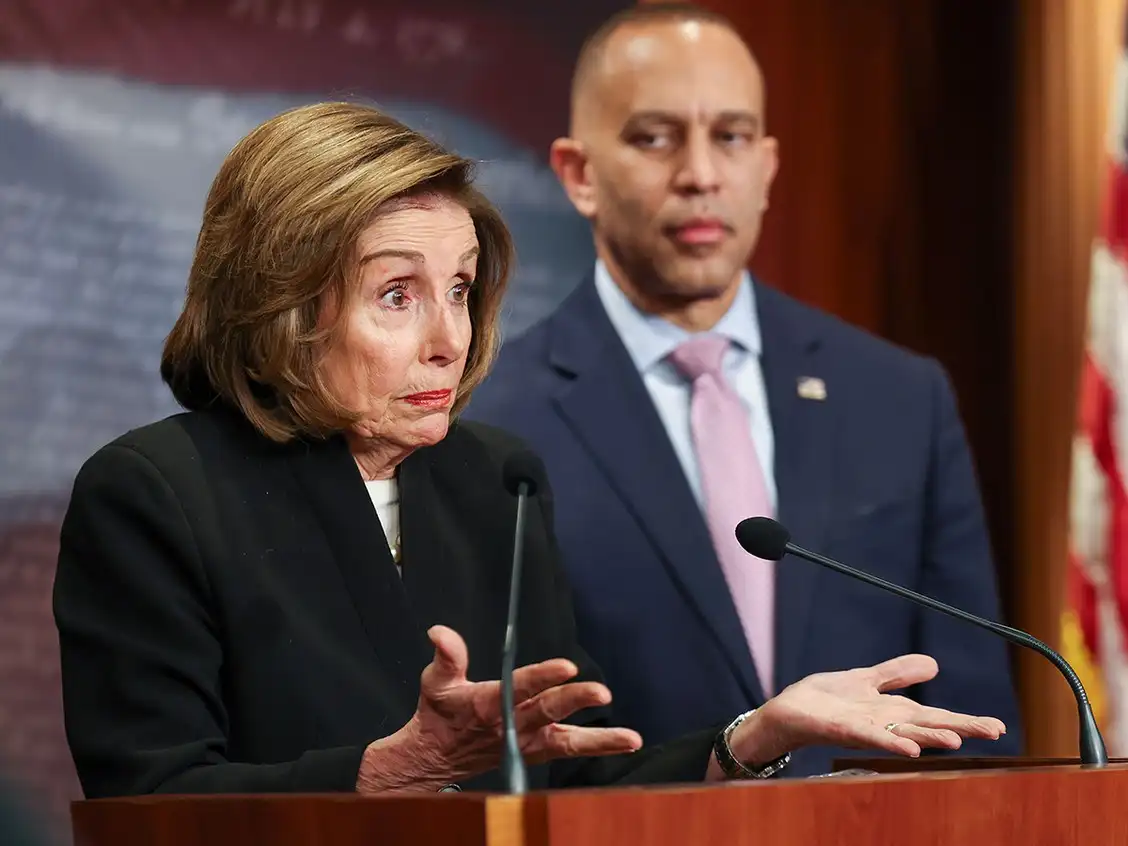
A deepening divide among US Democrats over military aid to Israel has been laid bare after more than 100 House members voted this week to cut funding, a move that underscores a generational and ideological shift within the party ahead of November’s midterm elections. The measure, proposed by Republican Thomas Massie of Kentucky, was defeated after near-unanimous GOP opposition and resistance from 98 Democrats—but the 103 Democratic votes in favor, alongside 10 abstentions, marked a rare challenge to a longstanding bipartisan consensus.
Democratic leadership reflects the party’s fracture
The rebellion extended into the party’s upper ranks. House Minority Leader Hakeem Jeffries opposed the amendment, yet his deputy, Katherine Clark, backed it, as did former Speaker Nancy Pelosi—a longtime stalwart of US-Israel relations. Pelosi argued that US policy “must change” for the sake of both Israelis and Palestinians, while Clark cautioned against providing a “blank check” to nations failing to align with American law and values.
Public opinion mirrors the shift in Congress
The vote reflects broader trends among Democratic voters. A recent Washington Post-Ipsos poll revealed that nearly three-quarters of Democrats now support reducing or ending military aid to Israel, with 40% advocating for its complete elimination. The growing discontent follows years of conflict in Gaza, rising Palestinian casualties, and frustration with Prime Minister Benjamin Netanyahu’s right-wing government.
Though the amendment stood little chance of becoming law, its symbolic weight was undeniable. As veteran political strategist Mike Fahey told AFP, “When more than 100 House Democrats are willing to vote to cut military aid, that’s no longer a protest vote. That’s a signal that the party is undergoing a generational and ideological realignment.”
Observers will now watch whether this fracture influences campaign messaging in the midterms—or signals a lasting recalibration of US foreign policy toward Israel.