The United States and Saudi Arabia have conducted joint strikes on Iranian proxy groups in Iraq, the US military's Central Command announced, in response to over 30 attempted drone attacks on US forces and Saudi energy sites over the last three days, with the operation targeting "terrorist logistics and weapons sites" across eastern Iraq. The strikes, which were carried out late Tuesday, were described as lawful self-defense by Saudi Arabia's Foreign Ministry, citing previous attacks by the militia groups on Saudi Arabia, in a conflict that has seen oil prices climb, with Brent crude rising 3.3% to $85 a barrel on Wednesday.
US-Saudi Military Operation in Iraq
The US and Saudi militaries launched airstrikes on Iranian-backed groups in Iraq, with the US Central Command stating that the strikes were aimed at "terrorist logistics and weapons sites" across eastern Iraq, in a region that has seen significant escalation in recent days, with Iran and its proxies allegedly targeting American forces, and the US military warning its troops that cellphone videos shared online could help Iran target American bases, according to a letter from Admiral Brad Cooper, the overall commander of US Central Command.
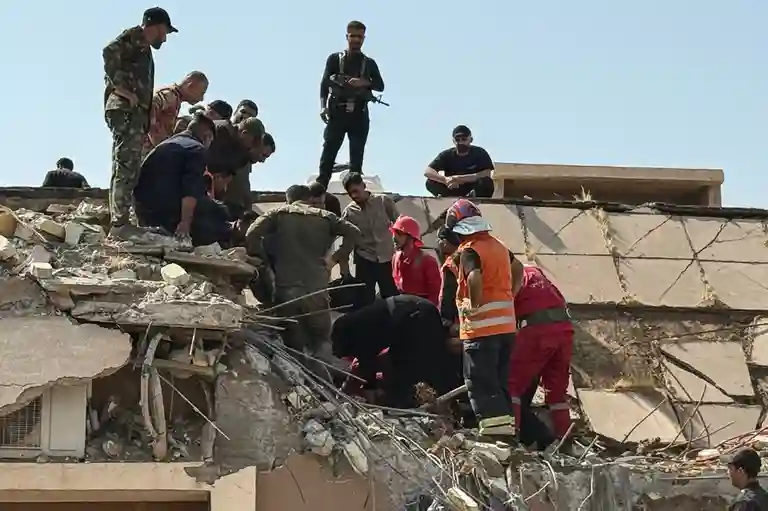
The Popular Mobilisation Forces, an umbrella group of Iraqi paramilitary forces backed by Iran, reported that at least 20 of its fighters were killed and 32 wounded in the strikes, which hit the group's headquarters in Baghdad and six other locations, according to a statement released by the group, with the US military stating that the strikes were in response to the attempted drone attacks, which were described as unsuccessful, with Saudi Arabia intercepting drones launched from Iraq that targeted petroleum facilities in Riyadh and the country's east.
Escalation in the Middle East
The conflict in the region has seen a significant escalation in recent days, with oil prices rising, and the price of Brent crude rebounding 3.3% to $85 a barrel on Wednesday, after a brief pause in fighting was shattered, with the US military stating that the strikes were aimed at disrupting the ability of Iran-backed groups to launch attacks on US forces and Saudi energy sites, and Admiral Cooper warning that the sharing of cellphone videos online could reveal whether strikes targeting American forces were successful in near real-time, with the "direct, unavoidable cost of this open-source intelligence" potentially being measured in the lives of American service members and civilian residents in targeted Gulf countries.
As the situation continues to unfold, the US and Saudi militaries are likely to remain on high alert, with the US military warning its troops to "redouble our focus on operational security", and the Saudi Ministry of Defense confirming that it "conducted precise and targeted strikes" in response to previous attacks by the militia groups on Saudi Arabia, with the conflict having significant implications for the region and the global economy, and readers should watch for further developments in the coming days, including any potential response from Iran and its proxies.
What's Next in the Conflict
In the coming days, readers should watch for further developments in the conflict, including any potential response from Iran and its proxies, as well as the impact of the escalation on oil prices and the global economy, with the US and Saudi militaries likely to remain on high alert, and the situation in the region continuing to unfold, and it remains to be seen how the conflict will be resolved, and what the long-term implications will be for the region and the world, with the US military and Saudi Arabia continuing to work together to disrupt the ability of Iran-backed groups to launch attacks on US forces and Saudi energy sites.
- Brent crude price: $85 a barrel
- US crude price: $81.93 a barrel
- Number of fighters killed: at least 20
- Number of fighters wounded: 32
- Number of drone attacks: over 30