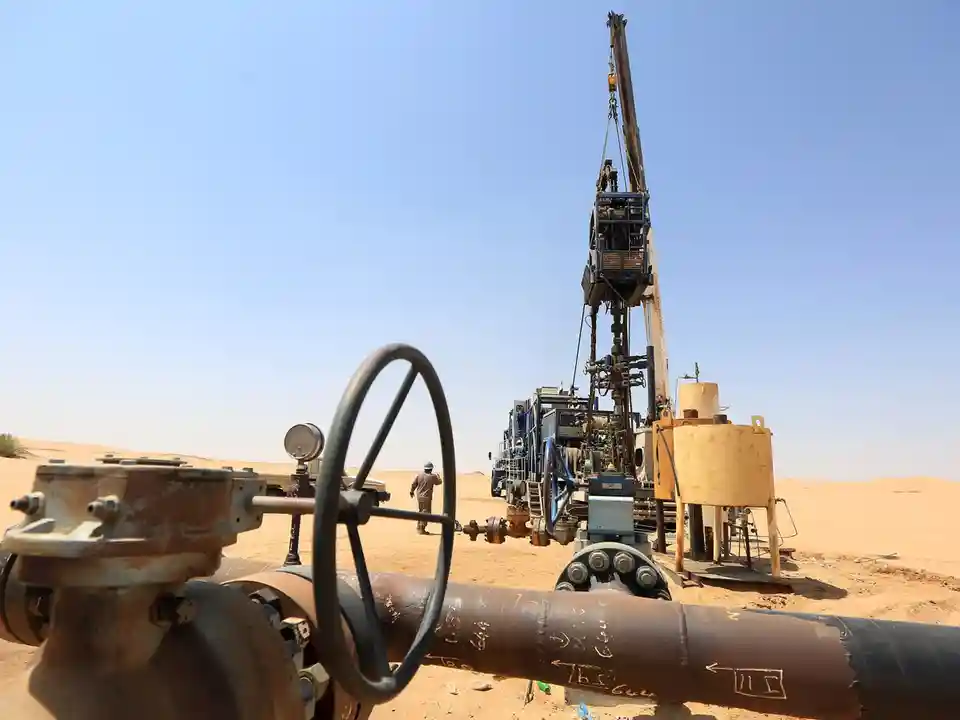
Yemen is set to resume oil exports on July 20, according to Rashad al-Alimi, head of the Presidential Leadership Council, after a halt that began in late 2022. The resumption of oil exports is crucial for the Yemeni government, which needs the revenue to pay salaries, improve services, and support economic stability.
Yemen's Oil Production and Export Challenges
Yemen has proven oil reserves of about three billion barrels, primarily concentrated in the Masila, Marib, and Shabwa basins. However, the country's oil production has declined significantly due to the war and the depletion of old fields, reaching a low of 19,000 barrels per day (bpd) in 2024, according to the International Monetary Fund (IMF).
A report by S&P Global estimated that Yemen's actual oil production was around 7,000-10,000 bpd in 2023 and 2024, mostly for domestic use. The Yemeni Minister of Oil and Minerals, Mohammed Bamqaa, stated that export revenues would be deposited in the Central Bank to bolster the state's financial resources, with oil stockpiles exceeding 1.7 million barrels ready for export.
Security Concerns and Houthi Rebel Control
The resumption of oil exports is threatened by security concerns and Houthi rebel control over Yemen's northwest. The Houthis have conditioned the resumption of exports on receiving a share of the revenues to cover public sector salaries. Experts believe that creating a secure environment, restoring confidence in shipping and insurance companies, and international buyers is crucial for the successful export of oil.
Professor Mohammed al-Kasadi, of Hadramout University, noted that the government's success in pumping oil to the port does not automatically guarantee a successful export process. Maritime transport and insurance companies assess the level of security risks, and any new attack on the ports could send the sector back to square one.
Economic Implications and Future Outlook
The suspension of oil exports has deprived the government of its most important source of revenue, intensifying pressure on the foreign exchange market. The resulting shortage has weakened the Yemeni rial and contributed to rising inflation. Experts warn that the resumption of exports will not be enough to end the economic crisis, as the Yemeni economy faces broader challenges related to the division between government- and Houthi-controlled areas.
Yemeni affairs expert Abdul Karim al-Ansi stated that the extent to which Yemenis benefit from oil revenues will depend on how these funds are managed and the government's ability to channel them into salaries and basic services. The real test will be whether exports can be sustained, providing a steady flow of foreign currency to support the economy.
- Yemen's oil production reached a historical peak of about 439,000 barrels per day (bpd) at the beginning of the millennium.
- The country's oil reserves are estimated at about three billion barrels.
- Oil revenues will be deposited in the Central Bank to bolster the state's financial resources.
As Yemen resumes oil exports, the country's economic stability and security concerns will be closely watched. The success of the export process will depend on the government's ability to create a secure environment, restore confidence in shipping and insurance companies, and international buyers.