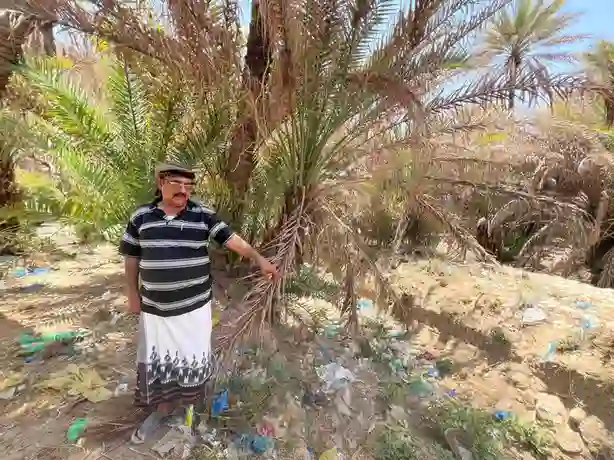
Yemen’s agricultural valleys, including the famed Wadi Dawan, are drowning in plastic waste, blocking irrigation channels and poisoning farmland. The crisis, worsened by years of war and collapsing public services, threatens food production and public health across the country.
Plastic waste clogs Yemen’s vital irrigation systems
In Wadi Dawan, a celebrated valley in eastern Yemen’s Hadramout province, plastic bags, bottles, and household waste now blanket flood channels that once nourished date palms and honey farms. Farmer Yousef Abdullah, 65, told Al Jazeera the waste disrupts irrigation, forcing farmers to manually clear debris before floods recede—or risk losing entire harvests.
“We move from one irrigation channel to another, removing plastic bags, construction debris, and trees,” Abdullah said. “Broken glass hidden in the rubbish can easily cut us.” After floods subside, farmers collect the waste again to prepare fields for planting.
Local officials confirm the problem extends beyond Wadi Dawan. Salem Raji, head of the Ministry of Agriculture’s office in the valley, said plastic waste contaminates soil, reduces crop yields, and damages canal walls. “Some farmers lose an entire harvest season because their fields receive no irrigation,” he said.
War and funding shortages cripple waste management
The crisis stems from Yemen’s broader collapse in public services. Years of conflict between the Iran-backed Houthis and the Saudi-backed government have left municipalities with little funding or capacity to manage waste. In Wadi Dawan, garbage trucks collect waste just once a week—when vehicles are operational—and many areas lack bins entirely.
Raji’s office receives just 8,000 Yemeni riyals ($5) monthly, limiting field visits to educate residents or remove waste. “Our budget leaves us unable to carry out regular outreach,” he said. Despite his warnings, residents continue dumping waste into flood channels, mixing household trash with sewage.
Public health risks spread beyond farmland
In Taiz, another hard-hit governorate, waste has polluted drinking wells and increased waterborne diseases. Dr. Yassin Abdul Malik al-Shuraihi, who leads disease surveillance in Taiz, said sewage and household waste dumped into flood channels contaminate water supplies, causing frequent diarrheal outbreaks.
Environmental experts warn of long-term damage. Khaled Saleh Bawahidi, director of Hadramout University’s Environmental Studies Centre, said plastic waste degrades soil, harms bee populations, and creates breeding grounds for disease-carrying rodents. “This threatens the quality of dates and honey, Yemen’s key agricultural exports,” he said.
With no immediate solutions in sight, the crisis is poised to deepen. Residents and officials alike call for urgent funding and infrastructure repairs—but Yemen’s ongoing war makes progress uncertain.


