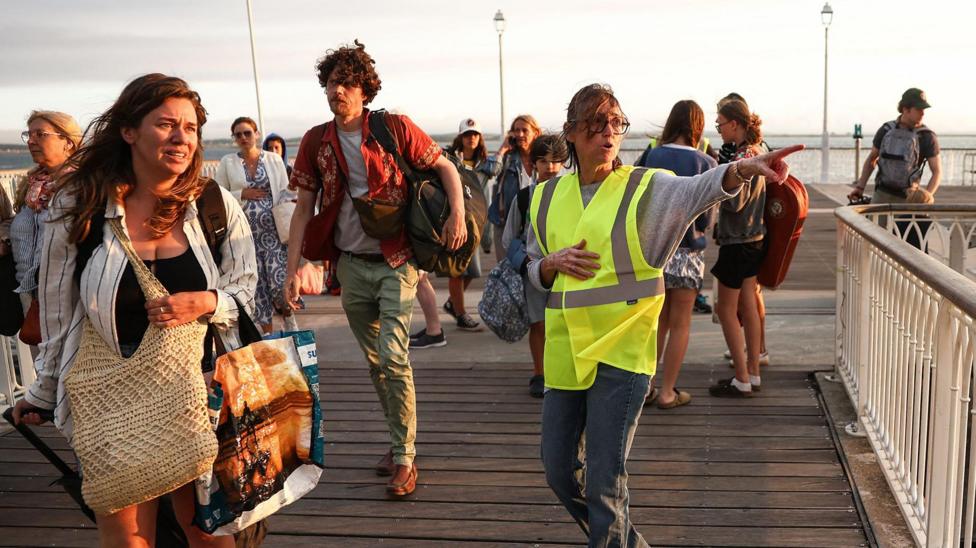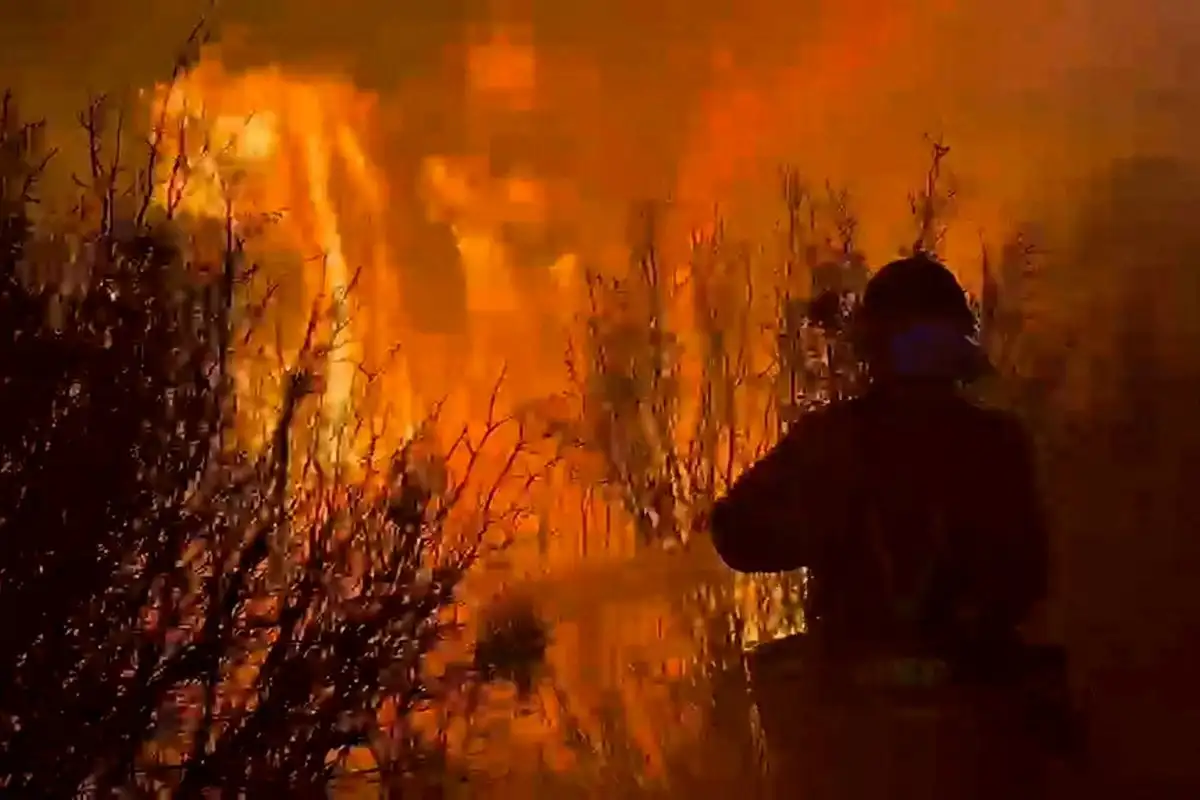
More than 20,000 individuals have been evacuated in southwest France as wildfires spread, coinciding with a renewed heatwave that has returned temperatures exceeding 40C to the continent. Thousands of tourists were compelled to leave holiday camps near Bordeaux, with approximately 700 firefighters deployed to combat the blaze close to the popular coastal town of Lège-Cap-Ferret.
France Wildfires Escalate Amidst Heatwave
Philippe de Gonneville, the mayor of Lège-Cap-Ferret, acknowledged that "Overnight, the fire spread more quickly than we had imagined." Authorities confirmed that 12,000 people had already been evacuated, with an additional 8,800 being relocated.
In neighbouring Spain, efforts continued to extinguish fires that had been active for several days. The intensity of the heatwave was underscored by record temperatures in several Spanish cities. Forecaster AEMET reported that areas including Albacete (42.0C), Teruel (40.7C), and Avila (37.8C) experienced their highest recorded temperatures on Wednesday. Teruel also recorded its warmest night since records began, with a minimum temperature of 21.9C.
Spain Faces Extreme Heat and Widespread Fires
Spain's meteorological agency issued a warning of "extraordinary danger," with temperatures in some regions forecast to reach 44C on Thursday. Popular tourist destinations such as Malaga, Valencia, and Alicante could experience highs of up to 42C. Across central Spain, firefighters, emergency personnel, and military units remained deployed to monitor multiple active fires, including blazes in Guadalajara, Toledo, Ciudad Real, and Albacete. Nationally, over 100,000 hectares have been consumed by fires this year.
Spanish Prime Minister Pedro Sanchez visited the Guadalajara region, reporting that Spain had already contended with 22 major wildfires this year. He noted that the 100,000 hectares burned so far represented the annual average Spain typically experienced over the past decade, emphasising the need for increased preventative measures.
The most significant wildfire in Spain this year, located in the Guadalajara region, has consumed an estimated 32,000 hectares. While stabilization was reported on Tuesday after evacuations in 34 municipalities, restrictions remain in place. The Castilla-La Mancha's INFOCAM fire service has permitted residents of five villages to return, though other measures persist. Spain's weather agency AEMET maintains that the wildfire danger remains "very high or extreme" across most of mainland Spain and the Balearic Islands, exacerbated by the ongoing heatwave, dry thunderstorms, and Saharan dust.
Broader European Impact of Heatwave
The severe heatwave extends beyond France and Spain, impacting Italy where a 59-year-old firefighter died after falling ill while battling a large wildfire near San Cataldo in Sicily. Greece is anticipating temperatures above 41C, leading authorities to ban outdoor work during peak midday hours. In Cyprus, outdoor work was similarly restricted on Wednesday afternoon. Further east, North Macedonia's capital, Skopje, saw 11 people hospitalised, three with serious injuries, following a storm that caused power outages and damage. Kosovo also anticipates further storms with warnings of lightning strikes, power outages, and property damage.
Wildfires have already burnt more land across Europe this year than the average for the past two decades, a stark indicator of the continent's rapid warming. This phenomenon has led to three intense heatwaves occurring in close succession during the current year.