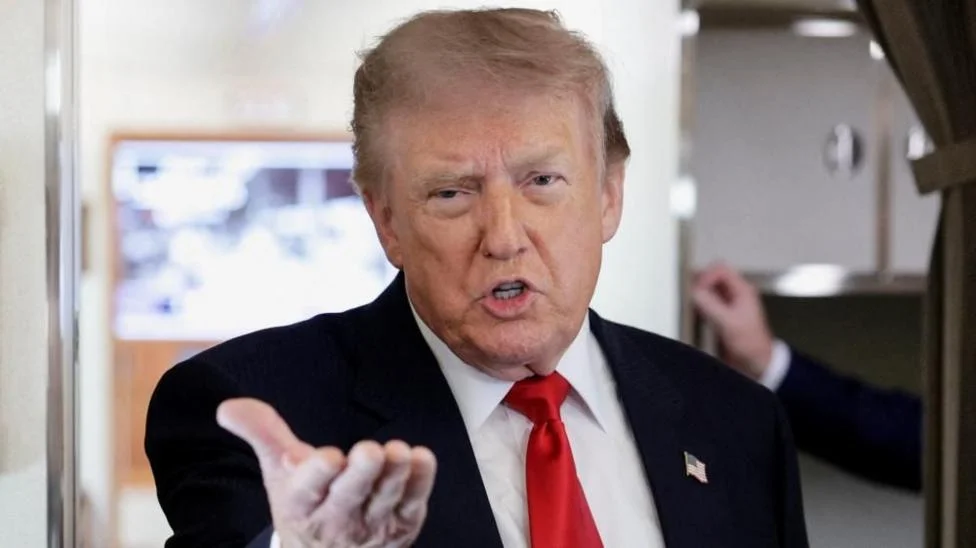
US President Donald Trump has stated that "there are very friendly negotiations going on" regarding the conflict with Iran, according to comments made aboard Air Force One, as the warring sides have not exchanged strikes for a third straight day, with the US and Iran engaged in indirect talks. The pause in fighting follows nearly two weeks of daily US strikes and tit-for-tat attacks.
Iran War Talks and US Military Strategy
Trump expressed optimism for an end to the war on Monday, telling reporters: "I think there's a good chance that something could happen." However, he warned that Washington would "go back to doing what we were doing" before the pause in fighting if the latest negotiations failed, as the US seeks to degrade Iran's ability to threaten commercial shipping in the Strait of Hormuz.
Tehran has denied that any direct negotiations are taking place, while the US military has stated that its strikes were aimed at "degrading Iran's ability to threaten commercial shipping in the Strait of Hormuz," a global route for transporting oil, with the price of oil falling by more than 9% to $87.59 a barrel on Monday amid hopes for de-escalation.
US Military Readiness and Ammunition Stockpiles
Trump also dismissed media reports that US ammunition stockpiles were running low after five months of fighting, stating: "We have a lot of ammunition. We have a lot of the mid-level stuff too, more than we could ever use, no matter what." The White House spokesperson, Anna Kelly, added that the US military "has more than enough munitions, ammo, and stockpiles to serve all of President Trump's strategic goals and beyond."
The US and Iran launched their strikes against each other on 28 February, with more than 600 US military service members injured since the start of the conflict, and dozens of people killed in US strikes, according to Iran's health ministry. As the US pauses the war with Iran, the situation remains uncertain, with the US ambassador stating that the pause is intended to make space for talks.
What's Next in the Iran War
As the talks between the US and Iran continue, the price of oil and the situation on the ground will be important to watch, with the potential for de-escalation or further conflict hanging in the balance. The US has urged its defense contractors to constantly produce more made-in-America weapons, which are considered to be among the best in the world, as the US seeks to maintain its military advantage in the region.
- The US and Iran signed a memorandum of understanding to stop military operations and reopen the Strait of Hormuz in June.
- Iran and the US agreed to reach an agreement to end the war over the following 60 days.
- The US resumed air strikes against Iran and reinstated its naval blockade of the country's ports after Iranian forces attacked tankers in the waterway on 13 July.
The outcome of the current talks and the future of the conflict remain uncertain, with the US and Iran working towards a potential resolution, and the international community watching closely as the situation develops.


