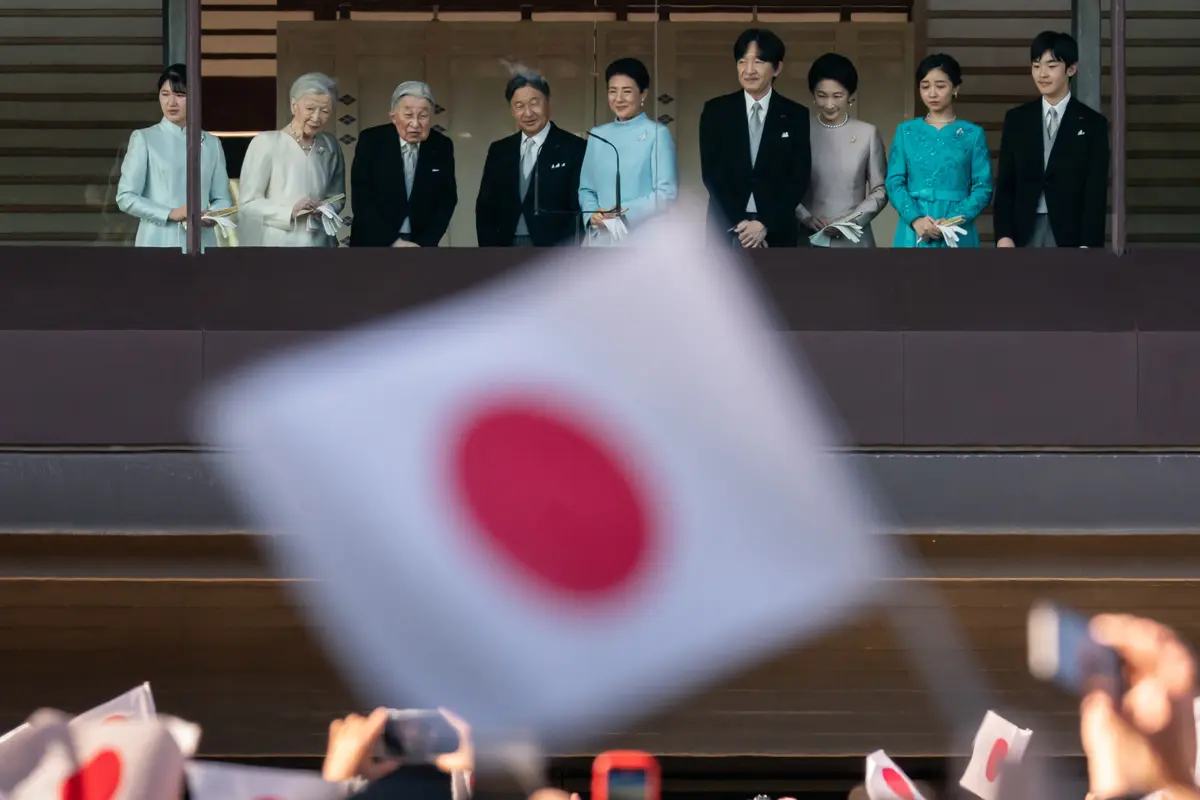
Japan’s parliament has passed controversial revisions to the Imperial Household Law, aiming to secure male heirs to the throne while allowing princesses to remain in the royal family after marrying commoners. The changes, approved by both the upper and lower houses, also permit the adoption of male-line descendants from former imperial branches.
Why Japan’s imperial succession law was revised
For context, Japan’s imperial family has dwindled in size, with only one young male heir—19-year-old Prince Hisahito—remaining. The revisions address concerns over the monarchy’s future by expanding the pool of potential heirs, though critics argue the law’s primary goal is to exclude women from inheriting the throne.
Under the new rules, princesses may retain their royal status post-marriage but cannot inherit the throne. Adopted male descendants, though ineligible themselves, could pass eligibility to their future sons. This maintains the male-line succession tradition, which Prime Minister Sanae Takaichi has called the foundation of the emperor’s legitimacy.
Public support vs. political resistance
Polls show 60% to 90% of Japanese citizens support allowing female emperors, with Princess Aiko—Emperor Naruhito’s 24-year-old daughter—often cited as a potential candidate. However, the government has resisted this change, citing historical precedent: Japan has had eight female emperors, all descended from male-line ancestors, but the practice ended in 1889 under the Meiji-era Imperial Household Law.
Former diplomat Seiichiro Noboru argues the revisions contradict Japan’s constitution, which states the emperor’s position is determined by the will of the people. The emperor himself has urged public understanding of the debate, though his role remains ceremonial.