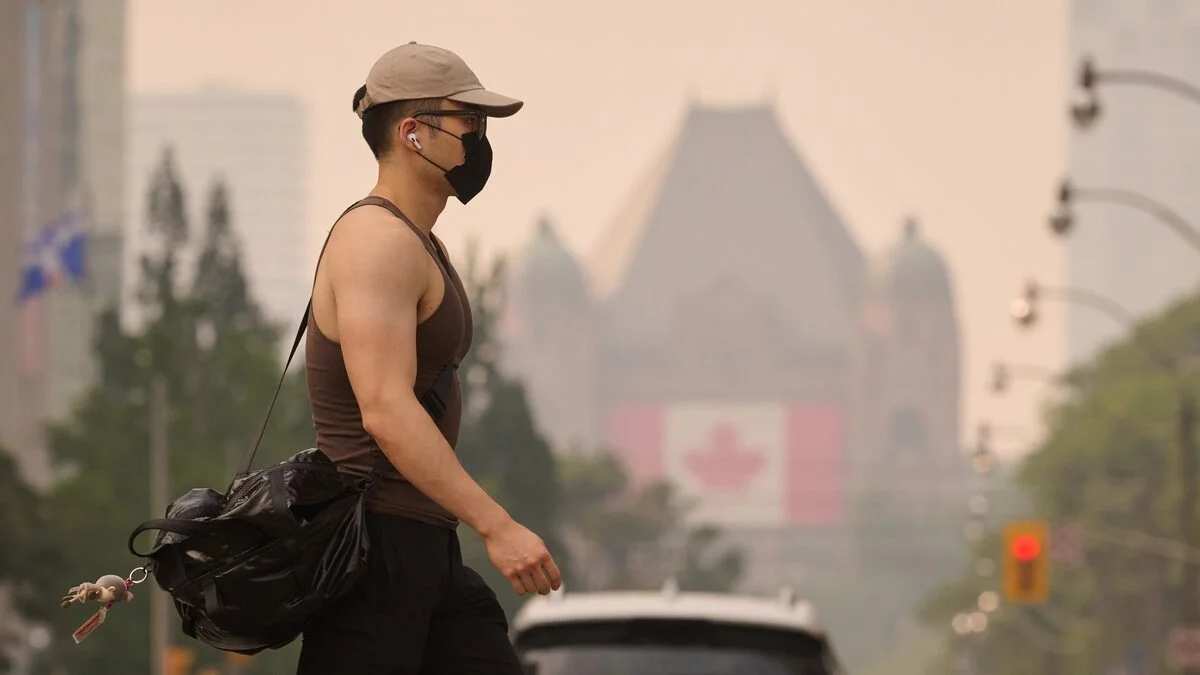
Ontario’s wildfire smoke will offer only temporary relief today before hazy conditions return this evening, with poor air quality expected to persist into the weekend.
Environment Canada attributes the recurring smoke to 136 active fires in the northwest region, including 63 classified as out of control, and another 44 in the northeast. The fires have already destroyed communities like Namaygoosisagagun First Nation, also known as Collins First Nation, north of Thunder Bay.
Federal and provincial response to wildfire crisis
The Ontario government and the Assembly of First Nations have requested federal assistance, while provinces such as Alberta have sent firefighters and water bombers. Prime Minister Mark Carney stated his government is coordinating with Ontario officials and stands ready to provide support.
Some U.S. lawmakers have reacted to the cross-border smoke, with threats on Thursday to sanction or even annex Canada over the pollution affecting American air quality.
Health impacts of wildfire smoke exposure
Toronto’s University Health Network reported a preliminary 80% increase in emergency department visits linked to air quality, rising from 20 on July 1 to 36 on Wednesday. Symptoms included shortness of breath, cough, congestion, and non-cardiac chest pain.
The Public Health Agency of Canada recommends N95, KN95, or KF94 masks for protection against PM2.5 particles, noting that cloth and surgical masks are less effective.




