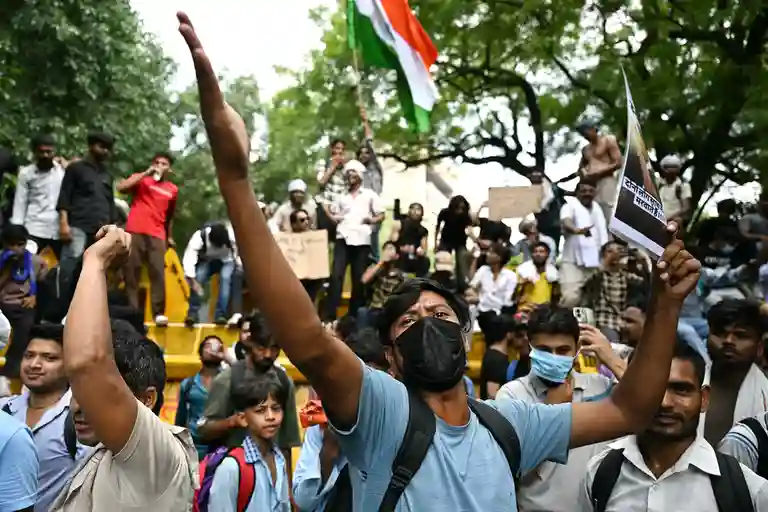
India’s education minister, Dharmendra Pradhan, resigned Saturday following nationwide protests over exam paper leaks, marking the latest political casualty of South Asia’s youth-driven unrest. The demonstrations, dubbed the "Cockroach Janta Party" movement, reflect broader regional frustrations over unemployment, corruption, and elite privilege.
Unemployment and Inequality Fuel Youth Anger
Despite economic growth, South Asia’s young population faces stark disparities. In India, nearly 40% of graduates aged 15–25 and 20% of those aged 25–29 are unemployed, according to an Azim Premji University report. Bangladesh’s wealthiest 10% control 58.4% of national wealth, while the bottom half holds just 4.7%, per the World Inequality Lab. Nepal, where 56% of the population is under 30, saw 20% of 15–24-year-olds jobless last year.
These statistics underscore a growing disconnect between economic progress and opportunity. "The [exam] papers are being leaked, the rich are paying for their children to pass, and [we] poor people are being left behind," a 23-year-old Indian protester told NPR. Such grievances have become rallying cries across the region.
Corruption and Digital Mobilization Spark Uprisings
Allegations of systemic corruption have galvanized protests. In Bangladesh, a court’s decision to uphold a 30% government job quota for veterans’ descendants triggered mass demonstrations, ultimately ousting Prime Minister Sheikh Hasina in August 2024. Nepal’s government banned 26 social media platforms in September 2025, citing misinformation concerns, but critics saw it as an attempt to suppress videos exposing politicians’ lavish lifestyles. The move backfired, forcing Prime Minister K.P. Sharma Oli’s resignation.
Widespread internet access has amplified youth activism. Social media not only spreads information but also overcomes traditional barriers to collective action. Attempts to restrict online discourse—like Nepal’s ban—have often intensified public outrage.
What Happens Next for South Asia’s Youth Movements
Protesters in New Delhi paused demonstrations after Pradhan’s resignation, but underlying tensions persist. Analysts warn that without structural reforms, the region’s "demographic dividend" could become a "demographic reckoning." Leaders across South Asia now face pressure to address systemic inequities or risk further unrest.
Observers are watching whether ruling parties will implement meaningful changes or resort to temporary concessions. For now, the message from Gen Z is clear: economic growth alone is insufficient without equitable opportunity.