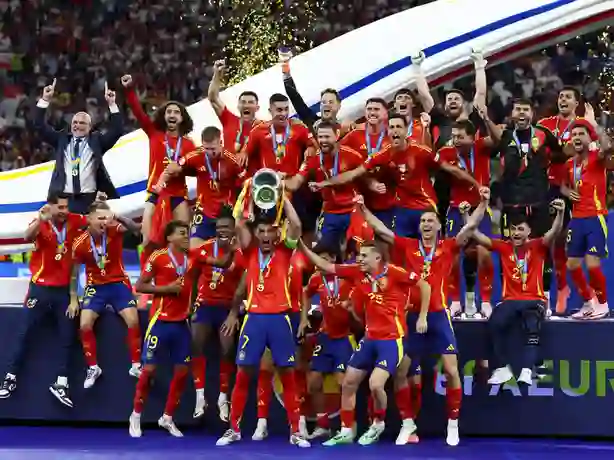
Spain defeated Argentina last night to secure the World Cup title, a victory that resonated far beyond the sport for millions worldwide. The outcome prompted a reassessment of allegiances, influenced by geopolitical events, particularly the ongoing conflict in Gaza and Palestine.
Global Prism: Gaza and International Relations
The conflict in Gaza and Palestine has fundamentally altered how many perceive global events and institutions. This has extended to judgments about governments, academic bodies, media outlets, corporations, and prominent figures. Observers note a pattern of institutions and individuals appearing to ignore destruction or employing qualifying language when confronted with situations that might otherwise elicit strong condemnation.
Conversely, the period has also highlighted individuals and entities who have refused to disengage from these pressing issues.
Sporting Arenas and Moral Judgments
While a football team is distinct from a government, and athletes are not directly responsible for national policies, sport has never been entirely divorced from broader societal concerns. Individuals bring their personal histories, identities, sympathies, and moral judgments to their engagement with sports. Support for a team can stem from reasons extending beyond tactical formations or statistical performance.
For many, Spain's presence in the World Cup final came to represent a larger stance. The Spanish government, under Prime Minister Pedro Sánchez, has adopted a notably clear position on Gaza, recognizing the State of Palestine and publicly using the term "genocide" to describe actions in the region. Spain has also initiated measures for an arms embargo against Israel.
This position, regardless of full agreement with every government policy, signifies moral courage, especially when taking such a stance may incur costs.
Symbols of Solidarity
The image of young Spanish star Lamine Yamal waving a Palestinian flag during Barcelona's La Liga celebrations offered a poignant symbol. This gesture, made at the pinnacle of sporting achievement, underscored the ongoing Palestinian struggle for visibility amidst widespread suffering. Yamal's subsequent World Cup victory with Spain added another layer to this narrative.
On the opposing side, Argentina, led by Lionel Messi, also brought Gaza into the viewing experience for some. An image of Messi at the Western Wall, from a 2013 visit, circulated, demonstrating how past events gain new resonance in light of current circumstances.
The contrast between Yamal's public display of support for Palestine and Messi's historical image served as a powerful reminder of symbols' significance in a world reshaped by ongoing crises.
Argentinian Politics and Global Alignments
Argentina's political landscape, particularly under President Javier Milei, further complicated the emotional calculus for some observers. Milei's avowed allegiances, including his embrace of Donald Trump and self-declaration as "the most Zionist president in the world," occurred amidst the destruction in Gaza.
While Argentinian footballers are not accountable for Milei's politics, these stances inevitably influence how external audiences engage with the team. This dynamic is amplified by specific UN votes, such as the resolution addressing the transatlantic slave trade. Argentina, along with the United States and Israel, was among the few nations to vote against this resolution calling for reparatory justice.
This alignment, on an issue of historical injustice and redress, mirrors perceived patterns where certain governments appear to oppose victims demanding recognition and accountability.
Realigning Moral Geography
The influence of Gaza has, for some, rearranged their perception of global proximity and respect. Nations previously distant can feel closer due to their vocal stances during periods of silence from others. Governments previously overlooked can earn admiration for refusing to avert their gaze during critical moral junctures.
Millions celebrated Spain's World Cup victory for myriad reasons, including admiration for the team, players like Lamine Yamal, and the sport itself. However, a significant segment also celebrated in solidarity with the Palestinian people.
It is crucial to distinguish between symbolism and justice; a World Cup victory cannot directly resolve the humanitarian crisis in Gaza. Yet, human experience is deeply intertwined with symbols. For some, the Spanish team's red jersey carried a profound meaning on this occasion.
The ultimate victory of Spain serves as a testament to football's enduring appeal. However, for many, the context of Gaza has irrevocably altered how they engage with the sport, demonstrating the pervasive influence of global events on even the most apolitical arenas.