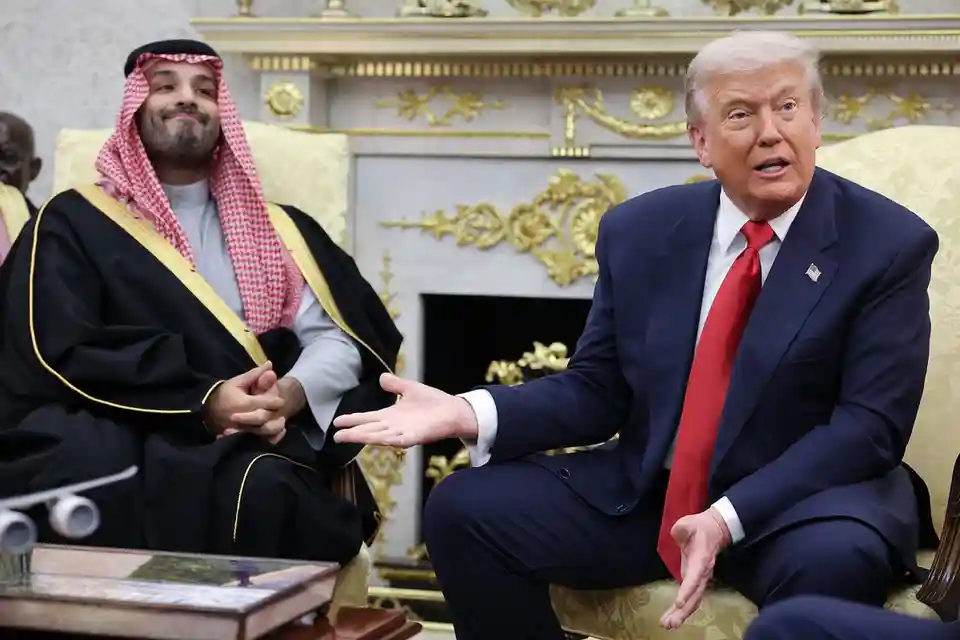
US President Donald Trump has made Saudi Arabia’s normalisation of relations with Israel a precondition for final approval of a civil nuclear cooperation agreement between Washington and Riyadh, a condition not previously disclosed when the deal was announced.
Nuclear Deal Terms and Proliferation Concerns
The agreement, signed on Wednesday by US Energy Secretary Chris Wright and Saudi Energy Minister Prince Abdulaziz bin Salman, permits only non-military nuclear use and explicitly prohibits uranium enrichment, according to Trump’s statement on Truth Social. However, the pact does not mandate the most stringent United Nations inspections or an outright ban on enrichment and reprocessing of spent fuel, sources familiar with the text told NBC News.
The Energy Department described the deal as a “decades-long, multi-billion-dollar partnership” advancing economic and nonproliferation objectives, though critics warn it could accelerate nuclear weapons development in the region. Saudi Arabia, a signatory to the International Atomic Energy Agency (IAEA), has repeatedly denied seeking nuclear arms but has stated it would pursue them if Iran did.
In a 2018 CBS interview, Crown Prince Mohammed bin Salman said: “Without a doubt if Iran developed a nuclear bomb, we will follow suit as soon as possible.” The kingdom’s official statement on the deal omitted Trump’s Israel condition, framing the agreement as a means to “diversify energy sources” and foster technological cooperation.
Abraham Accords Expansion as a Sticking Point
Trump’s demand links the nuclear deal to the Abraham Accords, the US-brokered normalisation agreements between Israel and Arab states—including the UAE, Bahrain, Sudan, and Morocco—signed during his first term. While Israeli Prime Minister Benjamin Netanyahu hailed Saudi participation as an “historic leap forward for peace,” Riyadh has long insisted it would not normalise ties without progress toward Palestinian statehood, a position Netanyahu has rejected.
The Trump administration has not released the full text of the agreement, and the Energy Department’s announcement made no mention of the Abraham Accords requirement. A senior administration official confirmed Trump had approved the deal, which now awaits congressional review.
What Happens Next
The agreement’s fate hinges on whether Saudi Arabia will accept Trump’s condition, which could reshape Middle East diplomacy but risks derailing the nuclear pact. Lawmakers and nonproliferation experts will scrutinise the deal’s inspection provisions and enrichment limits as Congress evaluates its implications for regional security. Observers will watch for Saudi Arabia’s response and any shifts in its stance on Israel normalisation in the coming weeks.