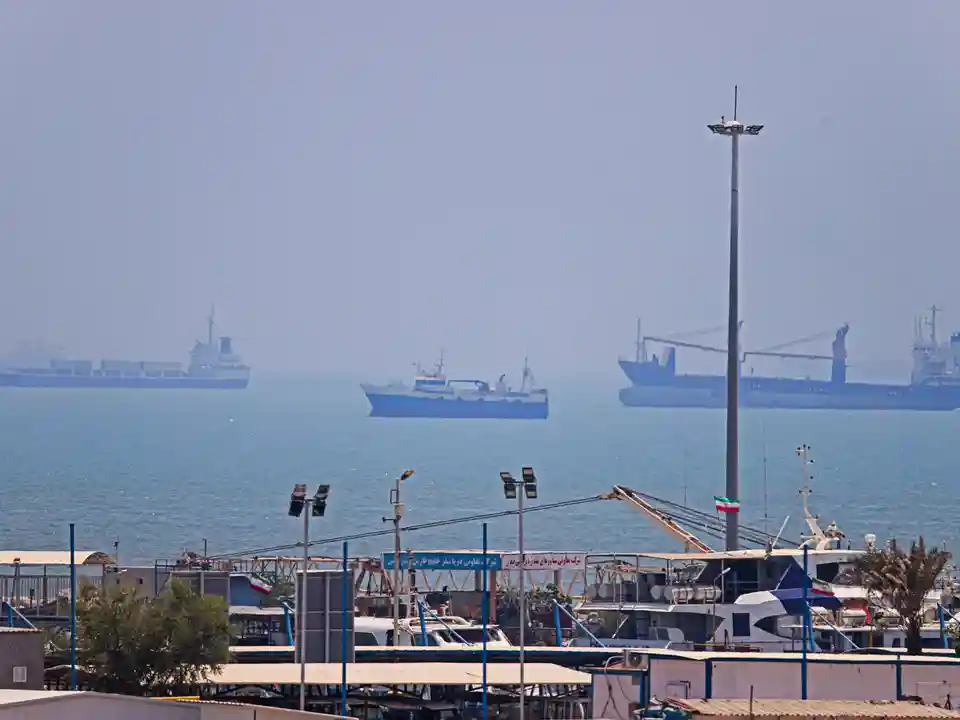
The United States has reimposed its naval blockade on Iran’s southern ports, disrupting oil exports and reigniting military tensions in the Strait of Hormuz.
The blockade, first enforced in mid-April, was lifted in June after a Memorandum of Understanding (MoU) ended four months of fighting and reopened the strategic waterway. Iran resumed crude exports, but recent strikes over control of the Strait prompted Washington to revoke oil and banking waivers, preventing Iranian-linked vessels from loading more oil.
Impact on Iran’s oil exports and economy
Iran’s parliament speaker, Mohammad Bagher Ghalibaf, confirmed the previous blockade halted all crude exports. Energy analyst Hamidreza Shokouhi estimates the renewed siege will remove at least 1.5 million barrels per day from the market, pushing oil prices to around $90 per barrel.
Global strategic reserves, already strained by the conflict, face further pressure. Iran has responded by attempting to block other regional oil exports via the strait, escalating economic and military leverage.
- Oil prices rise to ~$90 per barrel
- 1.5M barrels/day of Iranian crude off the market
- Iranian rial hits record low: 1.93M to the US dollar
- Tehran Stock Exchange drops 2.4% in one day
Military escalation and civilian impact
Seven nights of tit-for-tat strikes between the US and Iran have intensified, targeting civilian infrastructure—bridges, ports, power stations—and military sites. US forces struck the Curacao-flagged supertanker Belma, accused of transporting Iranian crude, and the Aq Tekeh railway bridge, a key import-export route.
Iran’s inflation has surged, with staple food prices tripling. Merchants report market instability, relying on pre-blockade imports as inland routes struggle to compensate.
What happens next
Iran has warned of retaliatory strikes on regional US bases if civilian infrastructure is targeted. Analysts caution that further US actions, such as hitting power plants, could expand the conflict, potentially involving Houthi forces in Yemen to disrupt shipping in the Bab al-Mandab strait.
Shokouhi notes Trump’s recent moves have made the situation “more intractable,” with no clear resolution in sight.