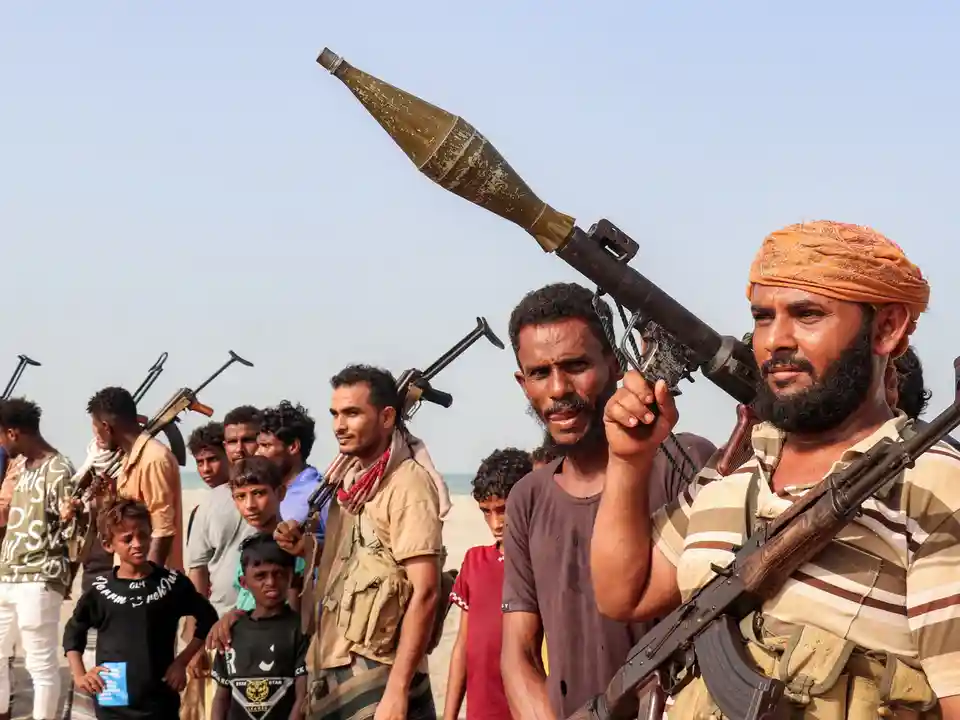
The conflict in Yemen has intensified as the Houthi rebels, also known as Ansar Allah, announced a maritime siege targeting all shipping bound for Saudi Arabia. This declaration follows recent attacks by the group on Saudi tankers in the Red Sea, placing the vital Bab al-Mandeb Strait at the center of growing regional tensions.
Houthi Maritime Blockade Raises Global Concerns
The Houthi imposition of a naval blockade on Saudi Arabia marks a significant escalation in Yemen's protracted civil war. The strategic Bab al-Mandeb Strait, a critical chokepoint connecting the Red Sea to the Gulf of Aden, is a key artery for global commerce and energy supplies. The rebels' threat to close this passage amplifies pressure on international trade routes, particularly impacting Europe's energy imports and Saudi Arabia's own imports.
This development is occurring within the broader context of heightened tensions between the United States and Iran. The Houthis, widely understood to be backed by Iran, have leveraged the volatile regional environment to expand their influence and exert pressure on their adversaries.
Shifting Dynamics in Yemen's Civil War
The recent announcement by the Houthi group follows a series of retaliatory actions and counteractions. On Monday, Yemen's internationally recognized government claimed responsibility for an air strike on Sanaa airport, stating it was to prevent an Iranian plane from landing. The Houthis, however, attributed the strike to Saudi Arabia. In response, the Houthis launched missiles into Saudi Arabia, a key supporter of the Yemeni government, before declaring the naval blockade.
These events signal a major shift in the nature of the conflict, moving beyond land-based engagements to threats against maritime assets and critical shipping lanes. Saudi Arabia, which has sought to avoid further entanglements on its southern border, now faces a more complex security challenge as the threat expands to sea and targets vital oil export routes.
Assessing the Balance of Power
The escalating situation prompts scrutiny of the military balance between the Houthi forces and the Yemeni government. The government's military has undergone restructuring, with regional indications suggesting a renewed focus on military options. The anti-Houthi camp includes the National Army, estimated at approximately 400,000 personnel, alongside other formations such as the Giants Brigades and the Guardians of the Republic forces.
- National Army personnel: Approximately 400,000
- Emergency Forces personnel: 30,000 to 40,000
- Homeland Shield Forces personnel: 30,000 to 40,000 (created in 2022)
- Guardians of the Republic fighters: Estimated 20,000
- Giants Brigades fighters: Estimated 20,000
- Total estimated government-affiliated forces: Over 500,000
Despite a larger reported manpower advantage, the government forces contend with disparities in training, discipline, and institutional integration. The Houthi forces, while potentially smaller in number, are reported to benefit from a more centralized command structure and extensive experience in asymmetric warfare. Their capabilities in missile, drone, and maritime threats have demonstrably impacted operations in the Red Sea and the Bab al-Mandeb Strait.
Future Prospects and International Involvement
The potential for a large-scale offensive, such as retaking Sanaa, is a subject of ongoing analysis. Success for such an operation would necessitate a unified military command, significant domestic and regional political backing, and a clear plan for post-conflict governance. While Saudi Arabia's political and military support is crucial for any broad government action against the Houthis, Riyadh's past strategy has focused on conflict management rather than outright resolution.
However, current regional and international events, particularly concerning Red Sea navigation security, may compel Saudi Arabia to re-evaluate its approach. The international community, including the United States, has thus far focused on degrading Houthi maritime and smuggling capabilities, rather than actively supporting a ground offensive. Nevertheless, reports suggest the possibility of a US-backed war against the Houthis is being considered.