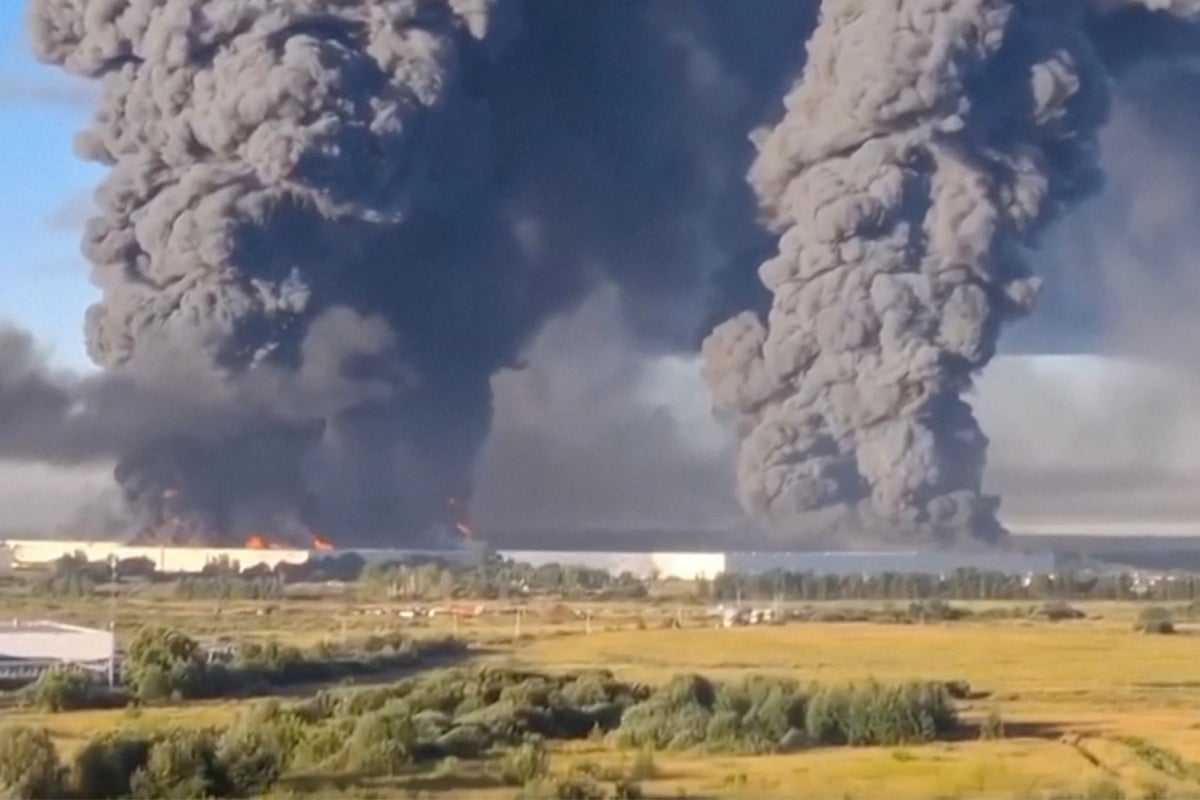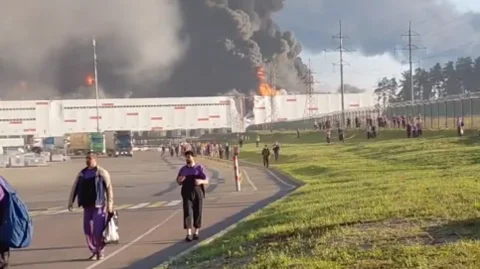
At least eight people were killed and 62 injured after Ukrainian drones struck two warehouses operated by Wildberries, Russia’s largest online retailer, according to Russian officials. The attacks occurred in Tambov and Elektrostal, with seven fatalities reported in Tambov and one in Elektrostal.
Strikes target Russian logistics and military supply chains
Ukrainian President Volodymyr Zelensky stated the warehouses were "major logistics facilities" used to supply sanctioned components for drone production and navigation equipment. Ukraine also confirmed strikes on targets in the Sea of Azov, the Black Sea, and Russian-annexed Crimea, framing the operations as a response to Russian attacks on Ukrainian civilian infrastructure.
Unverified footage from the scenes showed flames and black smoke billowing from the warehouses, with workers fleeing as explosions continued. The attacks reportedly began overnight, with some videos capturing injured staff attempting to escape.
Casualties and economic impact
In Tambov, Governor Evgeniy Pervyshov said seven night-shift workers died on the spot, while 25 others were injured, including seven in serious condition. In Elektrostal, Governor Andrei Vorobyov reported 37 injuries, with eight in serious condition. Both officials noted drones were shot down during the attacks, with Vorobyov adding that a Russian oil depot was also struck.
Wildberries, often compared to Amazon, is part of the RWB group, valued at approximately $12.6 billion by Forbes Russia in 2026. Serhii Kuzan, chairman of the Ukrainian Security and Cooperation Centre, told the BBC that Wildberries played a "vital component" in Russian logistics, with its platform used to procure military equipment, including drone components and body armor.
Escalation in long-range drone warfare
Ukraine has intensified long-range drone attacks on Russian energy infrastructure, with Kyiv claiming nearly 43% of Russia’s oil refining capacity has been disabled. Ukrainian officials assert that Russian oil and gas facilities are legitimate targets, as Moscow relies on fossil fuel exports to fund its invasion. Russian President Vladimir Putin acknowledged fuel shortages in June, signing a bill to boost domestic supplies in July.